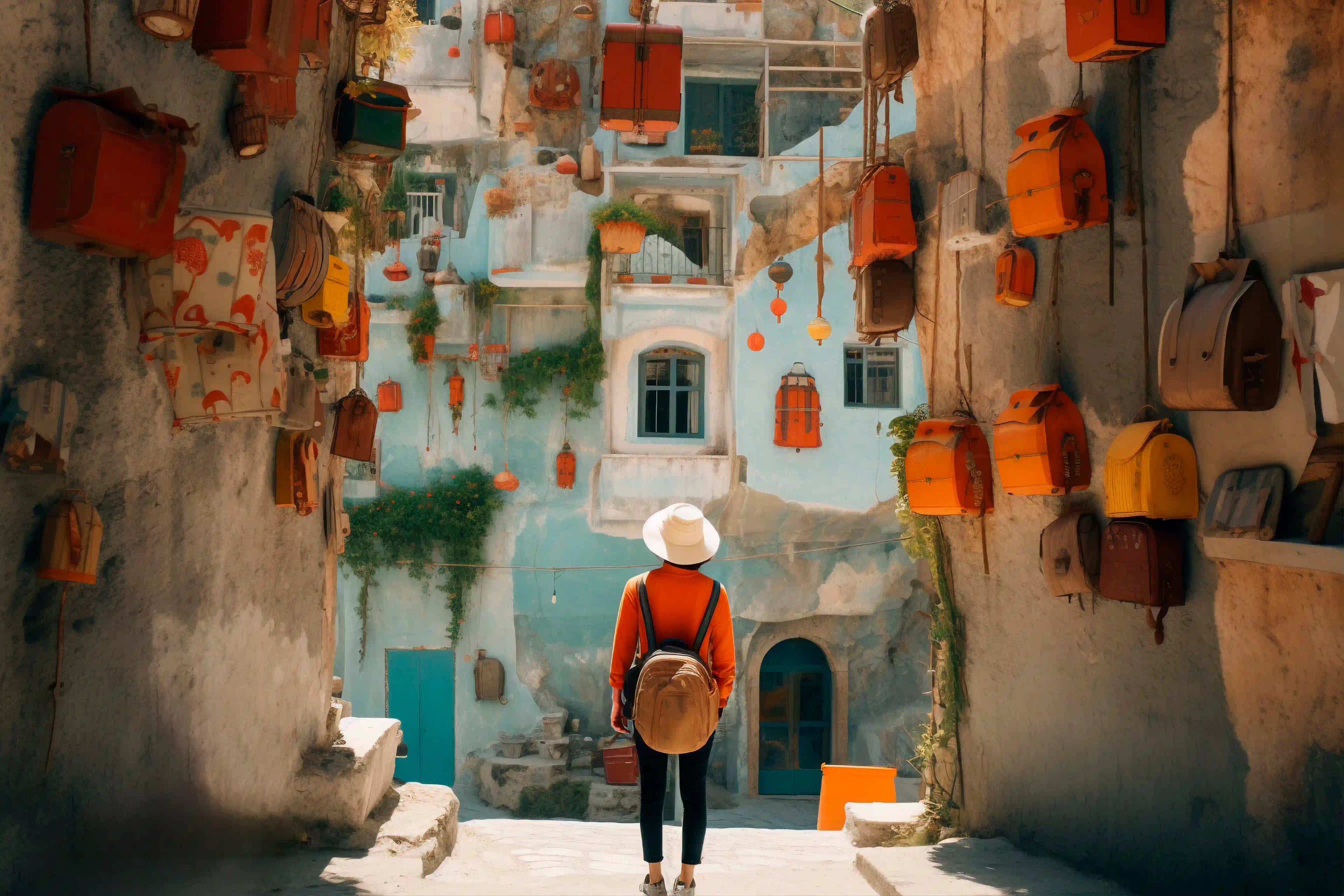
Tetouan's UNESCO medina carries a unique double history — Moorish and Spanish Colonial side by side — and remains one of the most authentic urban experiences in northern Morocco.
A City Built by Exiles
Tetouan's character was shaped by displacement. When the Spanish reconquista expelled the Moors from Andalusia in 1492, tens of thousands of refugees crossed the strait and settled on the Moroccan coast. Many came to Tetouan, a small town in the foothills of the Rif mountains, which they rebuilt in the image of the Andalusian cities they had left behind. The result was a medina of unusual refinement — arched doorways, tilework courtyards, carved plaster facades — built by people who were attempting to recreate a lost world. The city that Andalusian exiles constructed in the 15th and 16th centuries is the medina that stands today, designated a UNESCO World Heritage Site in 1997.
The Spanish Protectorate and the Ensanche
In 1912, Spain established a protectorate over northern Morocco, and Tetouan became its administrative capital. The Spanish colonial administration did something unusual: rather than demolishing or overlaying the Moorish medina, they built their new town — the Ensanche — immediately adjacent to it, on a strict grid plan with Baroque facades, wrought-iron balconies, and a central plaza modelled on any Spanish provincial capital. When the protectorate ended in 1956, the Spanish town did not disappear. Today you can walk from the Andalusian medina's souk — where women still carry water in ceramic jars balanced on their heads and craftsmen work marquetry and zellige by hand — directly into a street of Spanish-style cafes and pharmacies, with no transition except a gate in an old wall.
Tetouan at a Glance
1997
Year the medina received UNESCO listing
60 km
Distance from Tangier
1 hr
Journey time from Tangier by grand taxi
5 km
Distance to Martil beach
1912-1956
Spanish Protectorate period
380,000
Approximate city population
Craftsmanship: Zellige and Marquetry
Tetouan has been a centre of Moroccan craft production for five centuries. The National School of Arts, founded in the 19th century, still trains artisans in the traditional disciplines — zellige tile-cutting, plaster carving, marquetry wood inlay, embroidery, and leather tanning. The school is open to visitors and the workshop visits are among the most instructive craft demonstrations in Morocco: you can watch a zellige cutter work from a geometric pattern drawn by hand on graph paper, cutting each piece with a small iron hammer, one tile at a time. The workshops in the medina around the school sell directly, with prices that are lower than anything you will find in Fes or Marrakech for comparable quality.
Tetouan vs Chefchaouen: Making the Choice
This is the question every traveller faces when planning a trip to the Rif. Chefchaouen, 65 kilometres southeast of Tetouan, is one of the most photographed towns in Africa — every street is blue, every doorway is a potential composition. It is genuinely beautiful and worth seeing. It is also crowded with people who came because they saw it on social media, and many of the interactions in the medina are geared around that tourist traffic. Tetouan offers something different: a living city where the craft traditions are real rather than performed, where the Spanish-Moorish juxtaposition is found nowhere else in Morocco, and where you are unlikely to find yourself queueing to photograph a staircase. The answer depends on what you came to Morocco for. Tetouan is the better choice for authenticity and craft. Chefchaouen is the better choice for photography and atmosphere.
I went to Chefchaouen first and then spent two days in Tetouan. In Tetouan I felt like I was actually in Morocco, not in a film set. The medina school, the old Spanish streets, the market where people were buying vegetables — it all felt real.
Beaches and Day Trips from Tetouan
- Martil beach: 5km east of Tetouan, popular with Moroccan families throughout summer, long flat sand, seafood restaurants along the promenade
- Cabo Negro: 10km north of Tetouan, a quieter resort with a marina and hotels favoured by Moroccan middle-class summer visitors
- Chefchaouen: 65km southeast on the RP41, easily done as a day trip or a two-night extension
- Tangier: 60km north on the A4 motorway, under an hour by grand taxi — the two cities work well as a combined northern Morocco circuit
- Ceuta: the Spanish enclave 40km north, interesting for the surreal border crossing and the duty-free shops, but limited in historical terms
Place Hassan II: Where Both Cities Meet
Place Hassan II is the hinge between Tetouan's two worlds — the Andalusian medina gate on one side and the Spanish Ensanche's central square on the other. It is the best place to sit and understand the city's dual character. The cafes on the Spanish side serve coffee; the souks inside the medina gate sell spices and silver. You do not have to choose.