The Moroccan souk is one of the world's great shopping experiences — but it operates on rules that most visitors arrive unprepared for. Understanding the system makes the difference between an exhausting hustle and a genuinely enjoyable experience.
Understanding the Souk System
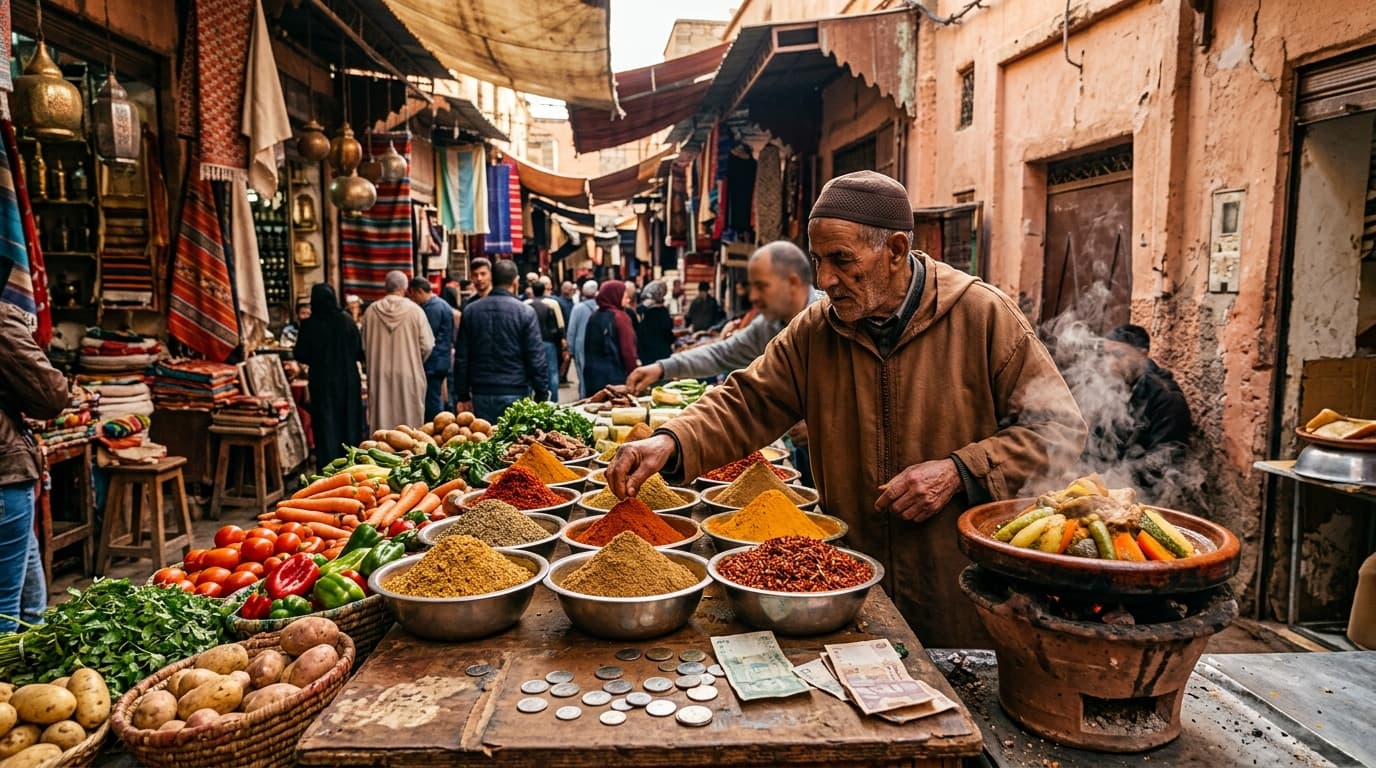
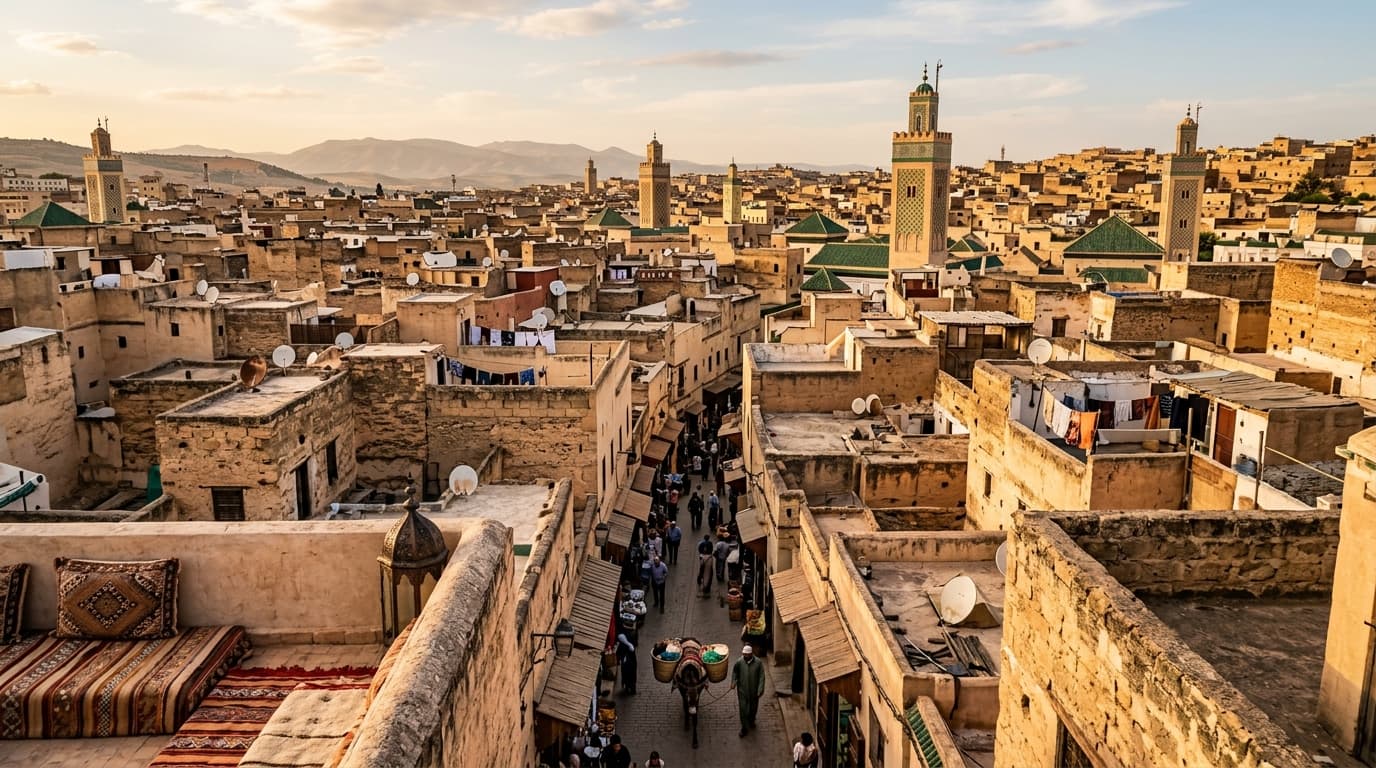
The traditional Moroccan souk is organised by craft — the spice sellers are in one lane, the leatherworkers in another, the carpet merchants in a third. This guild organisation dates back to the medieval period and still holds in Fes, where the souks are grouped around the Kairaouine Mosque by trade. In Marrakech, the souks north of Djemaa el-Fna have been partially reorganised for tourism but the basic structure remains: Souk Semmarine for textiles and leather, Souk el-Kebir for metalwork and carpets, Souk Cherratine for leatherwork, Souk des Teinturiers for the dyers. Knowing which souk you are walking into before you enter reduces the chance of wandering into a sales trap unprepared.
Souk Price Reality
3-5x
First quoted price vs fair value in tourist souks
55-65%
Target final price as percentage of first quote
20-30%
Commission a faux guide adds to your purchase
300-500 MAD
Fair price for a quality hanbel blanket, Chefchaouen
800-2,500 MAD
International carpet shipping to Europe
The Opening Gambit: What to Expect
Every experienced souk merchant has a finely calibrated opening technique. You will be greeted warmly, invited to look without obligation, offered tea, complimented on your taste, and presented with a first price that has been calculated specifically for someone who looks like you. The tea invitation is genuine hospitality, but it also functions as a social obligation — once you have sat down and accepted tea, the social pressure to buy something is real. You can decline tea politely. The first price quoted for anything in a tourist-facing souk in Marrakech or Fes will typically be three to five times the final fair price.
Bargaining: The Correct Approach
Effective bargaining in a Moroccan souk follows a predictable structure. Examine the item with genuine interest but without visible excitement. Ask the price. React with calm surprise rather than outrage. Make your first counter-offer at 30 to 40% of the asking price. Allow a back-and-forth to settle somewhere between 50 and 65% of the original price. The critical rule: never name a price you are not genuinely willing to pay. Once you have named a number, a handshake on that number is binding by the social norms of the souk. Walking away — genuinely walking away — is the most powerful bargaining tool available, and a merchant who lets you leave will often call you back with a sharply reduced price.
What to Buy — and What to Avoid
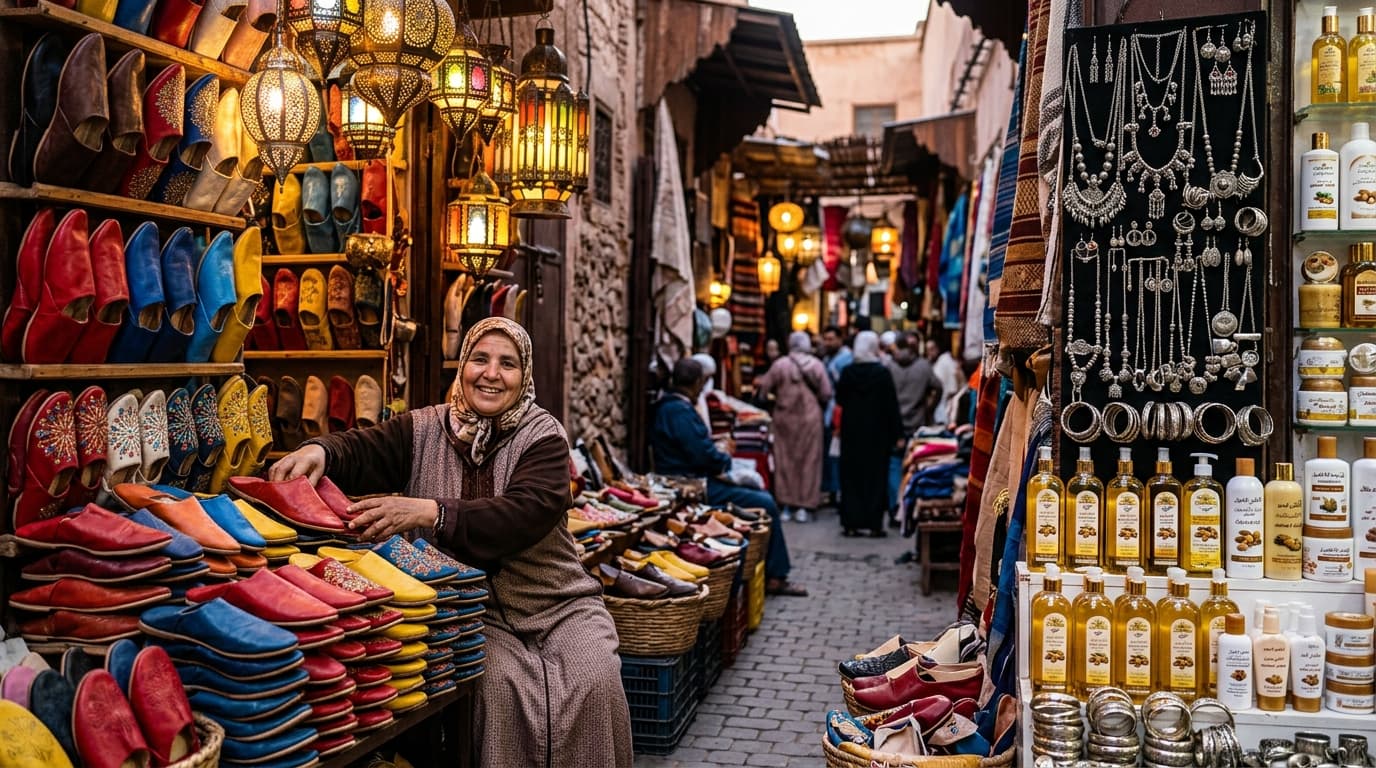
- Buy: Fes tannery leather bags and babouche slippers — check the leather is supple and the stitching is hand-finished
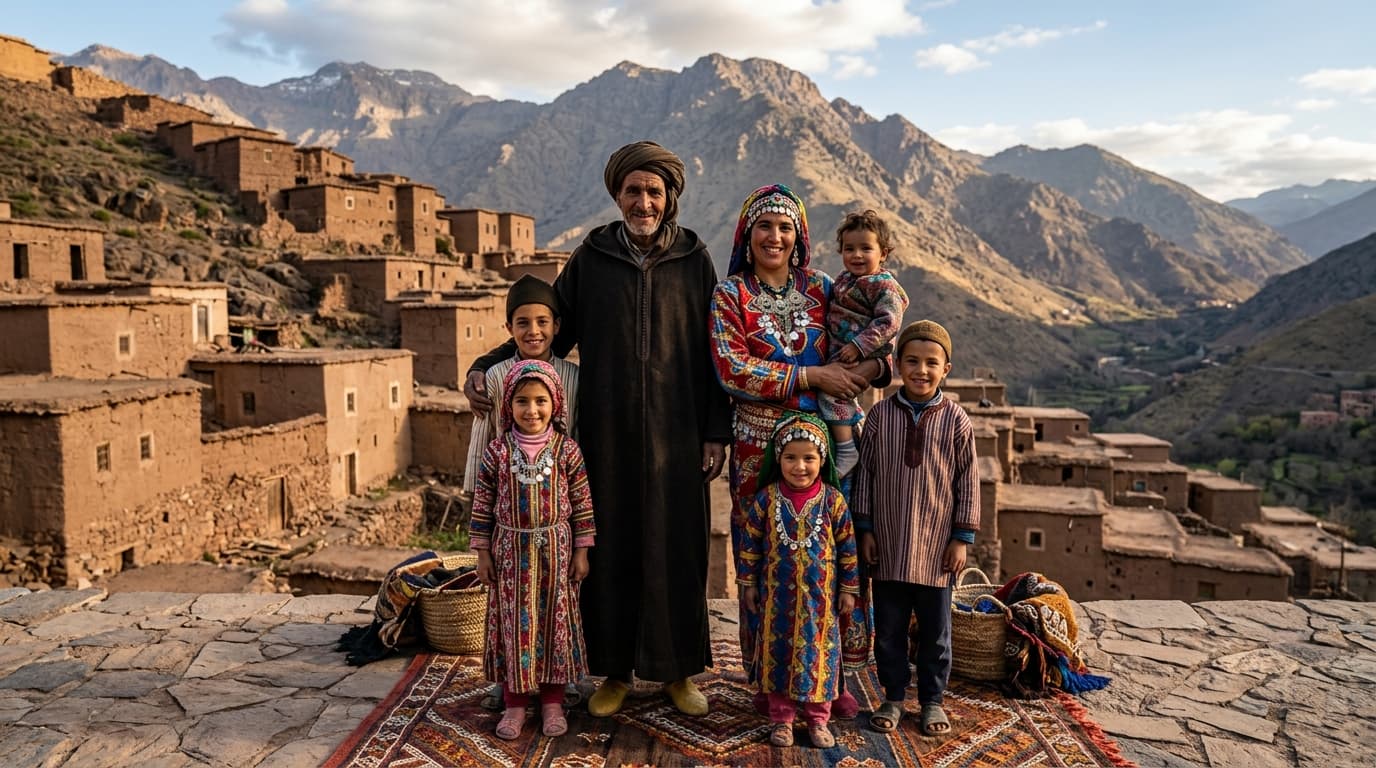
- Buy: Amazigh carpets from cooperatives with fixed prices — get a written receipt
- Buy: Cold-pressed argan oil and rose water from producing-region cooperatives
- Buy: Hand-painted ceramic tajines and bowls — ask specifically for lead-free glaze
- Buy: Punched tin lanterns and candle holders — authentic craft, packs flat
- Buy: Spices — cumin, saffron, ras el hanout — from souk merchants rather than supermarkets
- Avoid: Branded scarves labelled 'Moroccan' made in India or China
- Avoid: Cheap 'antique' jewellery with artificial patina made recently
- Avoid: Mass-produced carpets with factory-regular symmetric patterns
- Avoid: 'Liquid argan oil' in tourist shops at inflated prices without cooperative certification
My mistake was sitting down for tea. I had no intention of buying a carpet. An hour later I owned a six-foot Beni Ourain rug that I had agreed to ship home. I do not regret it — it is genuinely beautiful — but I wish I had walked in knowing what was about to happen.
What to Buy (and What Not To)
The best quality items in the Moroccan souk are leather goods (Fes tannery leather bags and slippers of genuine quality exist; avoid the mass-produced versions from China that have infiltrated the market), Amazigh carpets and textiles (buy from cooperatives with fixed prices rather than souk merchants), argan oil and rose water from cooperatives in producing regions, hand-painted ceramic tajines and serving dishes (check that the glaze is lead-free — quality producers specify this), and natural lanterns and candle holders made from punched tin. Avoid branded 'Moroccan' scarves made in India, cheap 'antique' jewellery made last week, and mass-produced 'Berber' carpets with factory-regular patterns.
Fixed Price Cooperatives: The Alternative
For travellers who find negotiation stressful or who want to ensure fair prices and authentic products, Morocco has a network of government-endorsed and independently run artisan cooperatives with fixed price tags and no haggling. The Ensemble Artisanal in Marrakech (near Bab Nkob) is the most accessible — a covered complex of workshops where you can watch artisans at work and buy directly from producers at set prices. COOP Argan in Essaouira and the Cooperative Tamounte near Ouarzazate sell genuine argan and saffron products at transparent prices. These cooperatives are not cheap — fixed prices reflect real production costs — but they are honest, and the products are authentic.
The Faux Guide Warning
The man who approaches you at the souk entrance and offers a free tour will take you exclusively to shops where he earns a 20 to 30% commission on your purchase — silently added to the price you pay. A polite, unrepeated decline while continuing to walk is all that is needed. If you want a guide, hire one officially through the bureau near Bab Bou Jeloud in Fes or the tourist office in Marrakech. Official guides charge 450 to 600 dirhams for a full day.
Avoiding Common Tourist Traps
The 'free guide' who appears at the entrance to the souk and offers to show you around without charge will, without exception, take you exclusively to shops where he receives a commission on your purchases. The commission — typically 20 to 30% of the sale price — is added silently to the price you pay. Decline politely and navigate independently or hire an official guide from the bureau. The 'closed today' approach — a man who tells you the souk or museum you want to visit is closed and offers to take you somewhere better — is a variant of the same trap. Check opening times independently before you go and do not deviate based on information given by strangers outside tourist sites.
Shipping Larger Purchases Home
For significant carpet or antique purchases, international shipping is reliable and often cost-effective. Reputable carpet merchants in Marrakech and Fes offer shipping services at rates of 800 to 2,500 dirhams to Europe depending on size and weight, and a good merchant will provide documentation of the item, a receipt with the agreed price and a clear timeline. Get the merchant's business card and a written receipt before agreeing to ship anything. Customs rules allow bringing back two or three small carpets duty-free to EU countries if declared as personal use items. For large quantities or high-value antiques, consult the Moroccan Ministry of Culture's export restrictions — genuine pre-1930 antiques require an export certificate.