Morocco is a safe country for tourists — the data, the experience of millions of annual visitors and the on-the-ground reality all support that. But 'safe' is not the same as 'without friction.' Here is an honest account of what to expect.
The Overall Safety Reality
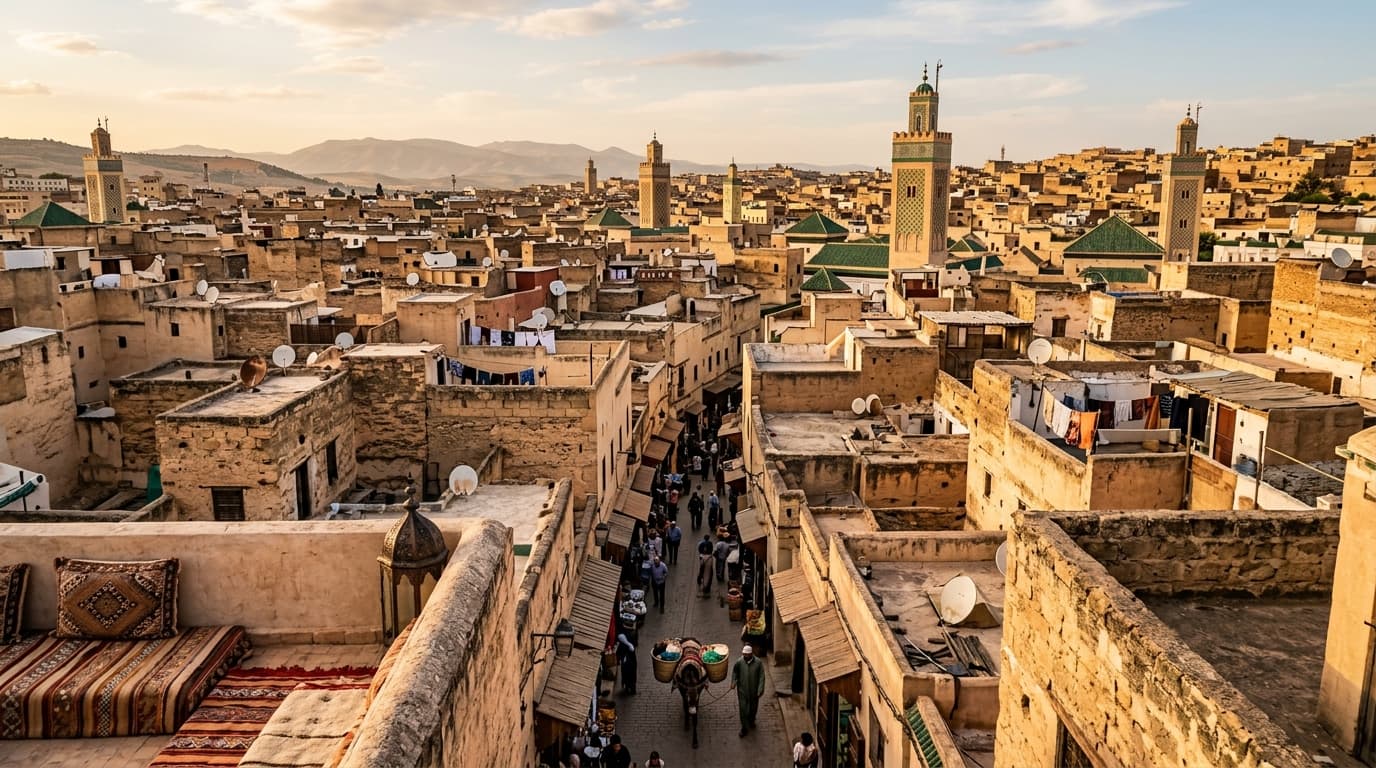
Morocco receives approximately 15 million international tourists per year and has one of the lowest rates of violent crime against tourists of any destination in Africa or the Mediterranean. The UK Foreign Office, US State Department and French Ministry of Foreign Affairs all rate Morocco as standard travel risk (equivalent to many European countries) outside the Western Sahara border region. The safety concerns that exist in Morocco are almost entirely in the category of petty scams, unwanted attention and navigational confusion rather than physical danger. Being sensible, informed and confident reduces the friction of Moroccan travel dramatically.
Morocco Tourism at Scale
15 million
International tourists per year
3rd
Most visited country in Africa
Standard
UK/US/French risk rating
90 MAD
Cost of a licensed half-day guide in medinas
4 MAD
Cost of a 1.5L bottled water
The Faux Guide Problem
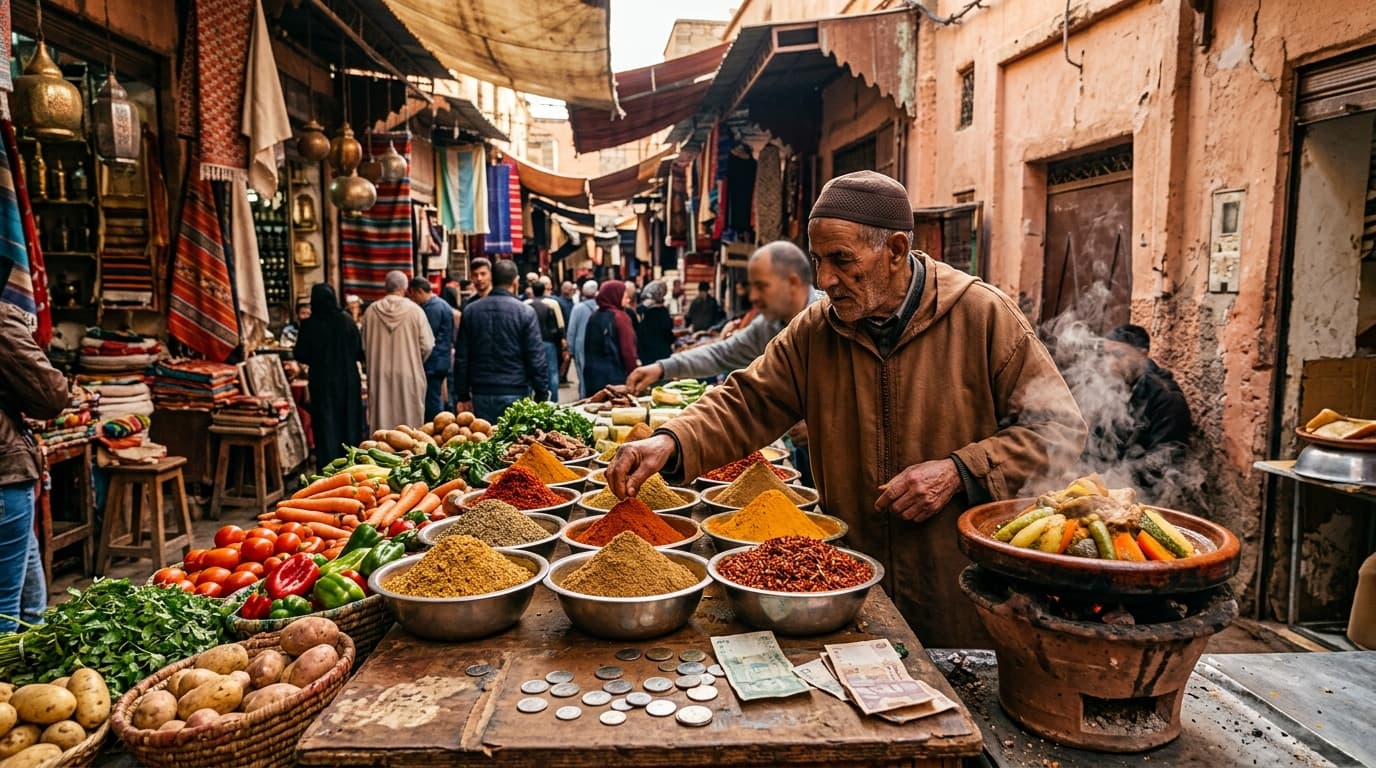
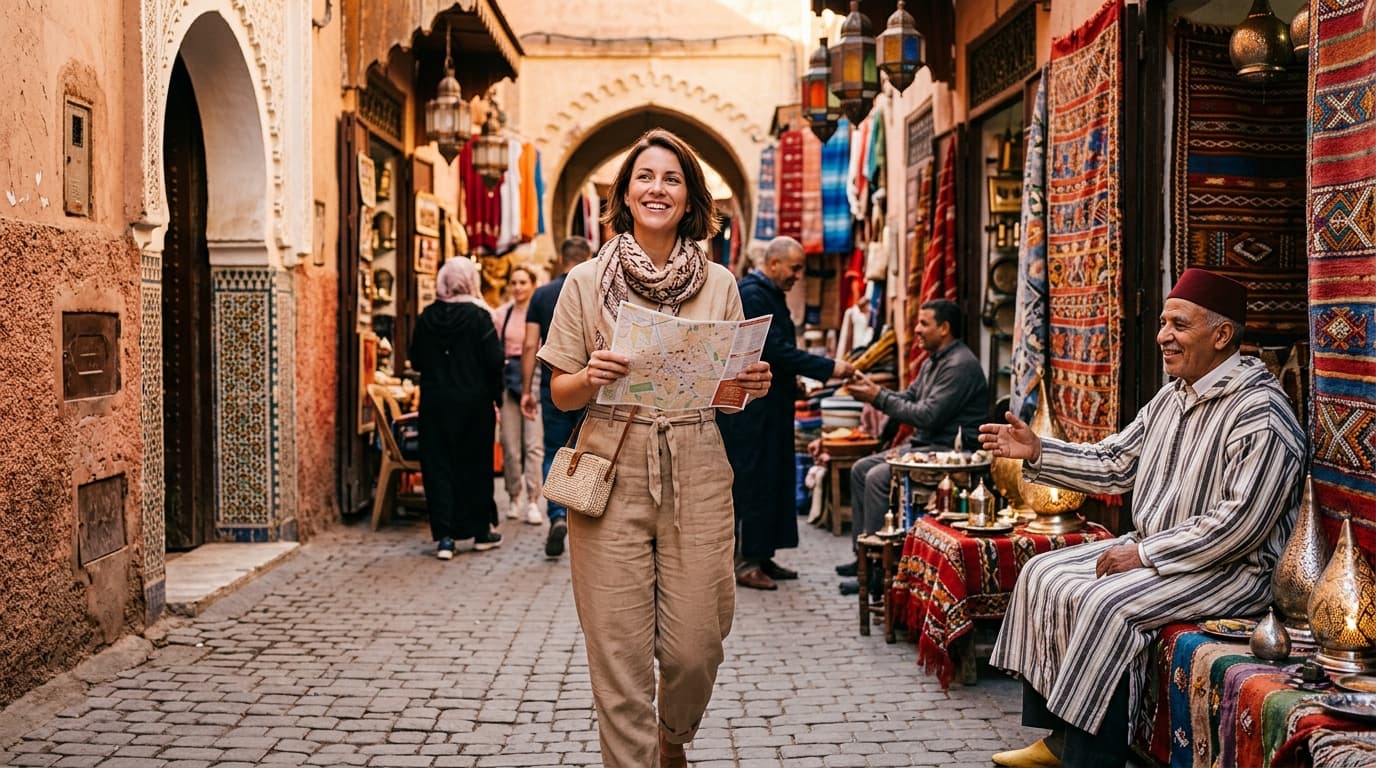
The most persistent friction in tourist Morocco is the faux guide — an unofficial 'helper' who approaches you near tourist sites, medina entrances or transport hubs and offers to show you around, claiming the entrance is around the corner or that the thing you want to see is 'just this way.' The intent is always to take you to shops where a commission will be paid. The system is not dangerous, but it is exhausting if you engage with it repeatedly. The correct response is a firm, polite, unrepeated 'no thank you' and continuing to walk. Making eye contact and engaging conversationally is interpreted as openness; a direct decline while continuing to move is understood. The faux guide problem is heaviest in Marrakech and Fez and almost non-existent in smaller towns.
Common Morocco Scams and How to Avoid Them
- The 'free guide' who appears at medina entrances takes you exclusively to commission shops — decline firmly and keep moving
- The 'museum is closed today' approach diverts you from your destination to a carpet seller — verify opening times independently beforehand
- Taxi meters that are 'broken' — agree the price before entering any petit taxi
- Phone snatching in crowded medina areas — keep your phone in a zipped inner pocket, not in your hand
- Henna artists who apply henna without discussing price — it will be demanded afterward at 150–300 dirhams
- Souk guides who approach at the entrance claiming to be licensed — official guides are hired from the bureau office only
For Women Travelling Solo or in Groups
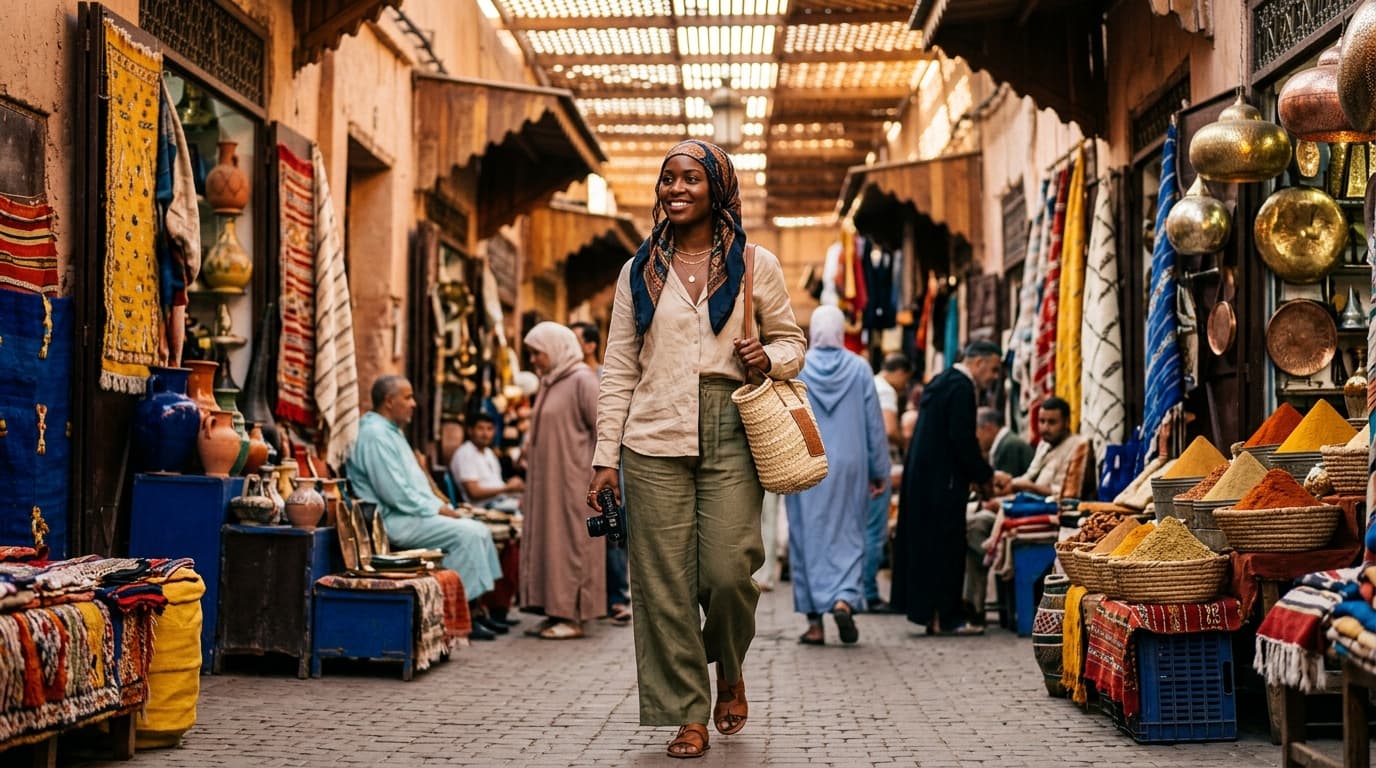
Women travelling in Morocco — whether solo or in groups — encounter a level of verbal attention on the streets that ranges from complimentary to persistently unwelcome depending on the area and time of day. This is a real aspect of travel in Morocco, particularly for women in tourist areas. Strategies that reduce unwanted attention: dressing modestly (covered shoulders and knees in medinas), walking with purpose and direction rather than appearing lost, avoiding prolonged eye contact with strangers who approach, and being in the company of others in the evening. The level of attention in Casablanca and Rabat, where street culture is closer to southern Europe, is significantly lower than in Marrakech's tourist areas.
I travelled solo for two weeks in Morocco, mostly in the medinas. The key was walking like I knew where I was going, even when I did not. When I stopped and looked confused, every kind of attention found me immediately. When I moved with purpose, I was left alone.
Health and Food Safety
Stomach upset is the most common health issue for Morocco visitors. Stick to food cooked fresh in front of you, avoid uncooked vegetables or salads in tourist-facing restaurants with uncertain kitchen standards, and drink bottled water. The tap water in Morocco's cities is technically treated but its taste and mineral content varies; bottled water (4 dirhams for 1.5 litres) is the sensible choice. Pharmacies in Morocco are well-stocked and pharmacists speak French and increasingly English — they are a reliable first stop for minor medical issues. The major cities have international-standard private clinics; travel insurance that covers medical evacuation is strongly recommended for trekking in the Atlas or visiting remote southern areas.
Road Safety
Road accident rates in Morocco are higher than European averages — a mix of modern vehicles, overloaded trucks, donkey carts and mopeds creates unpredictable conditions. Avoid driving mountain roads at night. The N9 Tizi n'Tichka pass requires particular caution in wet or icy conditions. For the Atlas and southern desert roads, booking a private driver through a reputable operator is both safer and more practical than self-driving.
Practical Safety Tips
Keep a photocopy of your passport separately from the original (Moroccan police can ask for ID). Carry a small amount of cash in an accessible pocket and keep the bulk of your cash and cards in a money belt or zipped inner pocket in medinas. Keep your phone in a secure pocket rather than a hand — phone snatching from tourists' hands does occur in crowded medina areas. Use licensed taxis (petit taxis have meters; agree a price before getting in if the meter is 'broken') and book accommodation in advance rather than accepting directions from strangers. Register your trip with your government's travel advisory service if visiting remote areas.