Fes el-Bali is the largest living medieval city on earth. It is also genuinely disorienting, occasionally frustrating, and utterly unlike anywhere else. Here is how to navigate it, what not to miss, and how long you really need.
Why Fes Is Unlike Any Other Moroccan City
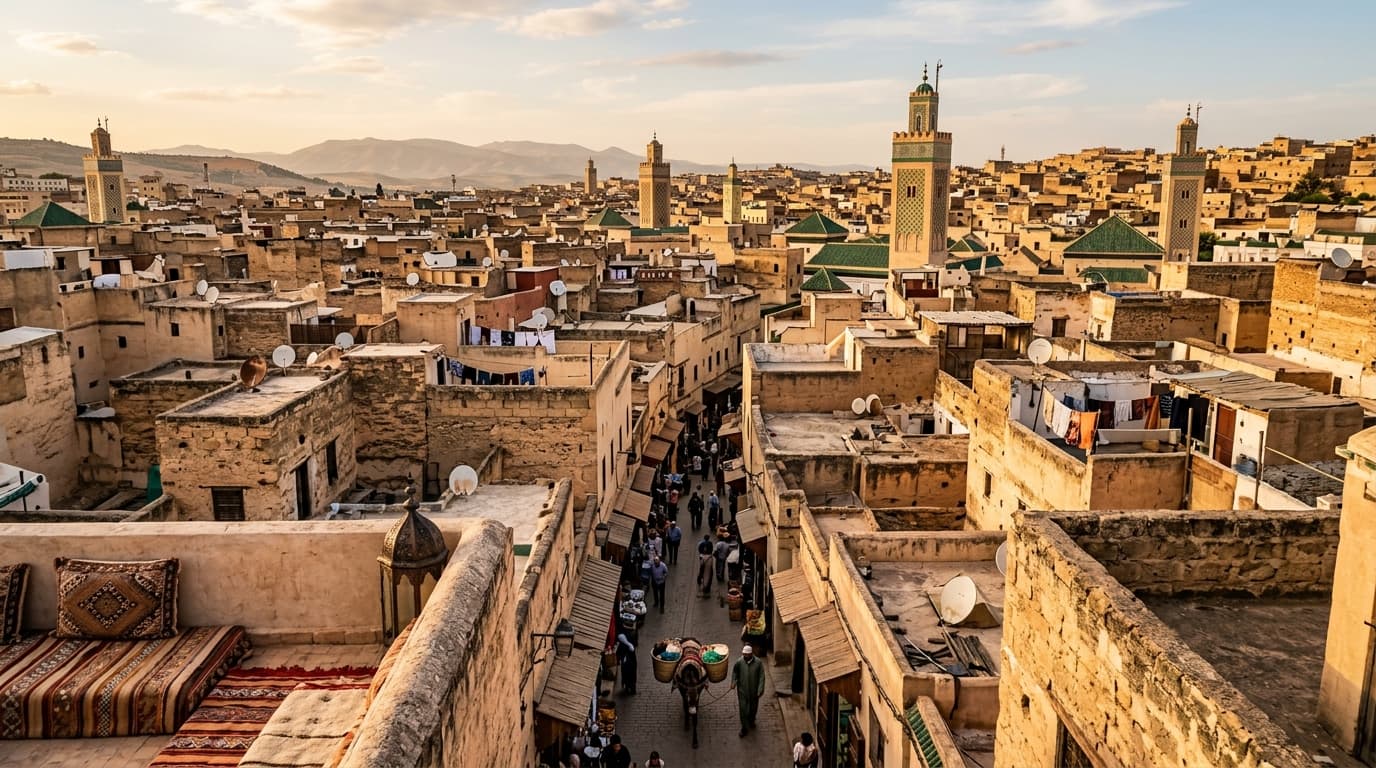
Fes el-Bali — the old city — was founded in 789 AD and has been continuously inhabited ever since. It contains approximately 9,000 narrow lanes and alleys within its walls, the largest car-free urban zone in the world, and a population of around 150,000 people who live and work here exactly as their grandparents did. There are no cars, no electric scooters, and no traffic lights. Goods move by donkey. The sounds are hammering from the coppersmith souks, the call to prayer from 360 mosques, and the hum of weaving looms. Arriving from the modern Ville Nouvelle feels like crossing a time border that no other city quite replicates.
Fes el-Bali: Key Facts
789 AD
Year Fes el-Bali was founded
9,000
Lanes and alleys within the medina walls
150,000
Population living inside the medina
360
Mosques within Fes el-Bali
70 MAD
Entry to Medersa Bou Inania
450–600 MAD
Licensed guide for a full day
Orientation: The Three Medinas
Fes consists of three distinct historic quarters. Fes el-Bali is the ancient medina, founded in the 9th century and divided by the Oued Fes river into the Andalusian quarter (established by refugees from Cordoba) and the Kairouani quarter (established by settlers from Kairouan in Tunisia). Fes el-Jdid — 'New Fes' — was added in 1276 by the Merinid dynasty and contains the Royal Palace and the mellah (Jewish quarter). The colonial Ville Nouvelle was built by the French after 1912. Most travellers spend nearly all their time in Fes el-Bali; the other quarters deserve at least a half-day each.
The Tanneries: What to Know Before You Go
The Chouara tanneries, visible from the leather merchants' terraces near Sidi Moussa square, are one of the most photographed sights in Morocco. The dyeing pits — filled with natural pigments including saffron yellow, henna brown, indigo blue and poppy red — operate exactly as they have since the 11th century. The smell is confrontational: a combination of pigeon dung (used to soften hides), ammonia and dye chemicals. Leather shops around the tanneries offer free terrace access in exchange for a passive sales pitch; you are not obliged to buy anything. Go in the morning, when workers are active in the pits.
I have guided the Fes medina for twelve years and I still find routes I have not walked before. The city is genuinely inexhaustible. But the first-timer who tries to navigate it alone on day one will lose two hours and arrive frustrated. Take the official guide for the first day. On day two, go alone and it will make sense.
The Medersa Bou Inania and Religious Architecture
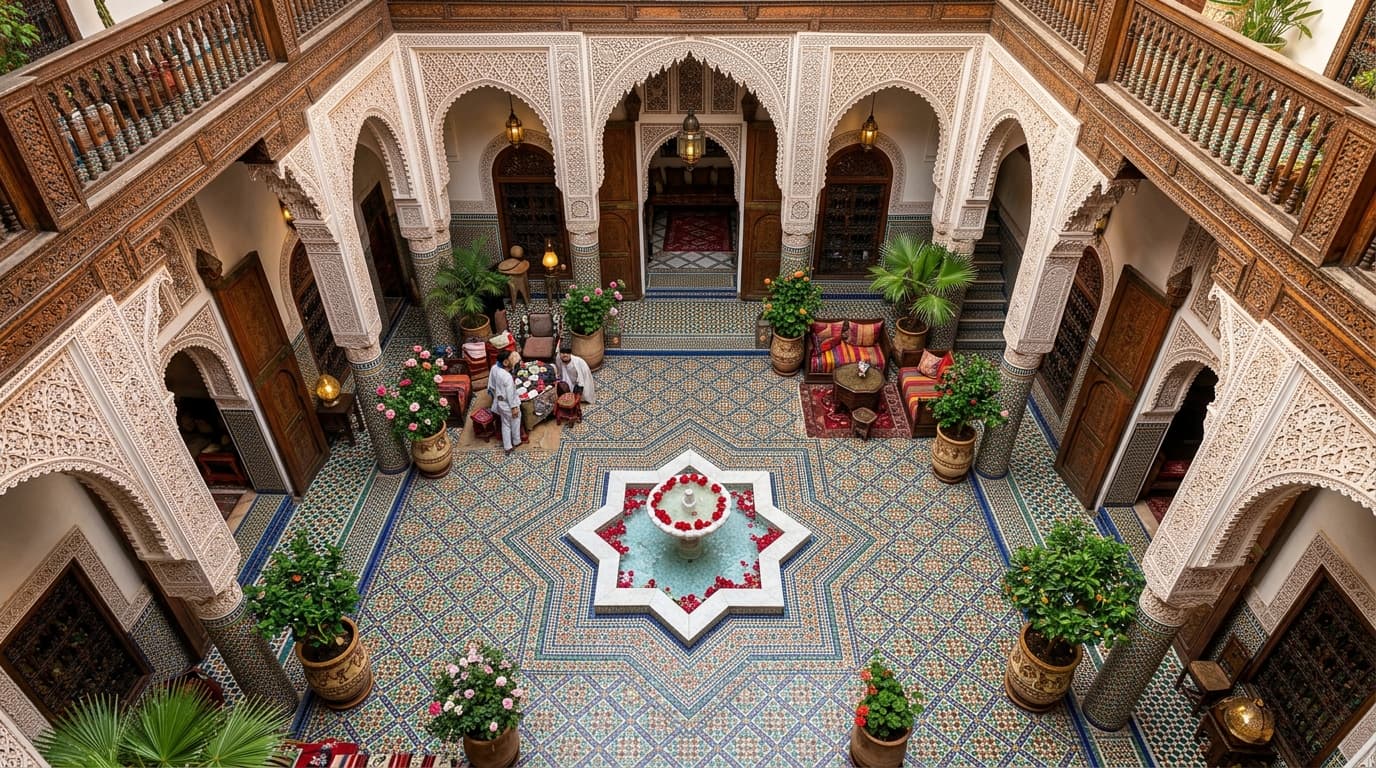
The Medersa Bou Inania, a 14th-century theological college built by the Merinid sultan Abu Inan Faris, is the finest piece of Islamic architecture in Morocco open to non-Muslim visitors. The ground floor courtyard — stacked with carved cedarwood, intricate zellij tilework and inscribed Kufic calligraphy — took 26 years to complete. Admission is 70 dirhams. Nearby, the Medersa Attarine and the Zaouia of Moulay Idriss II (which non-Muslims can view from a designated threshold) round out the religious architecture quarter. Allow two hours minimum for this area.
The Fes Medina: What Not to Miss
- Chouara tanneries — visit in the morning when workers are in the dye pits; access via leather shop terraces, no purchase required
- Medersa Bou Inania — finest Islamic architecture open to non-Muslims in Morocco; 70 MAD entry
- Rcif square — the geographic centre of the medina; the reference point for all navigation
- Rue Serrajine — the best street for genuine Fassi food at non-tourist prices
- Andalusian quarter — quieter and more residential than the tourist-facing side; go on day two
- Merenid Tombs on the hillside above the city — the best panoramic view of Fes el-Bali, especially at sunset
Getting Lost Productively
Every guidebook tells you to wander and get lost in Fes. What they do not tell you is how to recover. The medina has a few reliable anchoring points: Rcif square is the geographic centre, easily found by asking any local. Bab Bou Jeloud, the ornate blue gate, is the western entry point and the place from which most riads give directions. Talaa Kebira — the main commercial artery running downhill from Bab Bou Jeloud — passes most of the major sites. Do not follow anyone who approaches you on the street offering to show you the tanneries; certified guides are available through the official guide bureau near Bab Bou Jeloud at fixed government rates.
The Unofficial Guide Problem
Fes has more unofficial 'guides' than any other city in Morocco. Any person who approaches you outside Bab Bou Jeloud offering to show you the tanneries for free will take you exclusively to shops where he earns commission — which is added to your purchase price. Always hire through the official guide bureau at fixed rates (450–600 MAD per day). It is one of the most worthwhile expenses in Morocco.
Food in Fes: What to Eat and Where
Fassi cuisine is considered the most refined in Morocco. The city's signature dish is pastilla — a layered pie of pigeon (or chicken), egg, onion, almonds and cinnamon encased in paper-thin warka pastry, dusted with icing sugar and cinnamon. Other essentials: trid (a layered crepe dish with chicken and lentils), rfissa (shredded msemen bread in a fenugreek and chicken broth), and the various lamb preparations sold at the mechoui stalls near Rcif. For dinner, restaurants on Rue Serrajine near the Attarine souk serve proper Fassi food at non-tourist prices.
How Many Days to Spend in Fes
Two days is the minimum to cover the highlights without feeling rushed; three days allows you to breathe. Day two can take in the Andalusian quarter — quieter, more residential, and where local Fassis actually live and shop. Day three can include a half-day trip to the Merenid Tombs on the hill above the medina — the view of Fes el-Bali from here, especially at sunset, is the most comprehensive perspective on the city available from any point.
Practical Information
The nearest airport is Fez-Saiss (FEZ), 15 km from the city, served by Ryanair, easyJet and Royal Air Maroc. Trains from Casablanca take 3.5 hours and arrive at the Ville Nouvelle station; from there, a petit taxi to the medina costs 25–35 dirhams. Accommodation within Fes el-Bali ranges from basic guesthouses at 150 dirhams to beautifully restored riads at 1,500 dirhams. A licensed guide for a full day costs around 450–600 dirhams through the official bureau — it is worth the investment for at least one day to unlock the context that solo wandering cannot.