The Amazigh people — known to the world as Berbers — are the indigenous inhabitants of North Africa and the cultural bedrock beneath Morocco's Arab and Islamic identity. Understanding their history and traditions transforms how you experience the country.
Who Are the Amazigh?
The Amazigh — the name means 'free people' in Tamazight — are the indigenous Berber people of North Africa, predating the Arab arrival in the 7th century by thousands of years. In Morocco, they constitute the majority of the population by ancestry: genetic studies suggest that 60 to 80% of Moroccans have significant Amazigh heritage, regardless of the language they speak at home. After centuries in which Tamazight was excluded from official Moroccan institutions, a 2011 constitutional change formally recognised it as a national language alongside Arabic. Three main Berber dialects are spoken in Morocco: Tarifit in the Rif Mountains, Tamazight in the Middle Atlas, and Tachelhit in the High Atlas and Souss valley.
The Amazigh in Morocco: Key Figures
60-80%
Moroccans with Amazigh ancestry
3
Main Tamazight dialects in Morocco
2011
Year Tamazight recognised as official language
315,000 BCE
Age of Jebel Irhoud Homo sapiens remains
3,000+
Years of documented Amazigh cultural presence
The Atlas and Anti-Atlas Heartlands
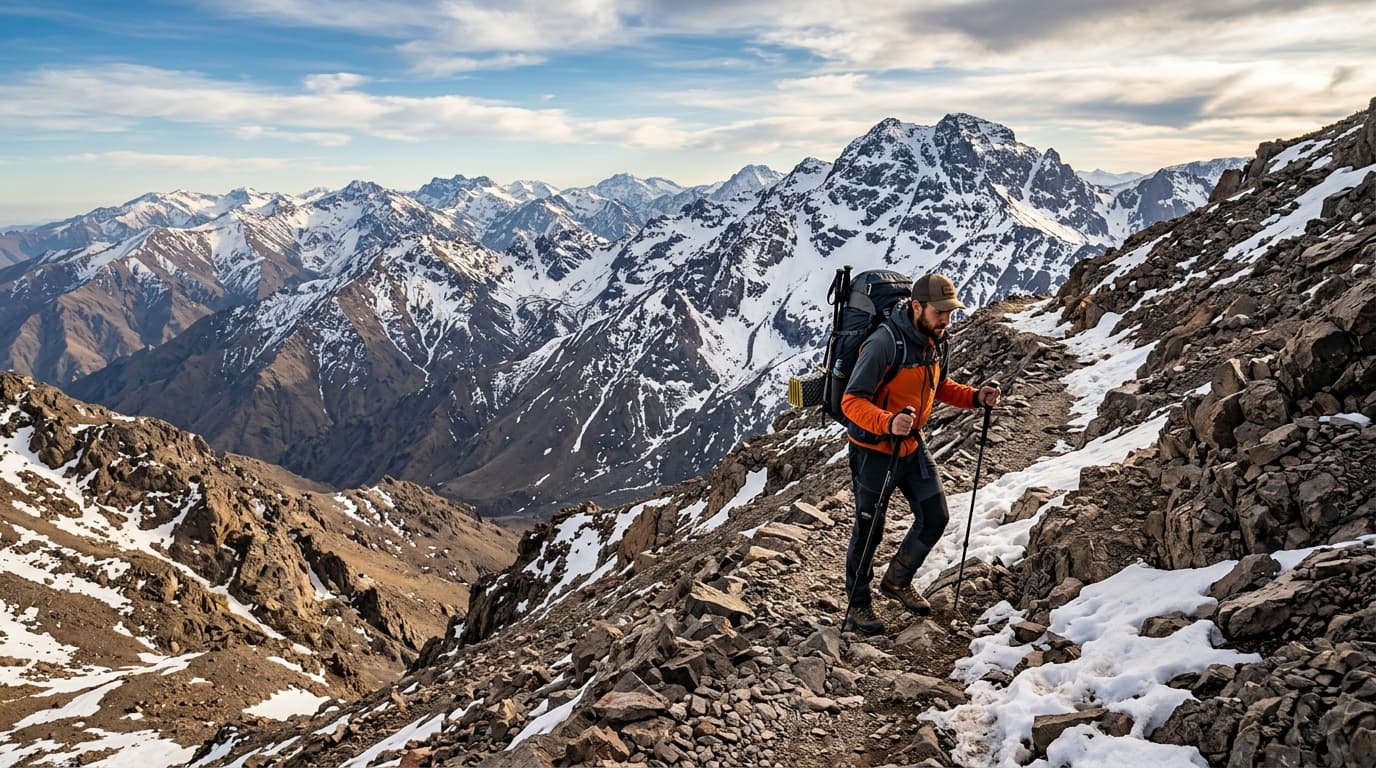
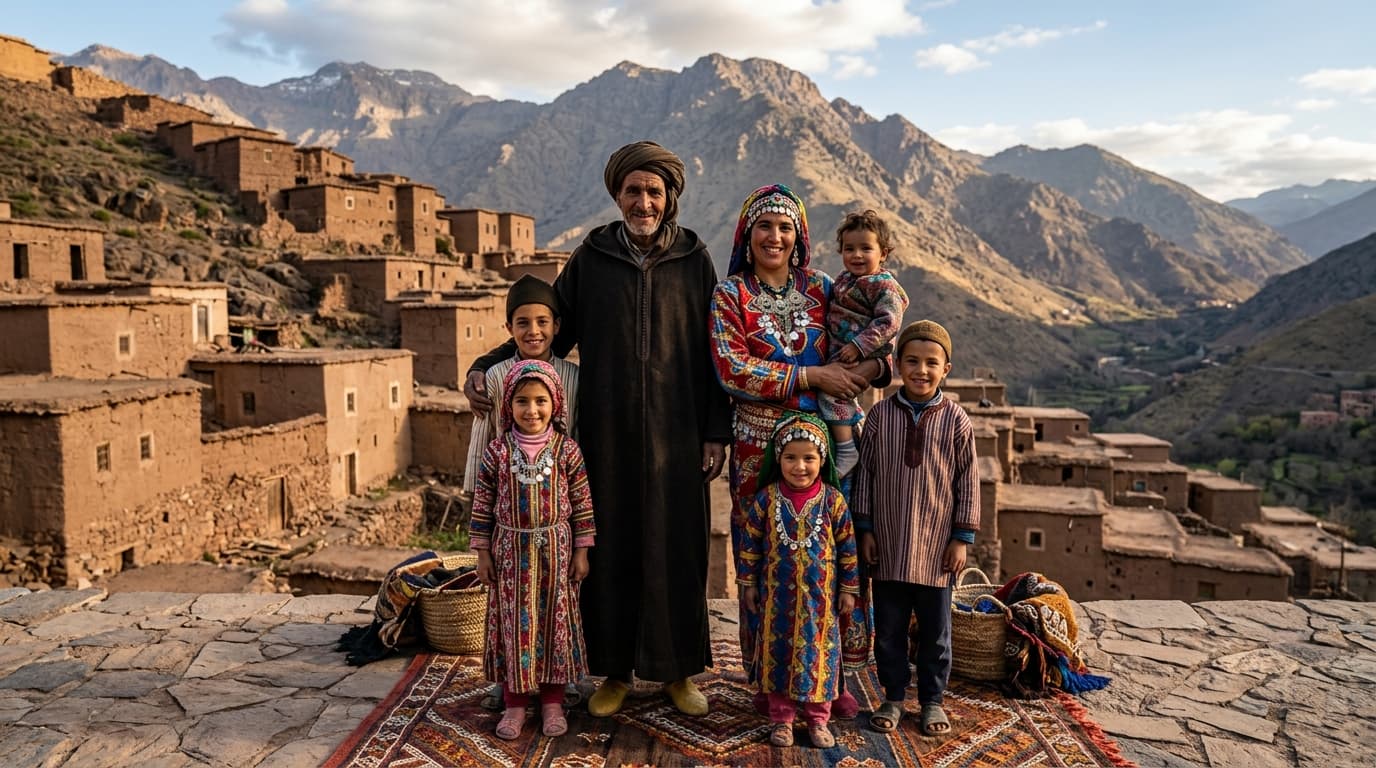
The Amazigh presence is most visible and most intact in the mountain communities of the High Atlas, Anti-Atlas and Rif ranges. Villages like Ait Benhaddou, Ait Bou Guemmez and the scattered ksour of the Draa Valley were built by Amazigh communities and reflect a vernacular architecture — rammed earth (pise) construction, geometric carved plasterwork, flat roofs with ornamental parapets — that has been continuously refined over centuries. In these communities, Tamazight is the primary language of daily life. Traditions of communal labour — the timizar system — remain active in remote valleys.
The Tifinagh Script
Tamazight is written in the Tifinagh script, one of the oldest writing systems in the world, with roots in the Libyan alphabet of antiquity. The geometric symbols — circles, crosses, triangles and lines — appear on Amazigh jewellery, textiles and architecture as both decorative and communicative elements. Since 2003, the official Moroccan Royal Institute of Amazigh Culture (IRCAM) has standardised a modern Tifinagh alphabet used in school textbooks and public signage. Visitors encounter Tifinagh on road signs alongside Arabic throughout the Atlas region — a relatively recent and politically significant change.
The guide from Ait Bou Guemmez valley showed me his grandmother's carpet. Every diamond pattern was a woman in the family — each one placed where she sat in the household. It was a family tree woven in wool. I had not expected to be moved by a carpet.
Food Traditions and Hospitality
Amazigh cuisine differs noticeably from the Arab-influenced cooking of the imperial cities. The staple grain in mountain communities is barley rather than wheat — barley flour is used to make aghroum, a dense flatbread cooked on an open fire. Tagines in Amazigh communities tend to use fewer spices than the Marrakchi versions, letting the quality of the meat and vegetables speak directly. The tradition of hospitality — tiwizi — obliges every Amazigh household to feed a guest, and the ritual of offering tea, bread and olive oil upon arrival is universal.
Key Amazigh Cultural Traditions to Know
- Tifinagh — the ancient geometric script still used on road signs and textiles
- Tiwizi — the communal hospitality obligation to feed and shelter any guest
- Timizar — collective village labour for shared tasks such as irrigation and harvest
- Ahwach and ahouach — communal circle dances performed at weddings and moussems
- Imilchil Marriage Festival — September moussem where tribes meet and negotiate marriages
- Middle Atlas carpet weaving — thick pile technique with diamond and triangle motifs
- Amazigh silver jewellery — heavy bracelets and fibula brooches with coral and carnelian
- Aghroum — barley flatbread baked on an open fire, the Atlas mountain staple
- Tachelhit — the Berber dialect of the High Atlas and Souss, spoken by 8 million people
Music, Dance and Festivals
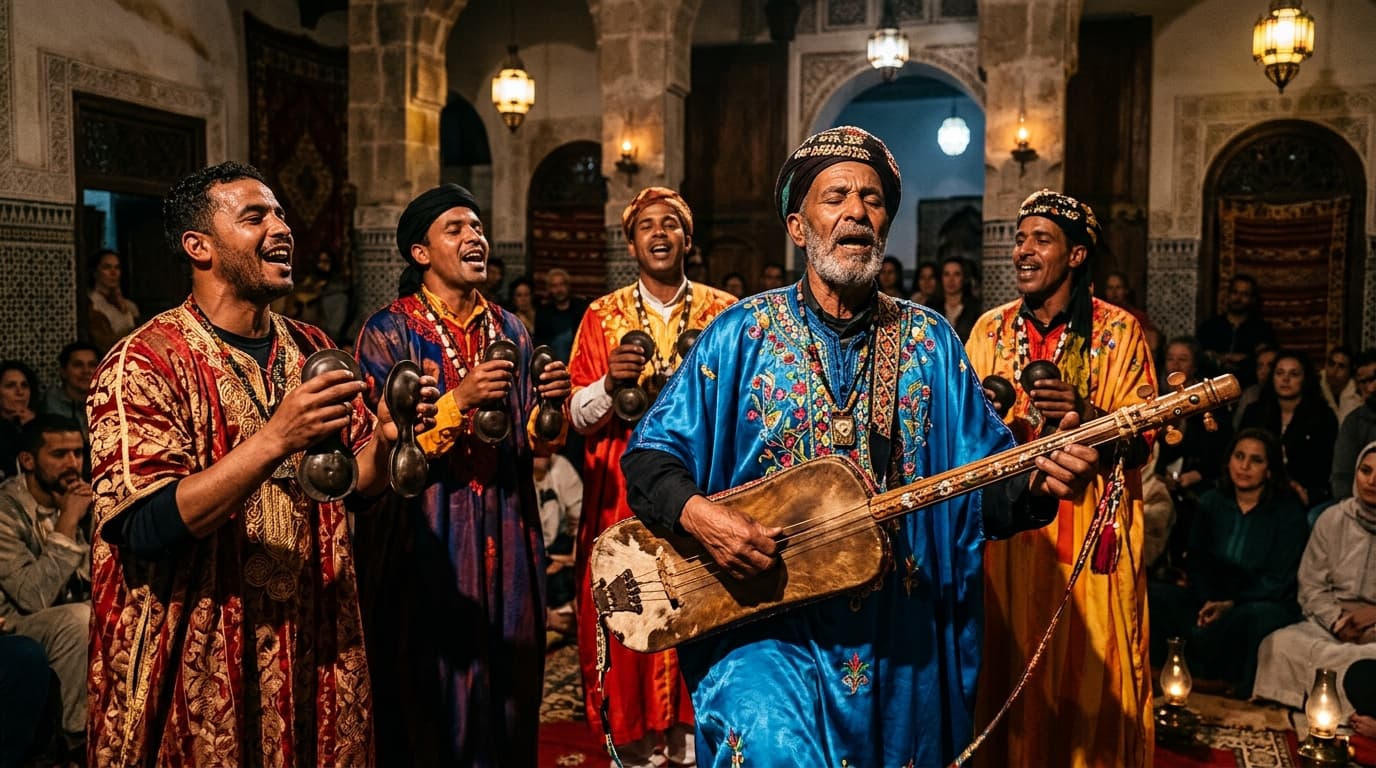
The ahwach and ahouach are communal dances performed at weddings and moussems (religious festivals) in the Atlas — large circles of men and women moving in synchronised patterns accompanied by bendir drums and melodic call-and-response singing. The Imilchil Marriage Festival, held in September in the High Atlas province of Tinghir, is Morocco's most famous Amazigh moussem: young men and women from different tribes traditionally meet and negotiate marriages, accompanied by three days of music, craft markets and livestock trading.
Craft Traditions
Amazigh craft production is among the most distinctive in Morocco. The women of the Middle Atlas tribes produce woven carpets using a thick pile technique — the colours are bold, the geometric patterns carry symbolic meaning (diamonds represent women, triangles represent protection against the evil eye), and no two are identical. Berber silver jewellery — heavy bracelets, fibula brooches and elaborate headdresses set with coral, amber and carnelian — is sold in the souks of Tiznit and the Anti-Atlas market towns. Cooperatives in Ouarzazate, Taliouine and Tazenakht sell authentic carpet and textile work directly.
Buying Amazigh Crafts Responsibly
A carpet bought from a cooperative in an Atlas village — where the weaver receives the full sale price — has a fundamentally different impact from the same carpet bought in a Marrakech tourist souk where a merchant takes 50 to 70% of the sale price. Ask your guide about cooperatives in the areas you visit. The Ensemble Artisanal in Ouarzazate and the Cooperative Tissage in Ait Bou Guemmez both sell directly from weavers at transparent prices.
Cultural Respect for Visitors
Visiting Amazigh communities requires particular consideration. Photography of people — especially women — without explicit permission is deeply unwelcome and should never be done. If you are visiting a village as part of a guided tour, confirm that the family receives a fair contribution. The best visits are arranged through local guides who are themselves from the region and maintain genuine relationships with the families involved. Buying directly from a craft cooperative in the village, rather than buying a 'Berber carpet' in Marrakech, is the most direct form of economic respect available to visitors.