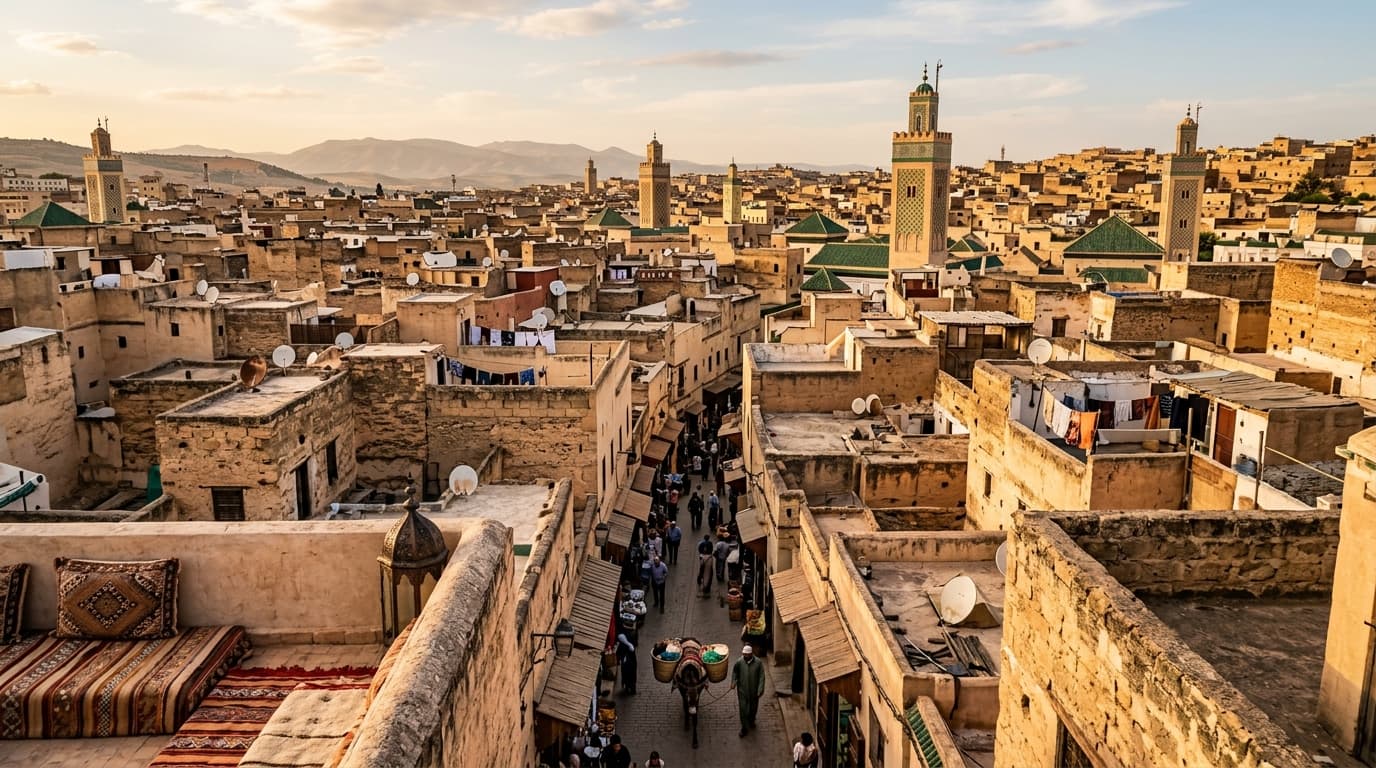
Rabat is quieter than Marrakech, more manageable than Fes, and contains some of the most significant historical sites in Morocco — starting with the Hassan Tower and ending at the Roman ruins of Chellah.
The Capital That Tourists Skip — and Shouldn't
Rabat does not appear on most Morocco itineraries. Travellers rushing between Casablanca, Fes, and Marrakech pass through on the train and see a modern administrative city from the window. That impression is not entirely wrong — Rabat is where government ministries and embassies sit, where Moroccan professionals live in apartment blocks with reliable electricity and functional pavements. But inside that modern framework, the city contains an Almohad medina on a river cliff, an unfinished 12th-century minaret that was meant to be the tallest in the world, a necropolis where Roman and Marinid ruins share the same hillside, and the best-preserved medina gateway in North Africa. It is a city that rewards the people who stay.
The Hassan Tower and Mohammed V Mausoleum
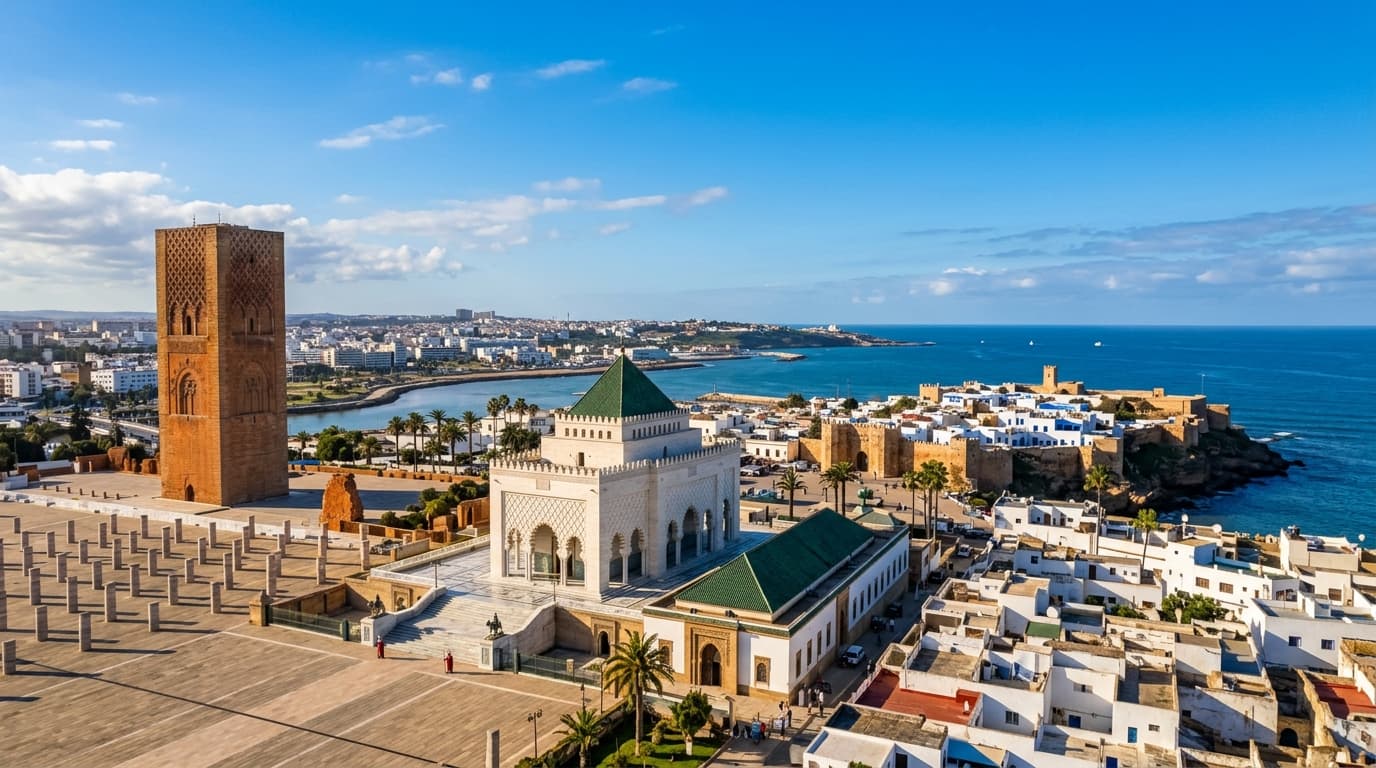
The Hassan Tower is the most recognisable structure in Rabat — a 44-metre sandstone minaret rising from a plateau of broken columns, all that remains of what was intended in the 12th century to be the largest mosque in the world. The Almohad sultan Yacoub al-Mansour ordered it in 1195; he died in 1199 and construction stopped at roughly half its intended height of 80 metres. The 200 columns of the mosque's prayer hall were never completed either, and they stand across the esplanade in silent rows, eroded to different heights by eight centuries of Atlantic wind. Beside the tower, the Mohammed V Mausoleum was built in 1971 to house the tomb of Morocco's independence-era king. It is the only site in Morocco where visitors regularly witness the ceremonial changing of the royal guard.
Rabat by Numbers
44 m
Current height of the Hassan Tower
80 m
Planned height before construction stopped in 1199
1150
Approximate year the Kasbah of the Udayas was founded
45 min
High-speed train journey from Casablanca
95 MAD
Standard second-class train fare from Casablanca
580,000
City population (greater metro area around 1.8 million)
The Kasbah of the Udayas: The Best Viewpoint in Morocco
The Kasbah of the Udayas stands on a promontory above the point where the Bouregreg River meets the Atlantic. The Almohads built it in the 12th century as a fortified garrison; the Andalusians who arrived from Spain in the 17th century turned it into one of the most refined small medinas in North Africa, planting a formal Andalusian garden and covering the narrow streets in blue-and-white lime wash that predates Chefchaouen's famous palette by centuries. The platform at the northern tip of the kasbah looks out across the river mouth to the town of Sale on the far bank and out to the open Atlantic beyond. At dusk, with the light coming in low from the west, this is as good a view as Morocco offers.
Chellah: Where Rome and the Marinids Share a Hillside
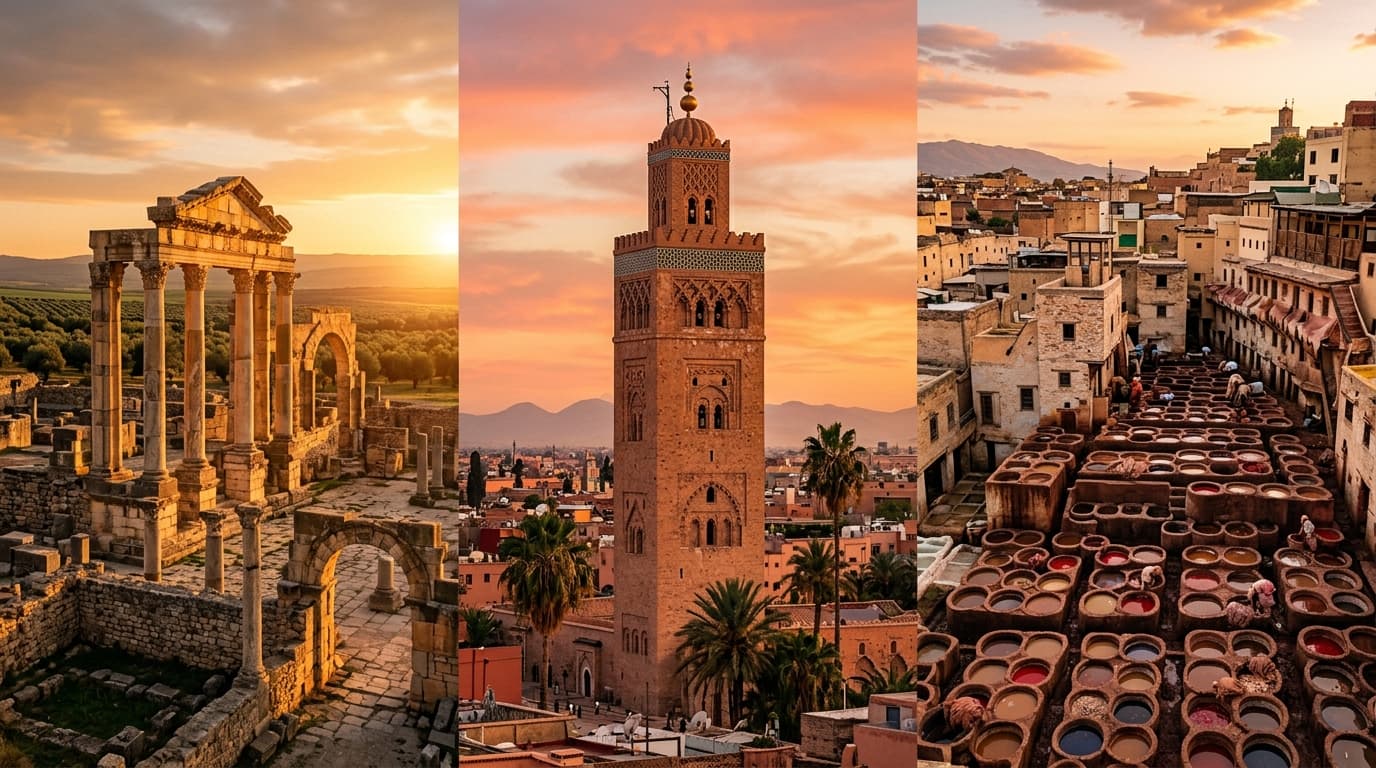
Chellah, a 20-minute walk south of the medina, is the most layered site in Morocco. The Romans built a city here — Sala Colonia — in the 1st century AD. When Rome withdrew, the site fell into disuse. The Marinid sultans of the 13th and 14th centuries built a necropolis on the Roman foundations, constructing mosques, minarets, and royal tombs directly over the forum and baths. Today the Marinid minaret is home to a colony of white storks, who nest on the top year-round. Walking through Chellah means crossing Roman mosaic floors, reading Marinid carved stucco, and looking up to watch storks circle above both civilisations. The entrance fee is 70 MAD. Allow at least 90 minutes.
We spent two full days in Rabat and still did not get to everything. The Chellah was completely empty when we arrived — just us and about forty storks. I could not believe more people were not there.
Getting Around Rabat
- Tram Line 1 runs from the ONCF train station through the city centre to the medina and beyond — useful, cheap, and air-conditioned
- Tram Line 2 extends across the Bouregreg bridge to Sale, making it easy to explore the sister city without a taxi
- The medina and kasbah are walkable from each other; Chellah requires a 20-minute walk south or a short petit taxi ride
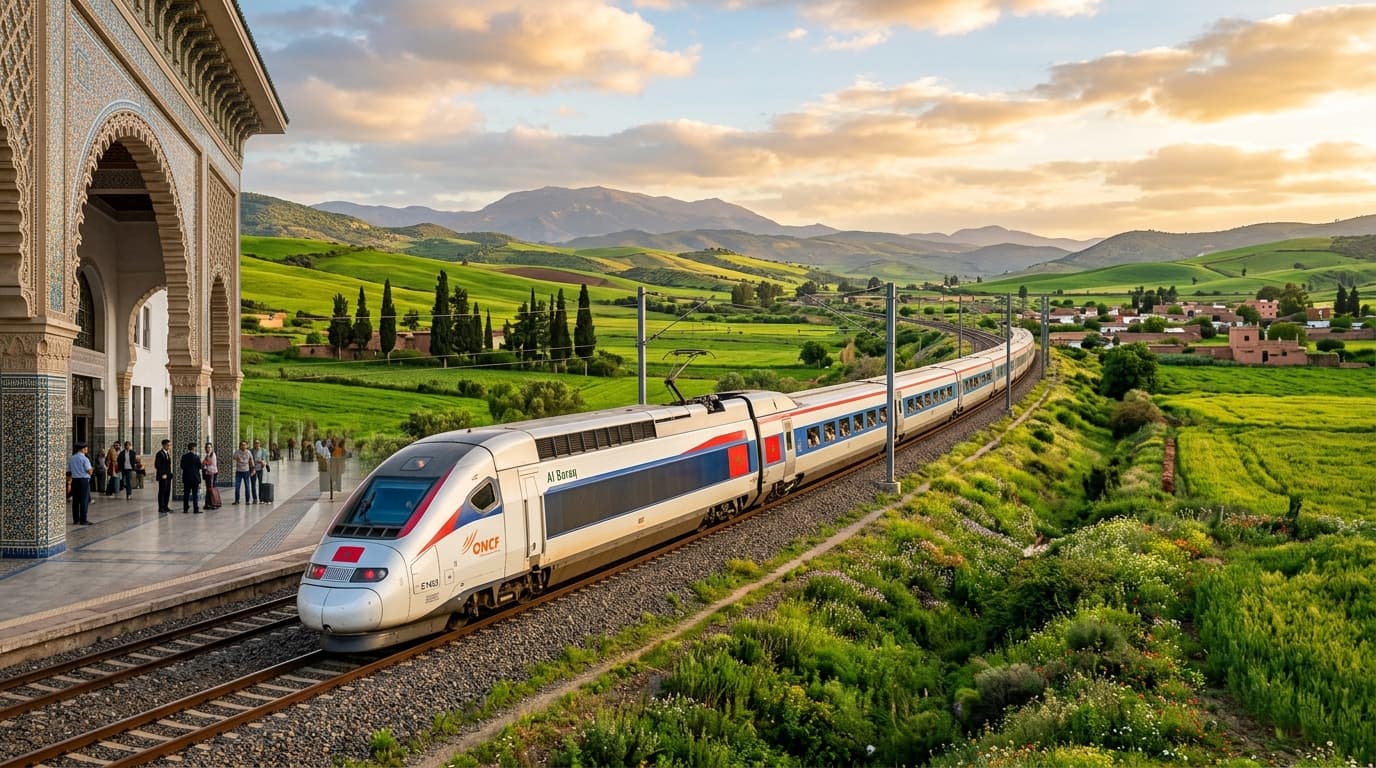
- High-speed Al Boraq train from Casablanca Mohammed V airport or Casa Voyageurs: 45 minutes, 95 MAD second class, runs hourly
- Grand taxis to Sale depart from a rank near Bab Had; the fare is around 5 MAD shared
Cross the River to Sale
Sale sits directly across the Bouregreg from Rabat and is rarely visited by foreign tourists. Its medina is smaller and more working-class than Rabat's, prices are noticeably lower, and the 14th-century Medersa Bou Inania is as fine as anything in Fes. Take the tram across or hire a rowing boat from the Rabat riverbank — the crossing takes five minutes.