Understanding Moroccan history transforms a trip from a sequence of beautiful sights into an experience with depth and context. This is the condensed, traveller-relevant history of one of the world's most continuously inhabited territories.
The Amazigh Foundation
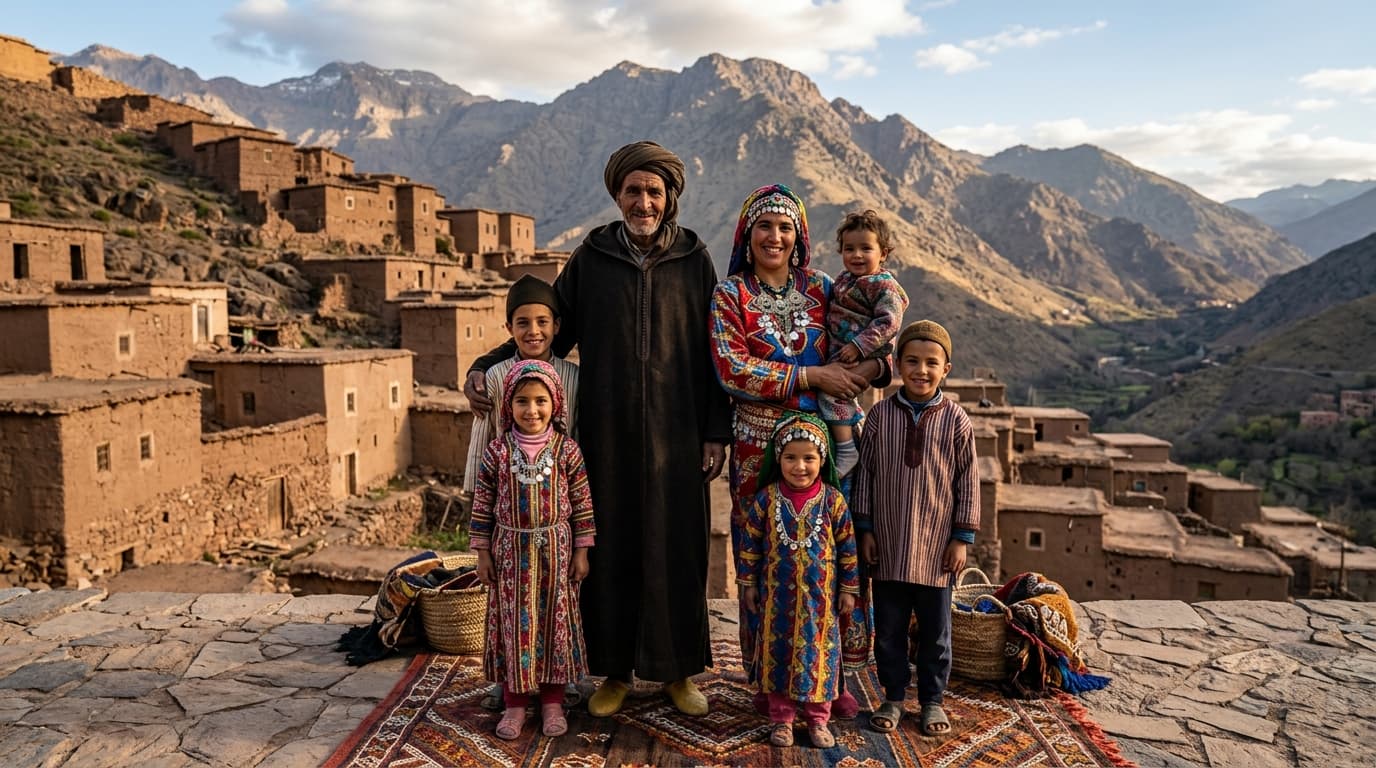
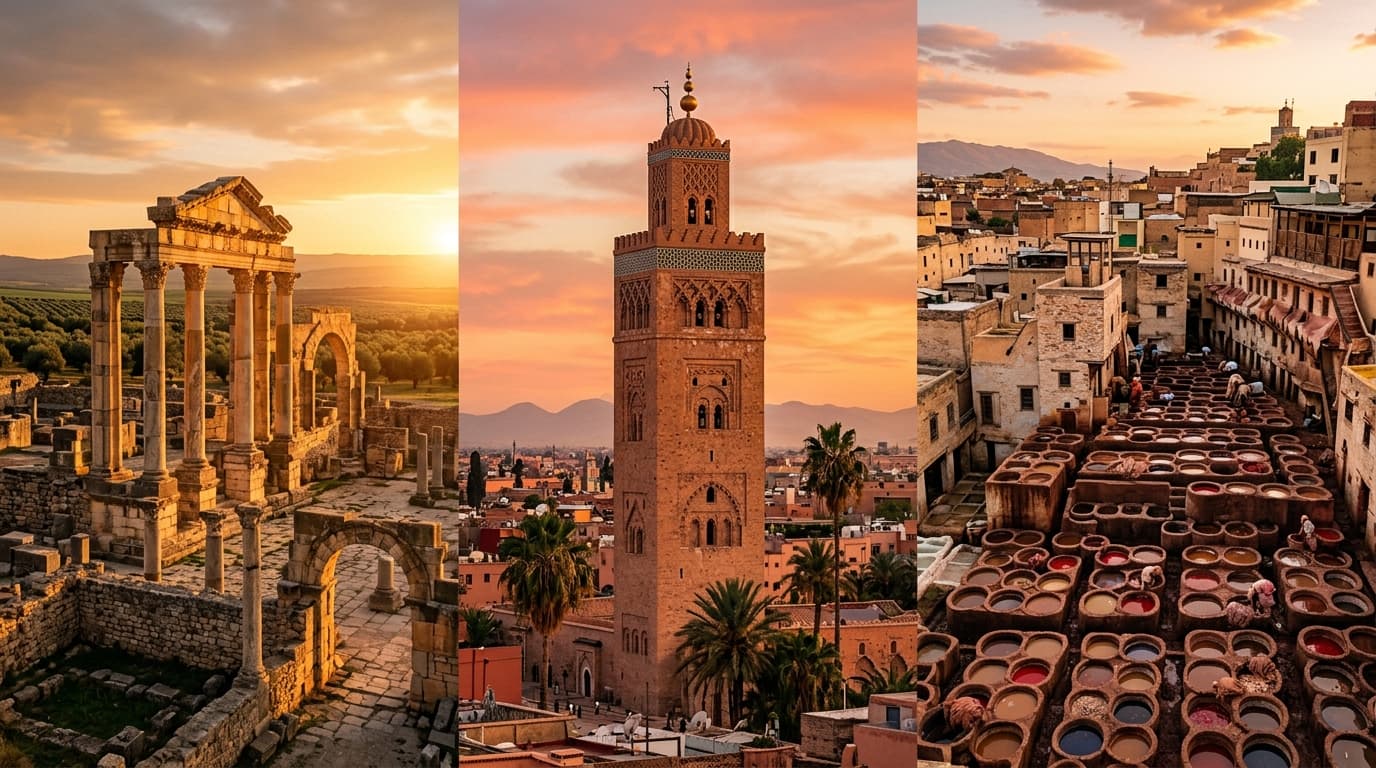
Human settlement of the territory now called Morocco stretches back at least 300,000 years — the Jebel Irhoud archaeological site near Safi has produced Homo sapiens remains dated to 315,000 BCE, among the oldest in the world. The indigenous Amazigh (Berber) people occupied North Africa as recognisable cultural communities by at least 3000 BCE. The Phoenicians established coastal trading posts from around 800 BCE, followed by Carthaginians. The Roman province of Mauretania Tingitana was established in 40 CE; the ruins at Volubilis near Meknes cover 40 hectares of a city that housed 20,000 people at its peak.
Morocco Through the Centuries
315,000 BCE
Oldest Homo sapiens remains (Jebel Irhoud)
789 CE
Idrisid dynasty founded; Fez established
1062
Marrakech founded by the Almoravids
1912
French Protectorate established
1956
Independence from France
The Arab Conquest and the Islamic Foundation
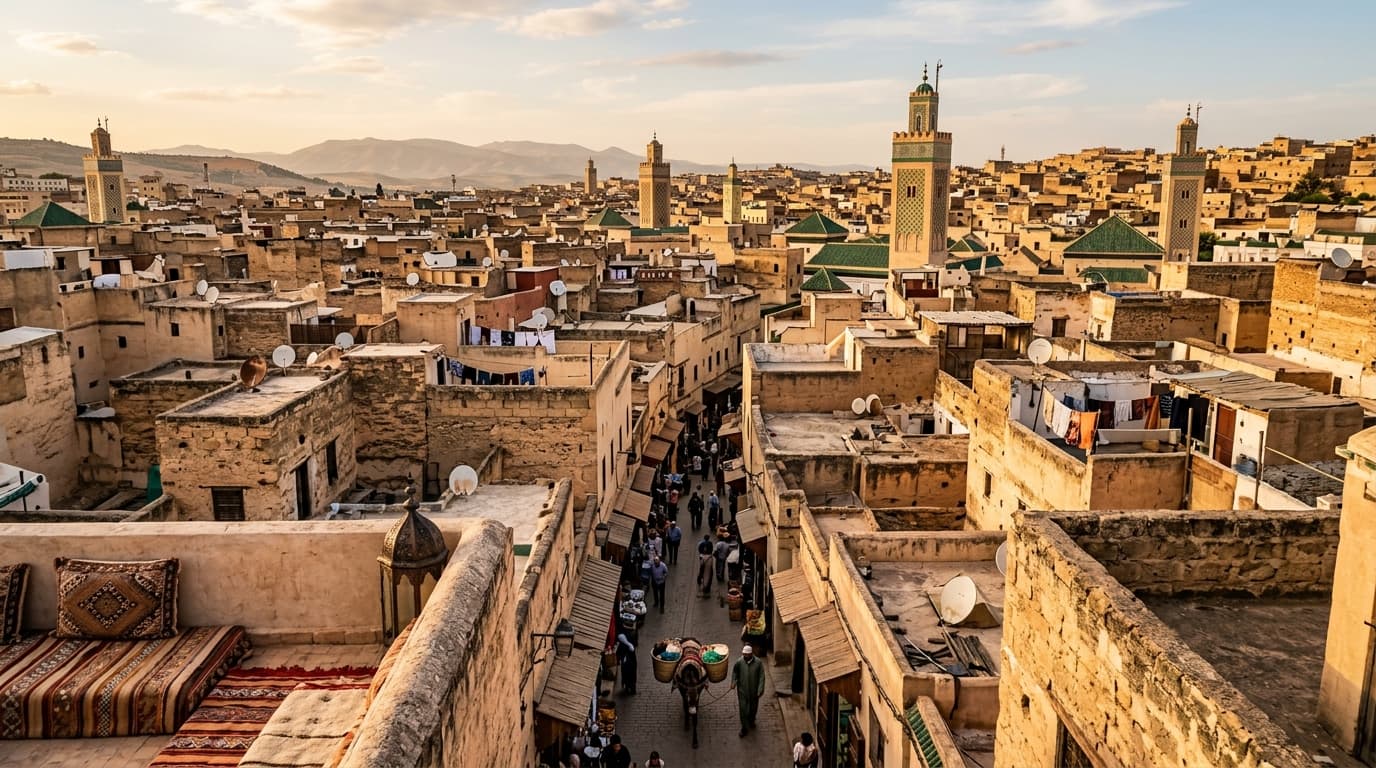
Arab armies arrived in North Africa from the 640s CE, completing the conversion of the Amazigh population and establishing Islamic rule within a century. The Idrisid dynasty, founded in 788 CE by Moulay Idriss I, established the first Moroccan Islamic state. His son Idris II founded Fes el-Bali as we know it today, populating it with refugees from Cordoba and Kairouan who brought with them the cultural sophistication of two of the medieval world's greatest cities. The zaouia of Moulay Idriss II in Fes remains one of the most sacred pilgrimage sites in Morocco.
The Berber Dynasties: Almoravids and Almohads
From the 11th century, the Islamic world of Morocco was shaped by successive Amazigh dynasties rather than Arab rulers. The Almoravids — a confederation of Sanhaja Berber tribes from the Mauritanian Sahara — conquered Morocco, founded Marrakech in 1062, and extended their empire to include southern Spain. Their successors, the Almohads, built the Koutoubia Mosque in Marrakech (1147), the Hassan Tower in Rabat and the Giralda in Seville — three minarets that are the defining monuments of their rule. The Almohad caliphate at its peak controlled territory from Senegal to the borders of Egypt.
Standing in the Medersa Bou Inania in Fez, you realise Morocco did not receive civilisation — it helped create it. The craftsmanship here is medieval but it does not feel old. It feels alive.
The Merinids and the Golden Age of Fes
The Merinid dynasty (1244–1465) built the great medersas of Fes and Salé as statements of cultural ambition that remain among the finest surviving examples of medieval Islamic architecture. They also founded new cities adjacent to the existing imperial cities: Fes el-Jdid (New Fes). The Merinid period represents Morocco's closest equivalent to a golden age — the economy was strong, the scholarship in Fes was internationally renowned, and the craft traditions — zellij tilework, carved plaster, carved cedarwood — reached their greatest technical refinement.
Key Moroccan Dynasties and What They Built
- Idrisids (788–974 CE) — founded Fes, established Moroccan Islamic identity
- Almoravids (1040–1147) — founded Marrakech, conquered Andalusia, built the Koutoubia
- Almohads (1121–1269) — built Koutoubia Mosque, Hassan Tower Rabat, Giralda Seville
- Merinids (1244–1465) — built the great medersas of Fez; the golden age of scholarship
- Saadians (1549–1659) — defeated the Portuguese at Ksar el-Kebir; built the Saadian Tombs
- Alaouites (1631–present) — the current royal dynasty; Mohammed VI rules today
The Saadian Dynasty and European Rivalry
The 16th and 17th centuries were shaped by the Saadian dynasty, which emerged from the Draa Valley and defeated both the Portuguese at the Battle of the Three Kings in 1578 — the largest battle ever fought on Moroccan soil — and an Ottoman invasion. The Saadian Tombs in Marrakech, sealed for two centuries and rediscovered in 1917, preserve the dynasty's most exquisite architecture. The same period saw the beginning of the European coastal rivalry for Moroccan ports that would eventually lead to the French and Spanish Protectorates.
Where to See Moroccan History in Person
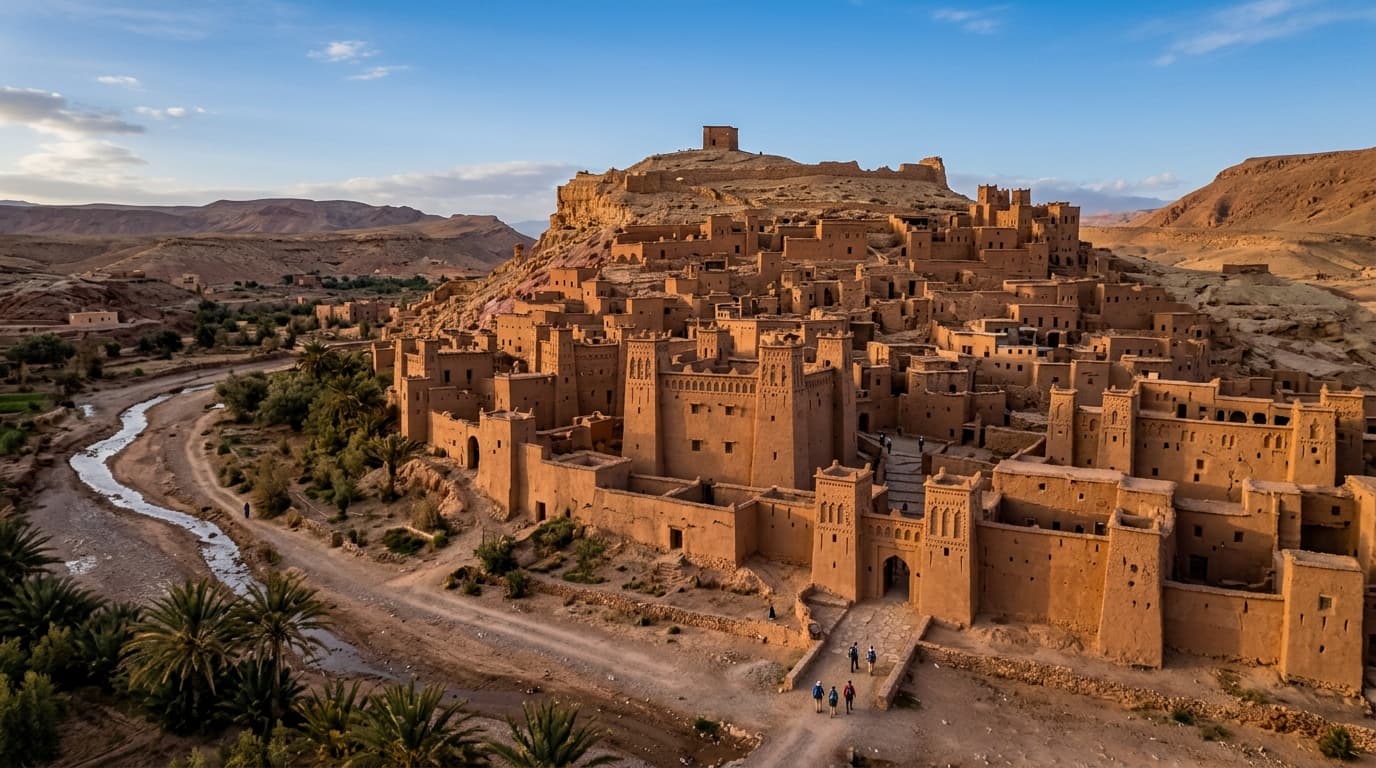
Volubilis (40 km from Meknes, entry 70 MAD) for Roman Morocco. The Medersa Bou Inania in Fez (70 MAD) for Merinid architecture. The Saadian Tombs in Marrakech (70 MAD) for the 16th-century dynasty. Aït Benhaddou (free entry, 10–15 MAD guide contribution) for pre-Saharan earthen architecture. All are accessible by public transport or day tour from their respective cities.
The French Protectorate (1912–1956)
The Treaty of Fez in 1912 established the French Protectorate over most of Morocco. General Lyautey, the first French Resident-General, made the consequential decision to build the new colonial administrative cities adjacent to but not demolishing the existing medinas — a choice that preserved the historic cities intact and explains why Moroccan medinas are among the best preserved in the Arab world. French infrastructure investment transformed Morocco's economy but at the cost of political sovereignty and the suppression of the nationalist movement.
Independence and the Modern Kingdom
Sultan Mohammed V led the independence movement against French opposition. After exile to Madagascar in 1953, which galvanised Moroccan national sentiment, he returned in triumph in 1955 and Morocco achieved independence on 2 March 1956. Mohammed V became king; his son Hassan II (1961–1999) managed a long, often turbulent reign that included the Green March of 1975 — when 350,000 Moroccan civilians walked into Spanish Sahara to claim it for Morocco. The current king, Mohammed VI, who ascended in 1999, has overseen economic modernisation, constitutional reform in 2011 and significant infrastructure development including the Al Boraq high-speed rail launched in 2018.