Morocco has one of the most modern rail networks in Africa — fast, comfortable, air-conditioned trains connecting the major cities at prices that make the European rail traveller slightly emotional. Here is everything you need to know.
The ONCF Network: What Exists
Morocco's national rail operator, ONCF (Office National des Chemins de Fer), runs a network of around 2,000 km of track connecting Tangier in the north to Marrakech in the south and Oujda in the north-east. The network does not reach the Sahara, Chefchaouen (the nearest station is Asilah, 45 km away), or most of the southern towns — for those you need buses or taxis. But for travel between the six major cities — Casablanca, Rabat, Fez, Meknes, Marrakech and Tangier — the train is by far the best option: faster than the bus on most routes, air-conditioned, punctual, and priced between 50 and 130 dirhams for second class.
ONCF by the Numbers
2,000 km
Total network length
320 km/h
Al Boraq top speed
2 hrs 10 min
Tangier to Casablanca
90 MAD
Casablanca to Marrakech (2nd class)
2018
Year Al Boraq launched
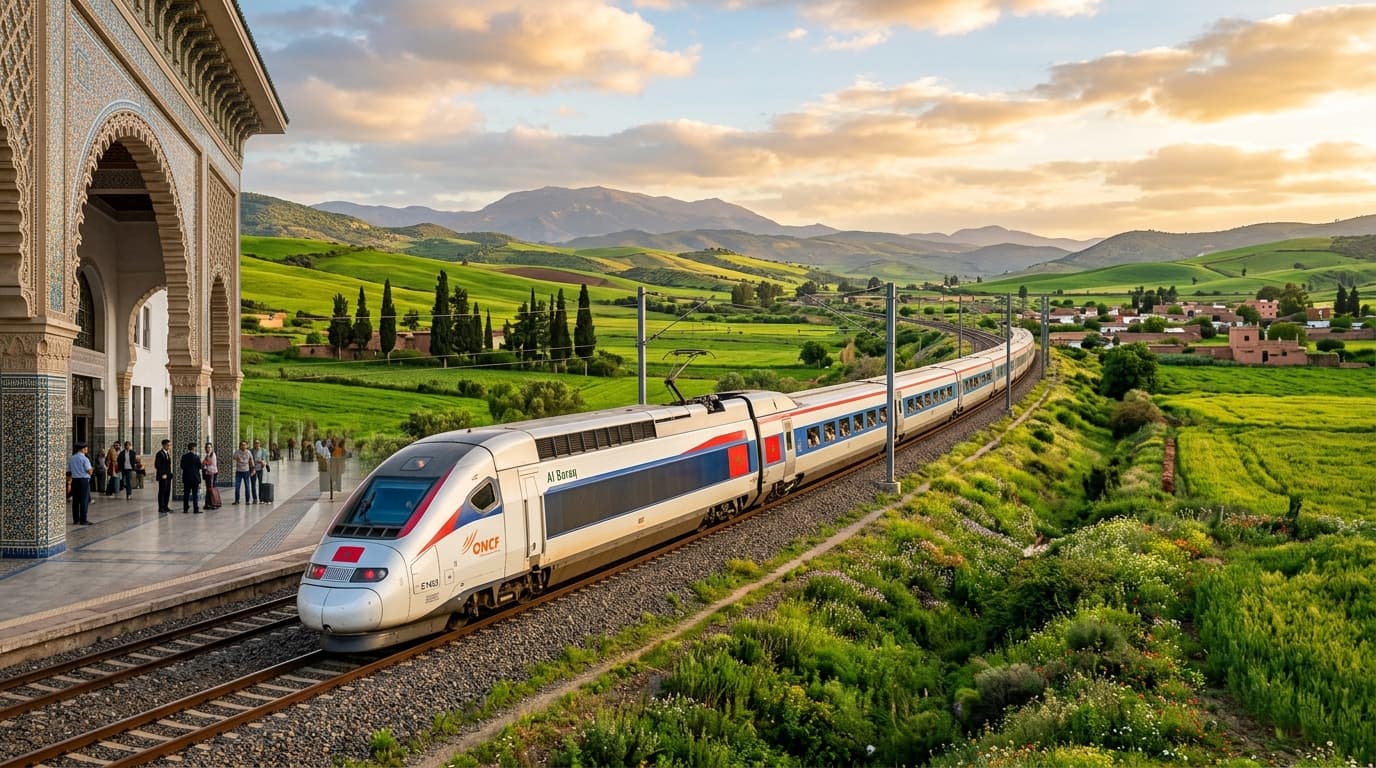
Al Boraq: Africa's First High-Speed Train
In 2018, Morocco launched Al Boraq, Africa's first high-speed rail service, connecting Tangier to Casablanca in 2 hours and 10 minutes — a journey that previously took over five hours. The trains run at up to 320 km/h on the Tangier-Casablanca leg and continue as regular trains to Marrakech and Rabat. A first-class Al Boraq ticket from Tangier to Casablanca costs around 240 dirhams (approximately 22 euros); second class costs 130 dirhams. The trains themselves are Alstom Euroduplex sets, identical to the trains used on French TGV routes, and the onboard comfort is genuinely impressive.
Key Routes and Journey Times
- Casablanca to Marrakech: 3 hours, 90 dirhams second class
- Casablanca to Fez: 3.5 hours, 120 dirhams second class
- Casablanca to Rabat: 45 minutes, 40 dirhams — trains every 30 minutes
- Fez to Meknes: 40 minutes, 20 dirhams — one of the best rail bargains in Morocco
- Tangier to Fez: 5 hours, 100 dirhams second class
- Marrakech to Tangier via Casablanca: approximately 6 hours combined service
Booking Tickets
ONCF tickets can be booked online at the official ONCF website (oncf.ma), at any train station ticket office, or at authorised travel agencies. Online booking opens 30 days before departure. For Al Boraq services and journeys during Eid and summer school holidays, booking several days in advance is strongly recommended. Second-class carriages are clean and comfortable for most journeys; for journeys over three hours, first class (typically 40–60 dirhams more) provides wider seats, more space and a slightly quieter atmosphere. There is no seat reservation system for regional services — arrive 10 minutes before departure to secure a seat.
I was expecting the kind of train journey you endure in some developing countries. Al Boraq to Casablanca was smoother and more comfortable than the Eurostar. The coffee was better too.
The Overnight Train and Passes
ONCF does not currently operate overnight sleeper services on domestic routes. For the Casablanca to Marrakech route, the last train departs around 9 p.m. and arrives around midnight — a convenient evening service for day-trippers returning from Casablanca. ONCF offers a tourist rail pass (Carte Bilatérale) for unlimited travel on the network over 8 or 15 days, available to non-Moroccan residents; check the current pricing on the ONCF website as it changes seasonally. For travellers doing the imperial cities circuit (Casablanca, Rabat, Meknes, Fez, Casablanca, Marrakech), the pass often represents good value.
Platform and Station Tips
Marrakech station sits adjacent to the CTM bus terminal on Avenue Hassan II — onward connections are simple. Arrive 15 minutes before departure for regional trains; no seat reservations means early boarding secures better seats. All trains are air-conditioned, which in summer months runs cold — bring a light layer for journeys over two hours.
Connecting to Buses and Taxis
The Marrakech train station sits adjacent to the CTM bus terminal on Avenue Hassan II, making onward connections simple. The Fez station has a CTM office 200 metres from the main entrance. Casablanca's main station — Casa-Voyageurs — connects directly to the local tram (Line 1) and grand taxi ranks for onward travel across the city. For travellers wanting to reach Chefchaouen by train, take Al Boraq to Tangier and then a grand taxi (45 minutes, around 50 dirhams shared) or CTM bus to Chefchaouen. For Meknes to Fez, the train is so frequent and cheap that there is no reason to consider any other option.
Practical Tips
Station cafes and kiosks sell good Moroccan coffee, fresh orange juice and pastries. Bring snacks for journeys over two hours as the onboard trolley service is limited. All trains have air conditioning, which in summer months is set aggressively cold — bring a layer. Power sockets are available in first class on Al Boraq services. Toilets on Moroccan trains are functional; on longer journeys they can deteriorate in cleanliness by mid-afternoon. Wifi is available on Al Boraq services. Mobile signal is strong throughout the network. Luggage racks above seats accommodate standard carry-on; overhead storage for larger bags is available at the carriage ends.