Morocco is a Muslim country with a conservative dress culture, but it is also a sophisticated, cosmopolitan travel destination. Getting the balance right between practicality, respect and comfort makes a real difference to your experience.
The Core Principle: Cover Up in Medinas
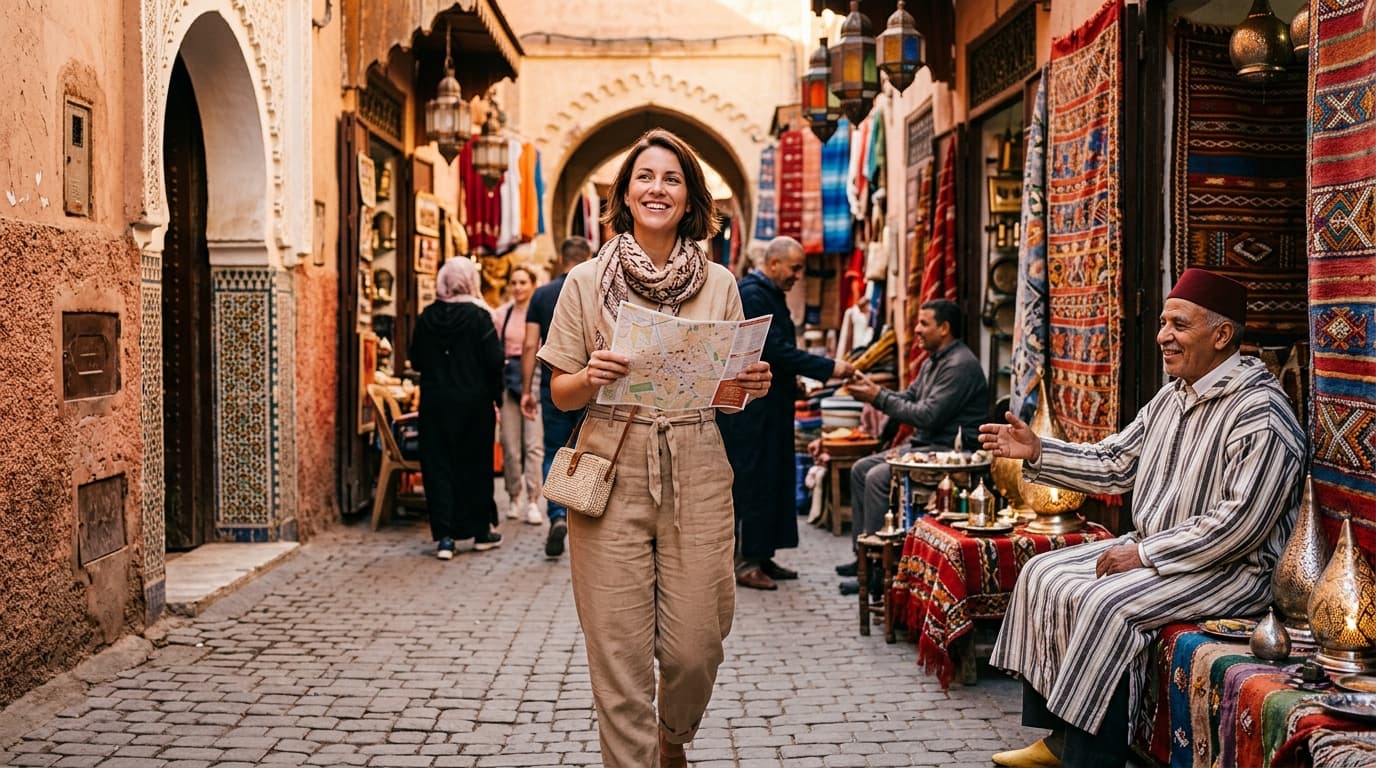
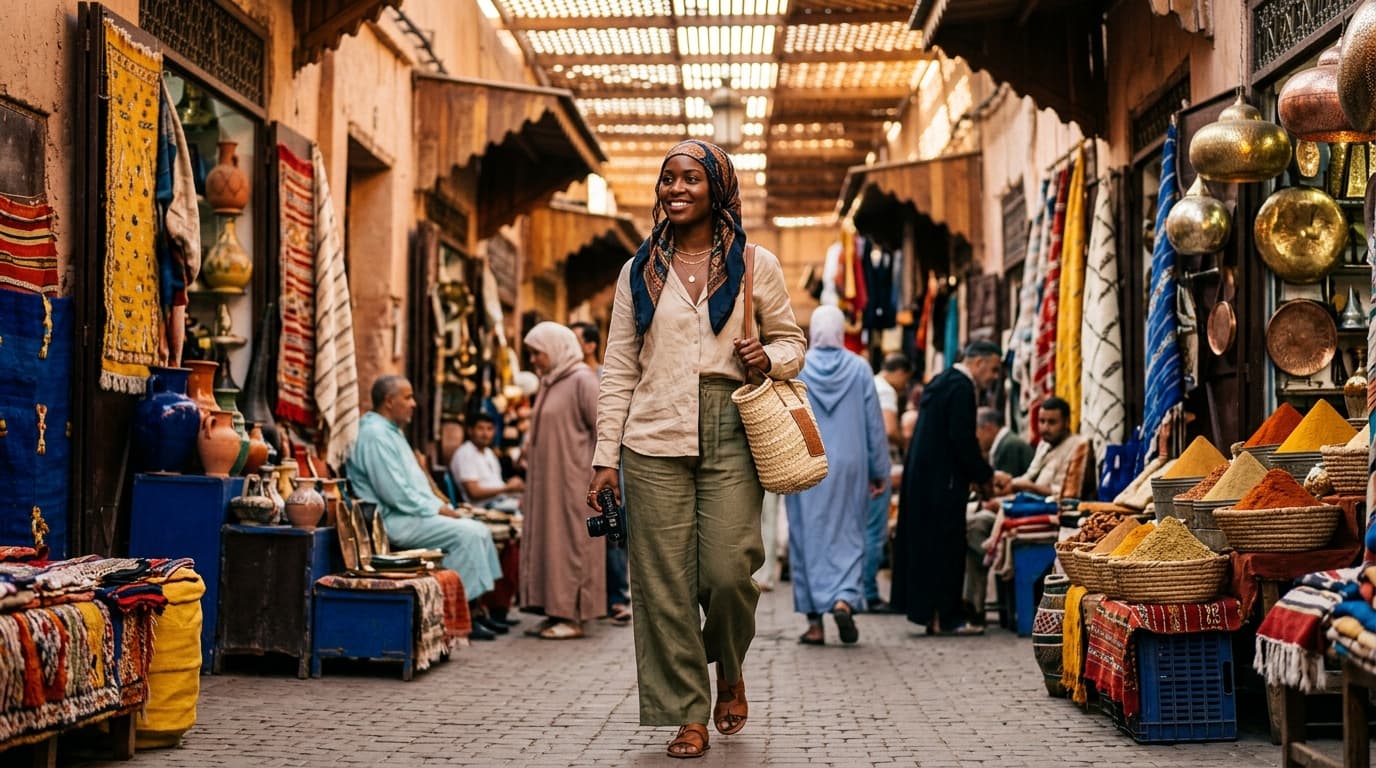
The guiding rule for both men and women in Morocco's medinas, markets and rural areas is simple: cover shoulders and knees. This is not a legal requirement — Morocco does not enforce a dress code for visitors — but it is a social norm that visibly signals respect for the communities you are walking through. Travellers who dress modestly report significantly less unwanted attention and a warmer reception from locals. The cities have a wide spectrum: on the beachfront in Agadir, swimwear is entirely normal. Inside Fes el-Bali, short shorts and sleeveless tops stand out sharply.
Morocco Climate Snapshot
40°C
Marrakech peak in July
5°C
Sahara pre-dawn low in January
18°C
Chefchaouen average in April
26°C
Essaouira summer high (Canary Current cooled)
4
Distinct climate zones
For Women: Practical Advice
A lightweight linen or cotton scarf is the most versatile item a woman can pack for Morocco. It can cover the shoulders entering a mosque, wrap the head in the Sahara against sun and wind, provide privacy in a hammam changing area, and serve as a light layer on a cold desert evening. Loose trousers or midi skirts are more comfortable than jeans in hot weather and satisfy the knee-coverage norm. Avoid tight-fitting clothing in rural areas and small towns; in Casablanca and Rabat's business districts, modern professional dress is entirely normal.
The Morocco Packing Checklist
- 2-3 lightweight linen or cotton tops with sleeves to the elbow or below
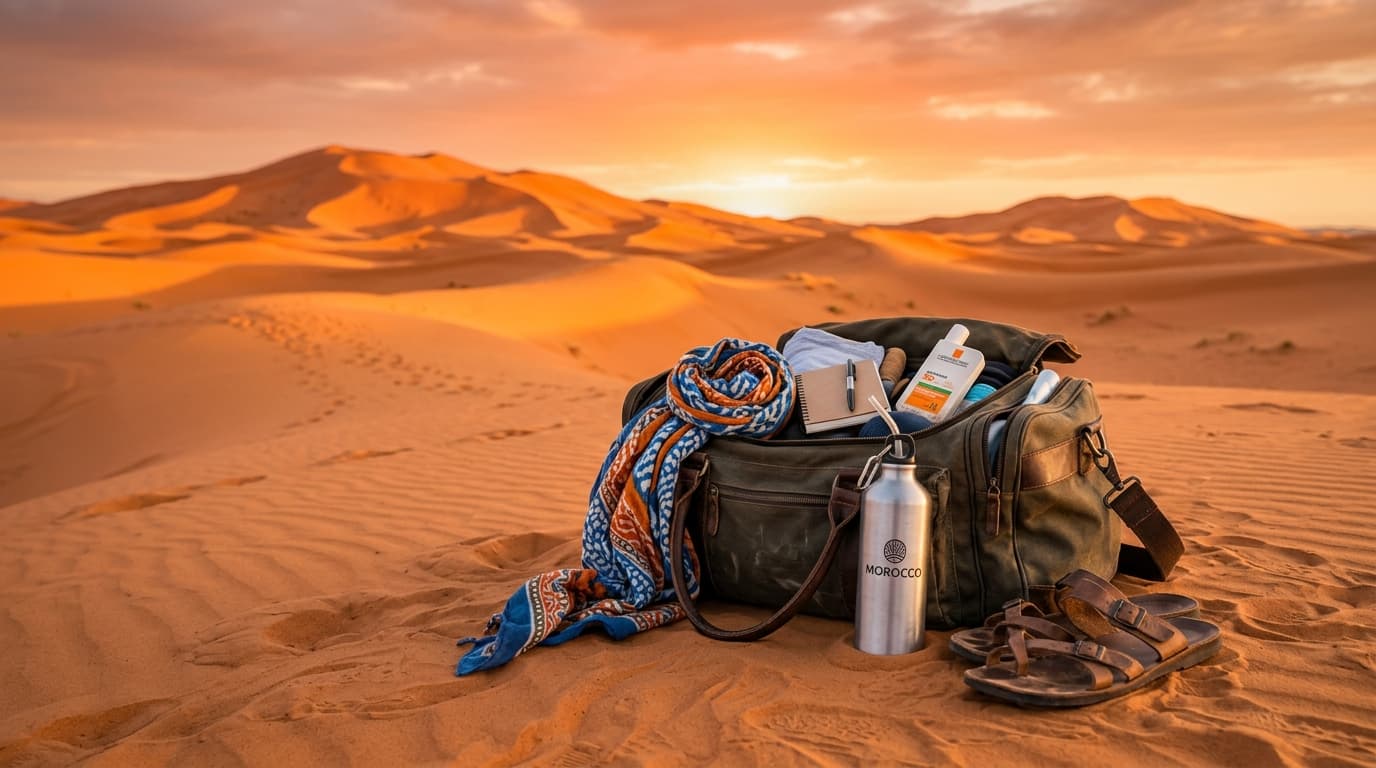
- 1 lightweight cotton scarf — at least 150cm long, doubles as shawl and head wrap
- Loose-fit trousers or midi skirt for medina days — linen preferred over denim
- 1 warm fleece or thin down jacket for Atlas Mountains or Sahara evenings
- Comfortable closed-toe walking shoes with grip for cobbled medina lanes
- Sandals or slip-ons for riad use and beach towns
- SPF 50 sunscreen and a wide-brim hat for the Sahara and Atlas
- Swimwear for beach towns and riad plunge pools
- A djellaba or kaftan — buy locally for 150 to 350 dirhams, worn everywhere
For Men: Often Overlooked
Men tend to receive less advice about dress in Morocco but the same covering norms apply. Long trousers are expected in medinas, mosques and villages. A linen shirt with the ability to button to the collar is useful for religious sites and formal dinners. The hammam (public bath) is accessed in shorts — bring a pair specifically for this. In beach towns, shorts are universally acceptable. The one item worth adding for men is a lightweight layer for evenings: temperatures drop sharply after sunset across almost every region of Morocco.
I packed two linen shirts and a cotton scarf and wore them every day in a different combination. Light, respectful, practical. The medina women in Fes smiled rather than stared. That made a real difference to how the whole trip felt.
Entering Mosques and Sacred Spaces
Non-Muslims are permitted to enter the Hassan II Mosque in Casablanca, which requires long trousers or skirt, covered shoulders, and shoes that are easy to remove at the entrance. For mosques that are not open to non-Muslims (the majority), you are welcome to stand at the entrance but not to enter. The Medersa Bou Inania in Fes and the Medersa Ben Youssef in Marrakech require similar modesty — covered shoulders and knees — but are open to all visitors.
Buy a Djellaba on Arrival
A djellaba — the full-length hooded robe worn by Moroccan men and women — costs 150 to 350 dirhams in the souk and is the single most practical cultural purchase you can make. It is cool in summer, warm enough for cool evenings, appropriate in every context from mosque to souk to Sahara camp, and packs flat. Most visitors who buy one early wear it every day.
Season-by-Season Packing
Spring and autumn: light linen layers, one warm fleece, comfortable walking shoes, a scarf. Summer: the lightest breathable fabrics possible for the day, a light jacket for air-conditioned restaurants and evening temperatures in the north, good sun protection. Winter: a proper warm jacket, layering pieces, waterproof shoes (rain is real in the north in winter), and one insulated layer for the Sahara at night. For the Atlas Mountains in any season: warm, windproof layers, good walking boots and waterproofs.
Shoes: The Critical Choice
Medina streets are uneven, slippery after rain, and covered in surfaces that defeat thin soles. Comfortable, closed-toe walking shoes or low boots with grip are essential for any city sightseeing. Sandals are acceptable in summer in beach towns and on riad terraces but will cause problems in the Fes medina's cobbled lanes after five minutes. If you plan to trek in the Atlas or visit the Sahara, bring proper hiking footwear. A pair of slip-on shoes or lightweight sandals for riad use and dinner is worth the weight.
Shopping for Clothes in Morocco
The Moroccan textile tradition offers genuine options for picking up practical wardrobe items locally. Djellabas — the full-length hooded robe worn by both men and women — can be bought in the souks for 150 to 400 dirhams, are comfortable, culturally appropriate everywhere and pack lightly. A lightweight tagelmust (the Tuareg head and face wrap) serves double duty in the desert and as a travel scarf. For women, Moroccan cotton kaftans sold at cooperative boutiques in Fez and Marrakech are beautiful, practical and completely appropriate for the medina context.