Morocco has one of the most varied climates of any country its size — from Mediterranean north to sub-Saharan south, from Alpine High Atlas to Atlantic coast. Here is what to actually expect, region by region.
Why Morocco Has Such Varied Weather
Morocco sits at the meeting point of four major geographic and climatic systems: the Atlantic Ocean to the west, the Mediterranean Sea to the north, the Sahara Desert to the south-east, and the High Atlas mountain chain in the centre. Each of these exerts a distinct influence on the climate. The Atlas acts as a weather barrier — rain clouds from the Atlantic drop their moisture on the western slopes and arrive on the eastern, desert-facing side as dry air. The Canary Current cools the Atlantic coast in summer while the Sharav dry wind blows scorching air from the Sahara during spring and autumn, occasionally raising Marrakech temperatures by 10 degrees Celsius in a single day.
Morocco Climate by the Numbers
40–42°C
Marrakech July average high
2°C
Sahara pre-dawn low in January
4,167m
Toubkal summit altitude
900mm
Annual rainfall in upper Rif valleys
300
Sunny days per year in Agadir
Marrakech: Temperature by Month
Marrakech sits in the Haouz plain between the Atlantic and the Atlas foothills. January averages 12 degrees Celsius at night to 18 degrees by day; April is 15–24 degrees; June is 22–34 degrees; July–August peaks at 25–40 degrees (occasionally higher during Sharav events); September drops to 22–33 degrees; November returns to 13–22 degrees. Rainfall is low year-round but concentrated in November to February — typically 15–25mm per month in winter, near zero in summer. The city's medina traps heat in July and August; early morning (before 9 a.m.) and late evening (after 7 p.m.) are the only comfortable times to walk outside during the summer peak.
Best Months by Region
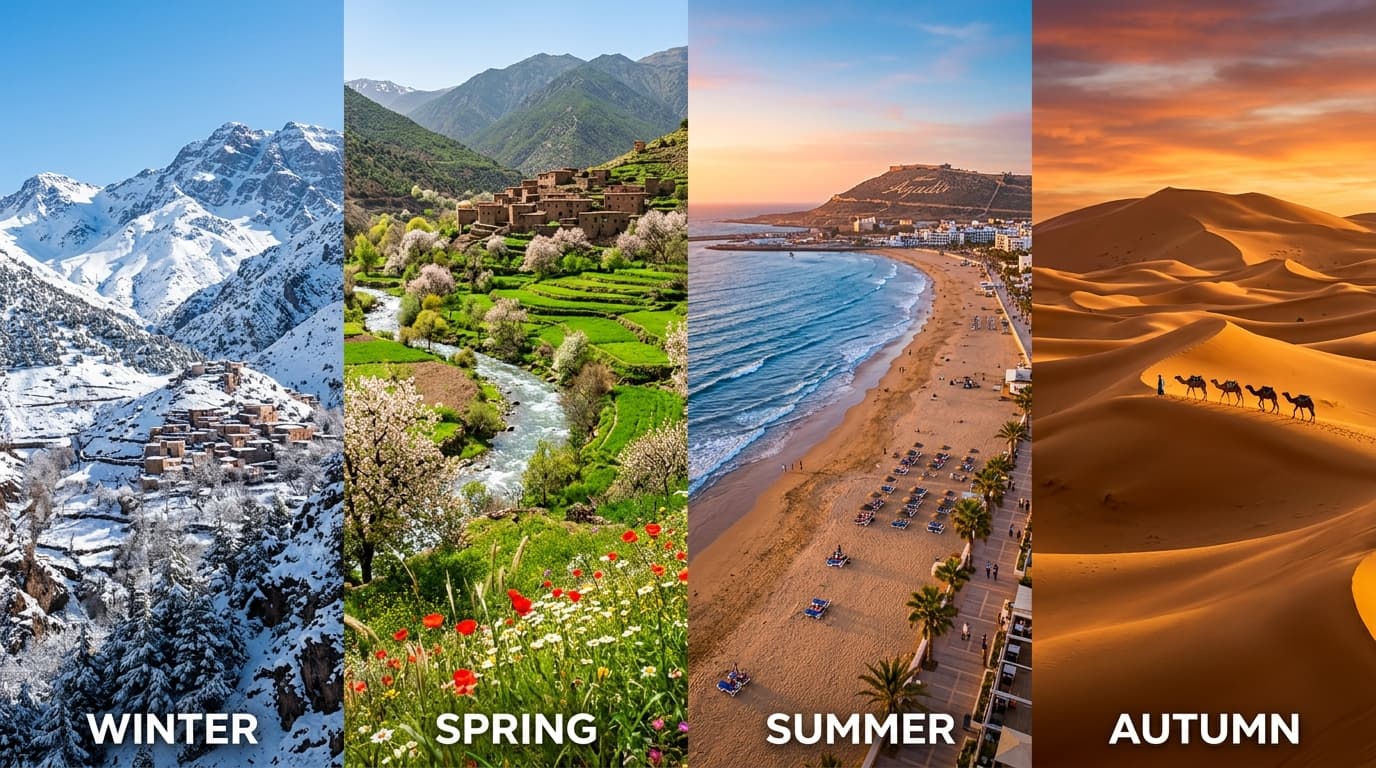
- Marrakech and the south: March to May and September to November
- Sahara (Merzouga, Zagora): March to April and October to November
- Atlantic coast (Agadir, Essaouira): May to June and September to October
- Northern Morocco (Chefchaouen, Fez, Tangier): April to June and September to October
- Atlas trekking (Toubkal, Dades, Todra): May to June and September to October
- Skiing at Oukaïmeden (2,650m): January to March
The Sahara and Pre-Saharan Zone
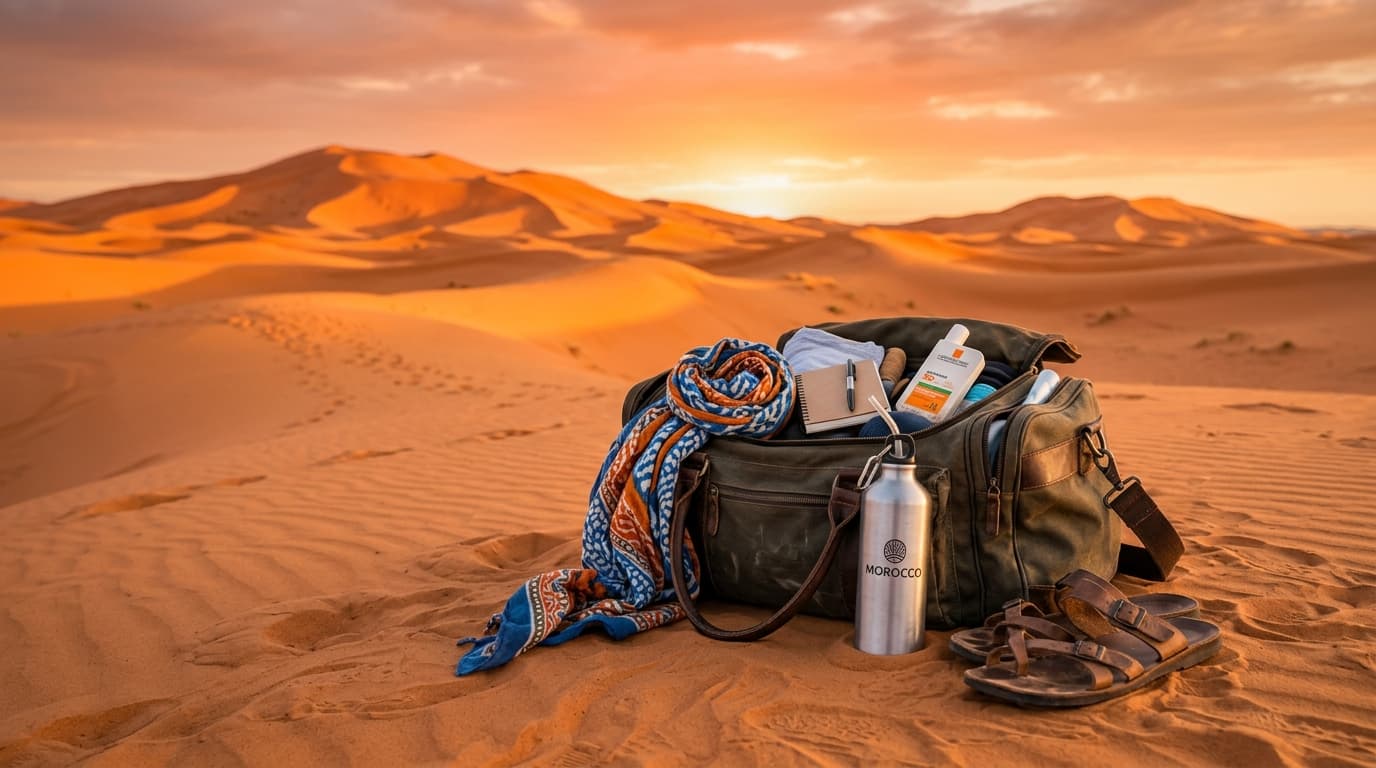
Merzouga and the Erg Chebbi dunes experience the most extreme temperature range in Morocco. Winter days can be a pleasant 18–22 degrees with nights dropping to 2–5 degrees (near freezing in January). Spring and autumn are ideal: 25–30 degrees by day, 12–15 degrees at night. Summer is brutal — June to August regularly sees 42–45 degrees by midday, and the radiant heat from the sand surface can exceed 70 degrees. Rain is extremely rare (fewer than 10 days per year) but when it occurs, usually in November or March, it can be torrential — flash floods through the wadis are a genuine risk. The Sahara is categorically not a summer destination.
I arrived in Merzouga in late October expecting warmth. The days were 28 degrees and perfect. By 2 a.m. I was wearing every piece of clothing I had brought and still cold. The temperature swing in the desert is not a travel blog exaggeration.
The Atlantic Coast
The Canary Current sweeping north along Morocco's Atlantic coast keeps summer temperatures remarkably moderate. Essaouira, the Atlantic city most exposed to this current, rarely exceeds 26 degrees even in August and is famous for its persistent trade winds that arrive every afternoon from June to September. Agadir, slightly more sheltered, reaches 28–30 degrees in summer with calmer conditions and is the destination of choice for beach holidays. The coast from Rabat to El Jadida has a classic Mediterranean-influenced Atlantic climate — warm and sunny from April to October, mild and sometimes wet from November to March. Sea temperature reaches a maximum of 22 degrees in October.
The Sharav Wind
The Sharav (or Chergui in Moroccan Arabic) is a hot, dry wind that blows in from the Sahara during spring and autumn. It can raise temperatures across Morocco by 8–12 degrees in a matter of hours, bringing fine dust, low humidity and a quality of heat that is very different from normal summer warmth. If you are visiting in March to May or September to October, be prepared for occasional Sharav days. They typically last 1–3 days before Atlantic air reasserts itself.
The High Atlas: Alpine Conditions
Above 2,000 metres in the High Atlas, weather behaves according to Alpine rather than Mediterranean rules. Toubkal (4,167m) holds snow from October to May; even lower passes like Tizi n'Tichka (2,260m) are regularly icy and occasionally closed in January and February. Summer on the high plateau is warm by day (20–25 degrees) and cool to cold at night (5–10 degrees), with afternoon thunderstorms developing from mid-June onwards. The Ait Bou Guemmez valley, one of the most beautiful inhabited valleys in the Atlas at 1,900 metres, is cool and green in spring, warm and dry in July and August, and genuinely cold (snow possible) from November to March.