A riad is not just a type of accommodation — it is the defining Moroccan spatial experience. Understanding what a riad actually is, how to find a good one, and what to expect helps you choose wisely and appreciate what you find.
What a Riad Actually Is
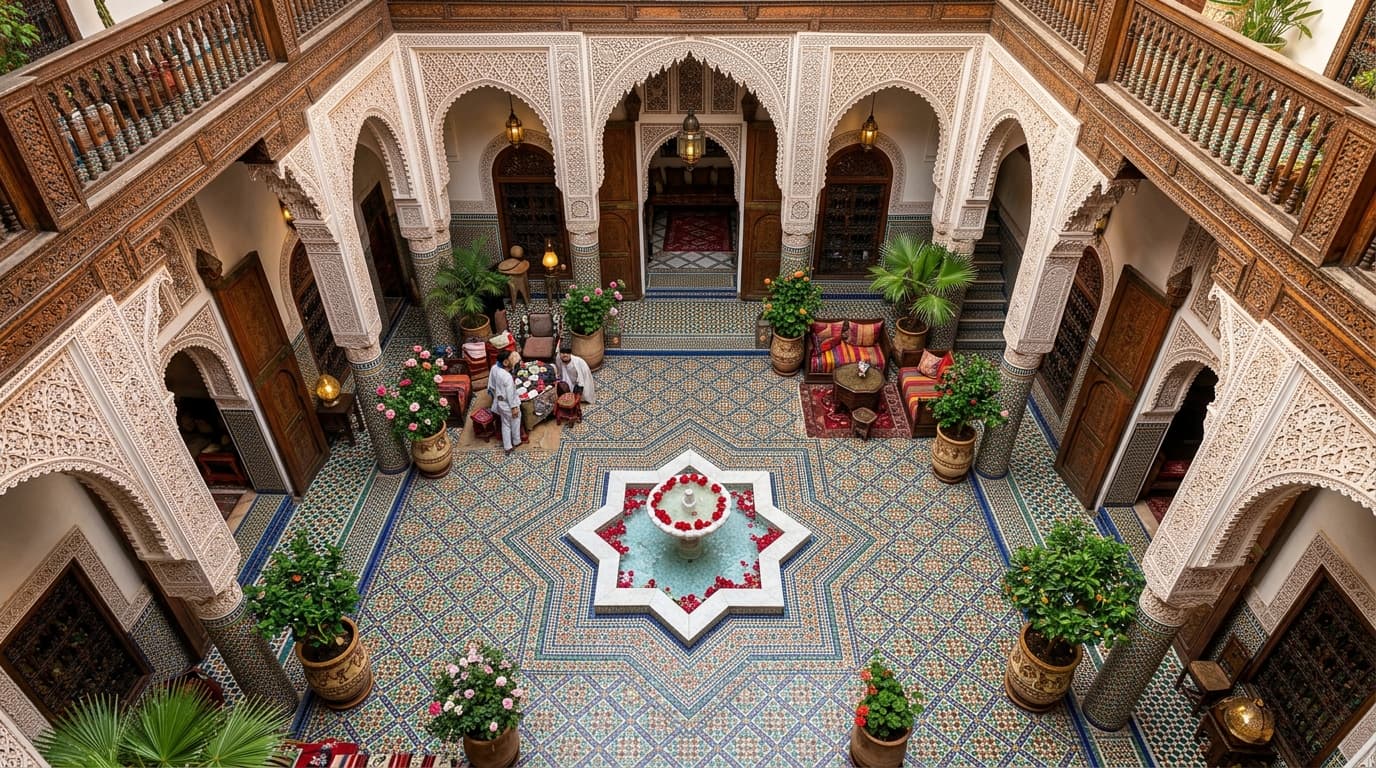
The word riad derives from the Arabic rawdah, meaning garden. A traditional riad is a townhouse built around a central courtyard containing a garden — typically with a fountain, citrus or olive trees, and geometric tile work at ground level. The rooms open onto the courtyard rather than the street, which is why riad exteriors are invariably plain, sometimes fortress-like, while the interior is elaborately decorated. This inward-facing architecture was a deliberate choice: privacy, quiet, and the cooling effect of the central water feature in summer. Walking through an unmarked wooden doorway in a Fez alley and finding yourself in a carved plasterwork courtyard is one of the great architectural surprises in the world.
Riad Accommodation at a Glance
150–350 MAD
Budget riad per night (shared bathroom)
400–900 MAD
Mid-range riad per night (en-suite)
1,000–3,000 MAD
Premium riad per night (pool, spa)
80–120 MAD
Breakfast if not included
20–30 MAD
Customary tip for staff meeting you at the taxi
40%
Price difference between Fez and Marrakech equivalent riads
The Difference Between a Riad and a Dar
Travellers often see both words used interchangeably on booking platforms, but there is a traditional distinction. A dar (meaning 'house') has a central courtyard without a garden — just the open-sky atrium with the fountain. A riad has the garden. In practice, today's hospitality industry uses 'riad' for almost any renovated medina guesthouse regardless of whether it technically has a garden, so the word has become a category label rather than an architectural description. What you are actually looking for is the courtyard layout — that is what makes the experience distinctive regardless of the label.
What to Check Before Booking
- Is it inside the medina walls, or just marketed as medina-adjacent?
- Do the photos show the actual courtyard with natural light, or styled corners only?
- Is breakfast included, or charged as an 80–120 MAD extra?
- How many rooms does it have — 4–6 rooms feels personal; 12+ operates like a hotel
- Is there a rooftop terrace?
- Does it have air conditioning? (Essential in Marrakech June–September)
- Are GPS coordinates or a WhatsApp pin provided for finding the front door?
Marrakech vs Fez: Different Riad Cultures
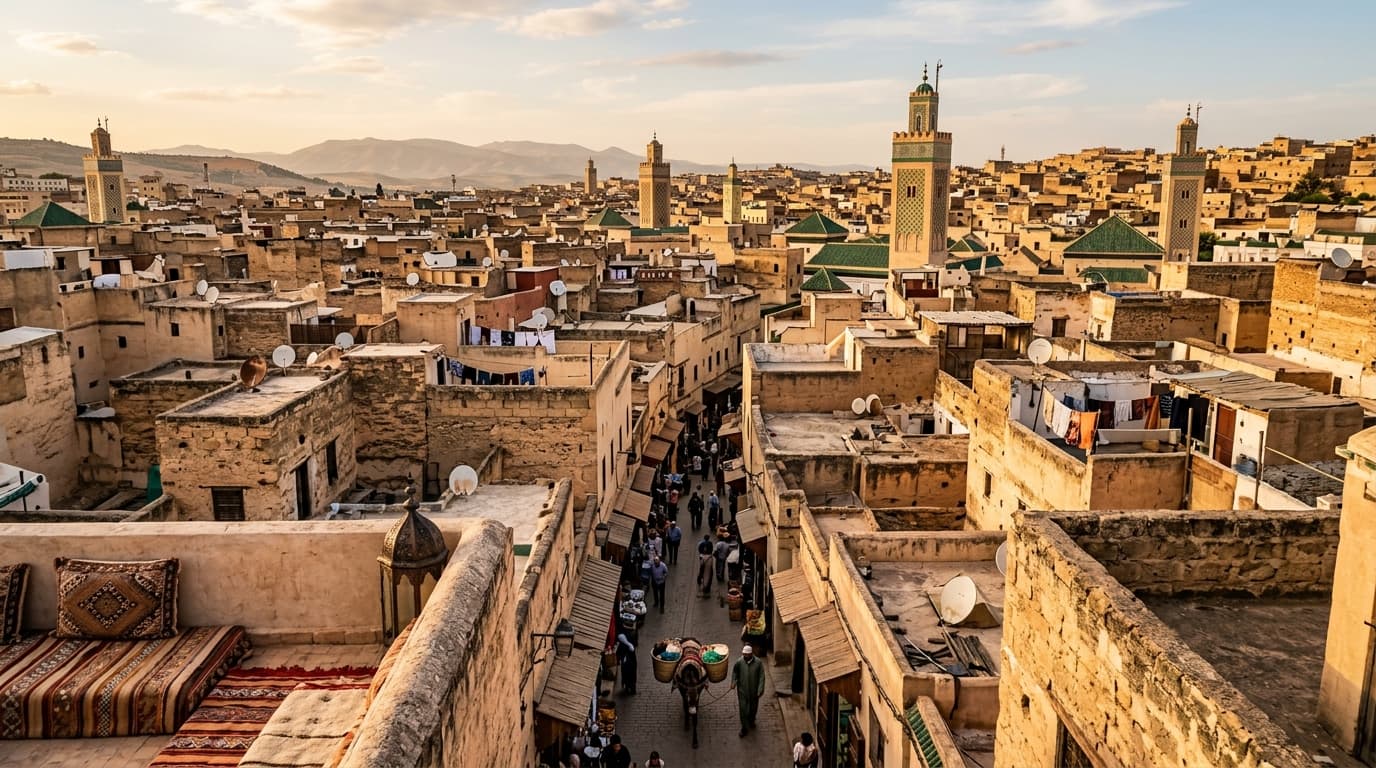
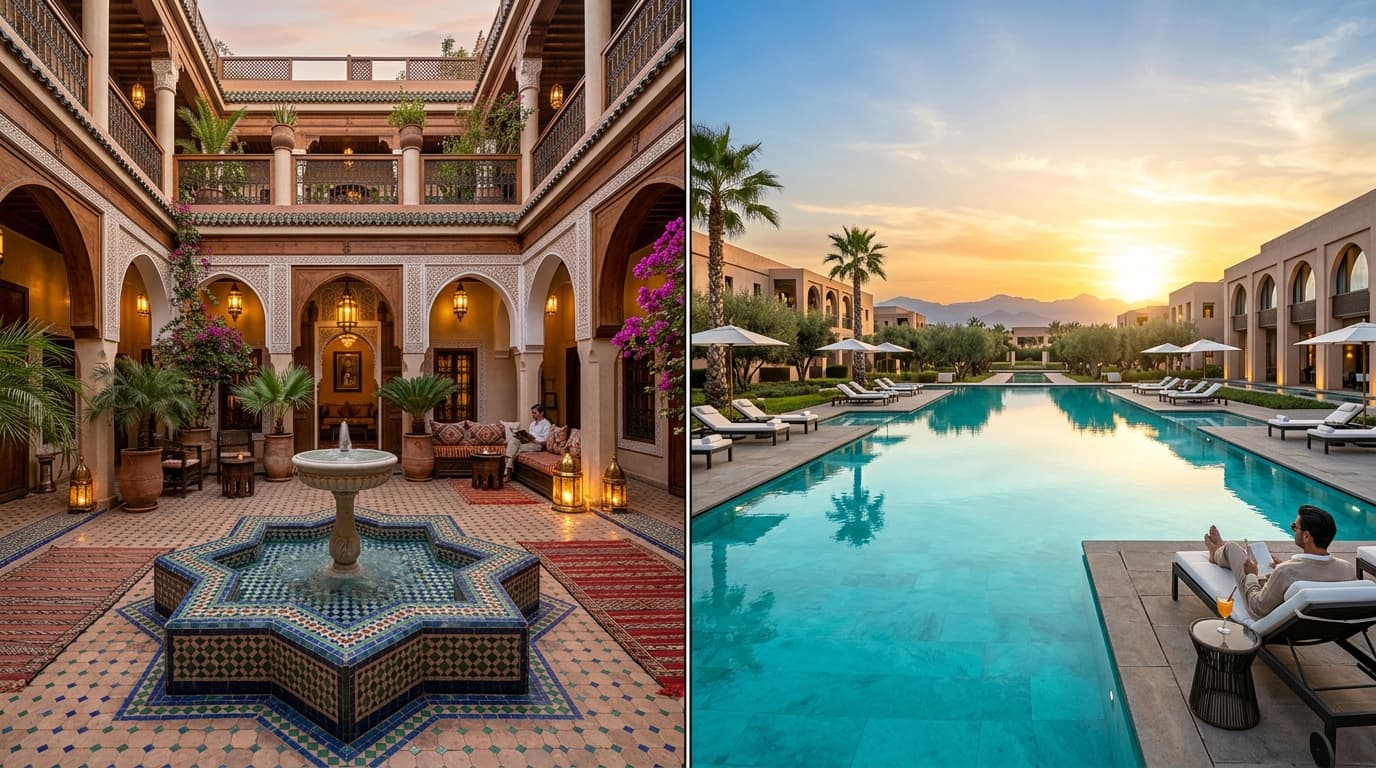
The riad scene in Marrakech and Fez has developed differently. Marrakech has the larger, more polished market — riads here tend to have been renovated to a high international standard, with plunge pools, WiFi, and breakfast included. Prices range from 600 to 4,000 dirhams per night. Fez has a rawer, less commercialised riad culture with more authentically Moroccan-owned properties. You find more rough edges but also more genuine character — tiled courtyards that are slightly worn, family members cooking actual Fassi food in the kitchen, and owners who can take you to parts of the medina tourists do not reach. Fez riads often cost 40% less than equivalent Marrakech properties.
The riad we stayed in in Fez had seven rooms and five of them were occupied by the owner's family. We ate breakfast in the same courtyard as three generations. On the second morning the grandmother brought us extra msemen because she had noticed we liked it. That does not happen in a 40-room hotel.
What to Look for When Booking
Key questions before booking: Is it inside the medina walls or just marketed as medina-adjacent? Does it have natural courtyard light? Are the photos showing the actual courtyard or a styled corner? Does breakfast come with the room (typically 80–120 dirhams extra if not)? Is there a rooftop terrace? How many rooms does it have — larger riads (12+ rooms) operate like hotels; smaller ones (4–6 rooms) feel more personal. Reviews mentioning noise from the medina or construction are important to read carefully.
Finding Your Riad on Arrival
The single biggest practical challenge of a riad stay is actually finding it. Medina addresses in Marrakech and Fez use derb (alley) numbers that are effectively meaningless without local knowledge. Every reputable riad will send you GPS coordinates or a WhatsApp pin; if they do not, ask before you arrive. A member of staff will typically meet you from your drop-off point — arrange this when you confirm your booking. Allow 20 minutes from the taxi drop-off to the front door in Marrakech and up to 40 minutes in Fez. A small tip for the person who meets you (20–30 dirhams) is customary.
Book Direct, Not Through Booking Platforms
Booking platforms add 15–20% commission that the riad absorbs by raising their listed rate. Contact the riad directly by email or WhatsApp — you will often get a better price, a room upgrade or a complimentary breakfast. Most Moroccan riad owners prefer direct bookings and will negotiate genuinely.
Riad Etiquette and What to Expect
Riads are communal spaces. The courtyard is shared, rooftop terraces are shared, and the breakfast table is often shared with other guests. Most riads do not serve alcohol, though some do — check before booking if this matters to you. The morning call to prayer from nearby mosques begins before 5 a.m. — ear plugs are worth packing if you are a light sleeper. Rooms vary enormously in size and light even within the same riad; if you have specific preferences, describe them when booking rather than after.
Price Tiers and What Each Gets You
Budget riads (150–350 dirhams per night) offer clean rooms in family-run houses with shared bathrooms and simple breakfasts. Mid-range riads (400–900 dirhams) offer en-suite bathrooms, decorated rooms, a courtyard breakfast and often a rooftop. Premium riads (1,000–3,000 dirhams) add plunge pools, spa services, private terraces, air conditioning and carefully restored zellij tilework and carved plaster. Properties like Riad Yasmine, Dar Anika or El Fenn in Marrakech compete with boutique hotels globally. For most travellers, the 500–900 dirham range delivers the core riad experience in full.