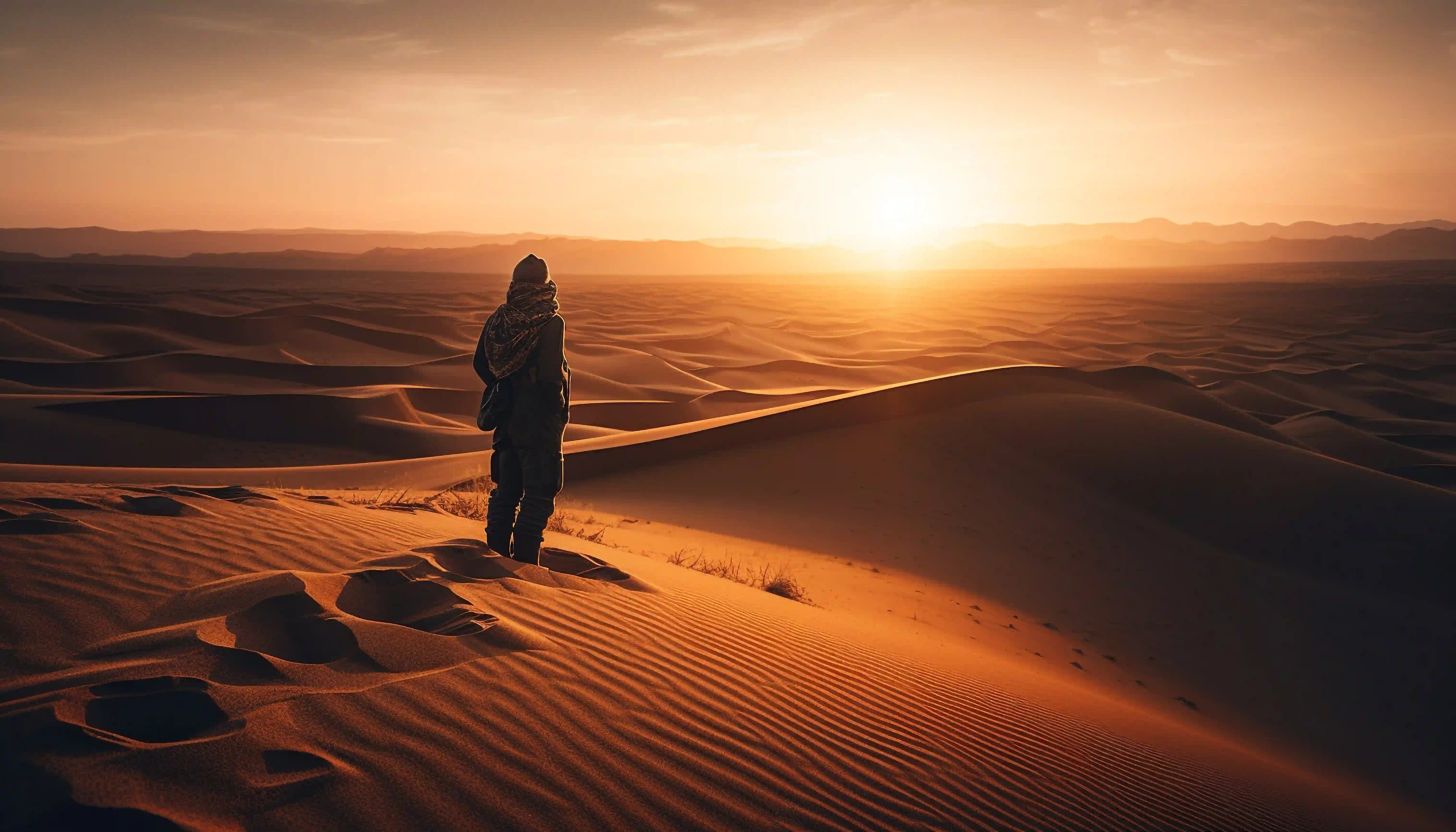
A night in the Sahara Desert is one of the defining experiences Morocco offers — but the quality of that experience depends almost entirely on who organises it and how you prepare. This is the honest, practical guide.
Merzouga vs Zagora: Which Sahara Experience?
Morocco has two main Sahara trekking bases: Merzouga in the south-east (gateway to Erg Chebbi) and Zagora in the Draa Valley (gateway to Erg Chigaga). They offer different experiences. Erg Chebbi near Merzouga has the classic tall, orange dunes — the ones on the postcards — rising 150 metres directly from the edge of a flat stony plain. It is easier to reach from Marrakech (6–7 hours by road) and has more developed infrastructure. Erg Chigaga near Zagora is more remote, requires a 4x4 to reach, is less visited and offers a rawer desert experience. For a first Sahara trip, Merzouga is the standard choice.
Sahara at a Glance
150m
Tallest Erg Chebbi dune
6–7 hrs
Drive from Marrakech
200–350 MAD
Budget camp per person
700–1,200 MAD
Mid-range camp per person
2°C
Pre-dawn low in January
What the Camel Trek Actually Involves
A standard Erg Chebbi camel trek departs from a camp at the dune edge around 4:30–5 p.m., rides for 45 minutes to 1.5 hours to a camp positioned in the dunes, and returns the following morning for sunrise. The camels (technically dromedaries — one hump) are Tuareg camels well used to carrying tourists. They are ridden seated, not bareback, with a saddle made from blankets and wood. The gait is lurching and the stirrups cause friction — bring padded cycling shorts or thick trousers. The camp in the dunes typically consists of Berber-style tents with mattresses, communal fire, dinner and traditional music. Standards range from simple to luxurious depending on the operator.
When to Go
October through April is the prime window. Spring and autumn offer dunes at 25–30 degrees by day and cool, clear nights ideal for stargazing. Avoid June to August — midday sand surface temperatures exceed 70 degrees Celsius and the experience is genuinely miserable rather than challenging.
Choosing the Right Operator
The most important decision for a Sahara trip is operator quality, and the price variation is enormous. Budget operations near Merzouga village offer a camel ride and basic tent for 200–350 dirhams per person including dinner — the experience is rushed, the tents are thin, and the music is often a cassette recording. Mid-range camps (700–1,200 dirhams) offer proper meals, live music from a Tuareg musician, comfortable sleeping arrangements and a guide who actually knows the dunes. Premium desert camps (1,800–3,500 dirhams) add private tents, proper beds, gourmet food and the guarantee of smaller group sizes. Book through a Marrakech-based operator with verifiable reviews rather than arranging with a stranger in Merzouga itself.
I expected the dunes to be the highlight. What I did not expect was the silence. Three hours after everyone went to sleep, I climbed a dune alone and heard absolutely nothing — no wind, no insects, no human sound. I have never experienced anything like it.
The Night Sky
One of the genuine, unexaggerated attractions of the Sahara is the night sky. The Erg Chebbi is 50 km from the nearest significant town (Errachidia) and has no light pollution whatsoever. On a clear, moonless night, the Milky Way is visible as a dense structural feature of the sky rather than a faint smear — the kind of sky that makes adult travellers genuinely speechless. The best nights for Milky Way photography are three to four days either side of new moon; check the lunar calendar when planning your trip date. The temperature drops to near freezing by 3 a.m. in winter; the camp blankets at most mid-range operators are not sufficient — bring a sleeping bag liner.
What Every Sahara Packing List Needs
- Sleeping bag liner — camp blankets are rarely enough below 10 degrees Celsius
- Tagelmust head wrap — buy locally for 60–80 dirhams, essential against sun and wind
- Padded cycling shorts or thick linen trousers for the camel saddle friction
- Headtorch with red-light mode for navigating the camp and stargazing
- 20,000 mAh power bank — camp solar power typically runs 2–3 hours per evening
- Zip-lock bags for all electronics — fine sand destroys unprotected memory cards
- SPF 50 sunscreen and lip balm — desert UV levels are extreme
Physical Considerations
The camel ride itself is manageable for most people in reasonable health. The lurching motion causes discomfort in the lower back for some riders; if you have a pre-existing back condition, discuss this with the operator and ask about riding in a 4x4 to the camp instead. The dune climb — most camps are within walking distance of a significant dune crest — requires moderate fitness but no technical skill. The sand shifts underfoot but the inclines are not extreme. Children typically love the experience; minimum age guidelines vary by operator but most accept children from about 5 years old. Motion sickness on camels is rare but exists; if you are prone to vehicle motion sickness, take appropriate precautions.
Sustainable and Ethical Considerations
The welfare of working camels in tourism contexts is a legitimate concern. When assessing an operator, look for animals that are in good body condition (visible ribs are a warning sign), that have well-padded saddles and no visible sores at the saddle contact points, and that are given water and rest at appropriate intervals. Smaller group tours — a maximum of four camels rather than a train of fifteen — are better for both the animals and the experience. Avoid operators who offer extremely cheap rates; these almost always involve compromised animal welfare. The best operators around Merzouga are members of the national federation of Sahara guides, which has welfare standards that members are required to meet.