The Dades and Todra gorges cut through the southern edge of the High Atlas in ways that have no parallel in Morocco. Combined in a single road trip, they constitute the most dramatic landscape corridor in the country.
The Geography: What Makes These Gorges
The Dades and Todra gorges were formed by rivers cutting through the southern edge of the High Atlas limestone plateau over millions of years. The rivers — the Dades and the Todra — both flow southward from the Atlas snowfields, carving ever-deeper channels through the rock as the plateau was uplifted. The result is a series of canyon walls that rise 300 metres vertically from the valley floor in the Todra, and a sinuous gorge road in the Dades that winds through rock formations coloured by iron and mineral deposits into shades of red, ochre, pink and grey. The two gorges are 50 km apart as the crow flies and are usually visited as a combined circuit.
The Gorges in Numbers
400m
Todra canyon wall height
10m
Narrowest point of Todra Gorge
50 km
Distance between the two gorges
1,600m
Altitude in upper Dades Gorge
150+
Climbing routes in Todra
Boumalne Dades: The Gateway
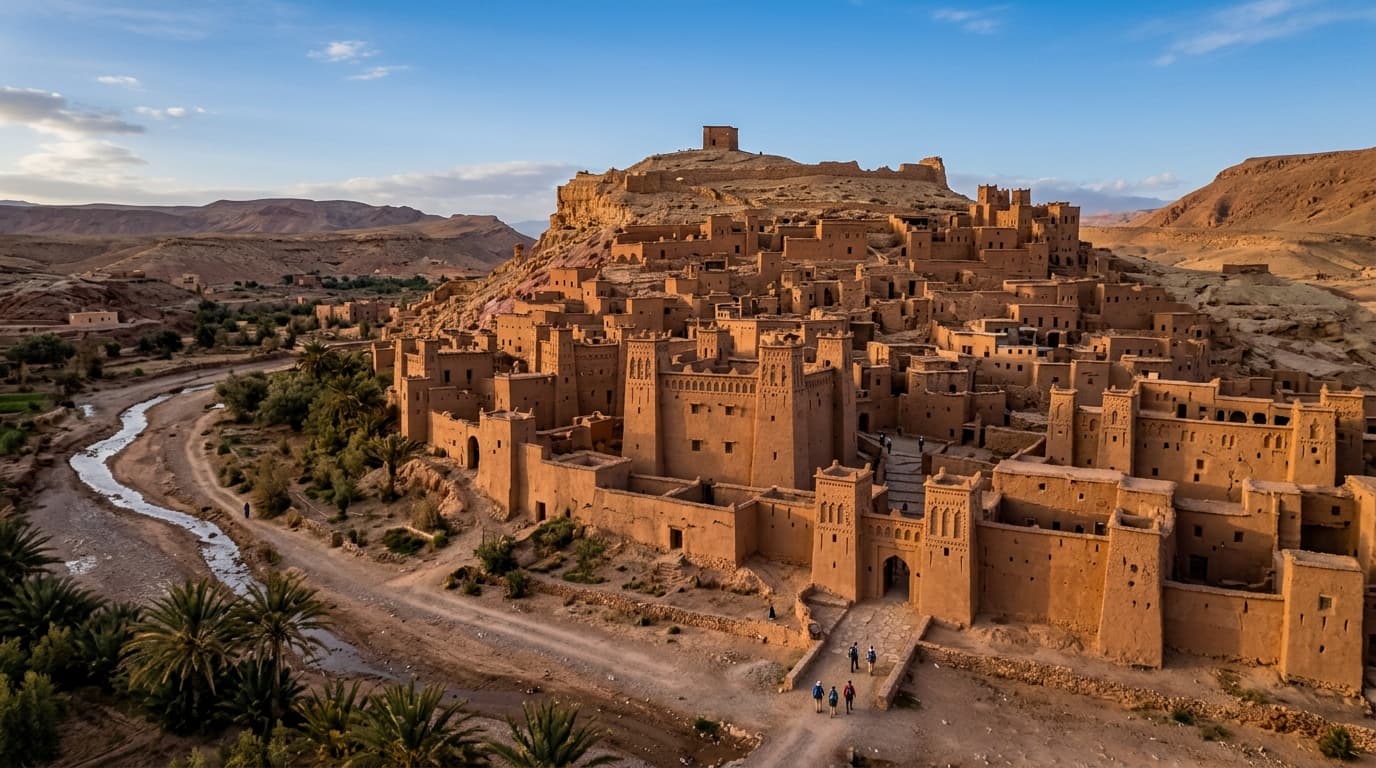
Boumalne Dades, a small town on the N10 'Road of a Thousand Kasbahs', is the conventional starting point for the Dades Gorge road. The town itself has a weekly souk on Wednesdays that is largely un-touristified, several reliable guesthouses and a petrol station. From Boumalne, the R704 road climbs north into the gorge for 30 km before the tarmac ends. The first 15 km are gentle, passing mudbrick villages and rose-producing gardens (the Dades Valley is part of the rose-growing zone famous for Damask rose production). The canyon walls close in progressively over this stretch.
The Best Stops on the Dades–Todra Circuit
- Boumalne Dades Wednesday souk — genuine working market, few tourists
- The rose gardens at Aït Oudinar — peak bloom late April to mid-May
- The Monkey Toes hairpin bends — park before the first bend and walk up for the view
- Canyon-wall guesthouses at 27 km — book in advance, unique sleeping position
- Todra Gorge at its 10-metre narrowest — best photographed at mid-morning
- The river pools below Todra — ice-cold even in summer, refreshing after a drive
- Tinghir Thursday souk — a hub for the Todra Valley Amazigh communities
The Monkey Toes: Morocco's Most Famous Road Bend
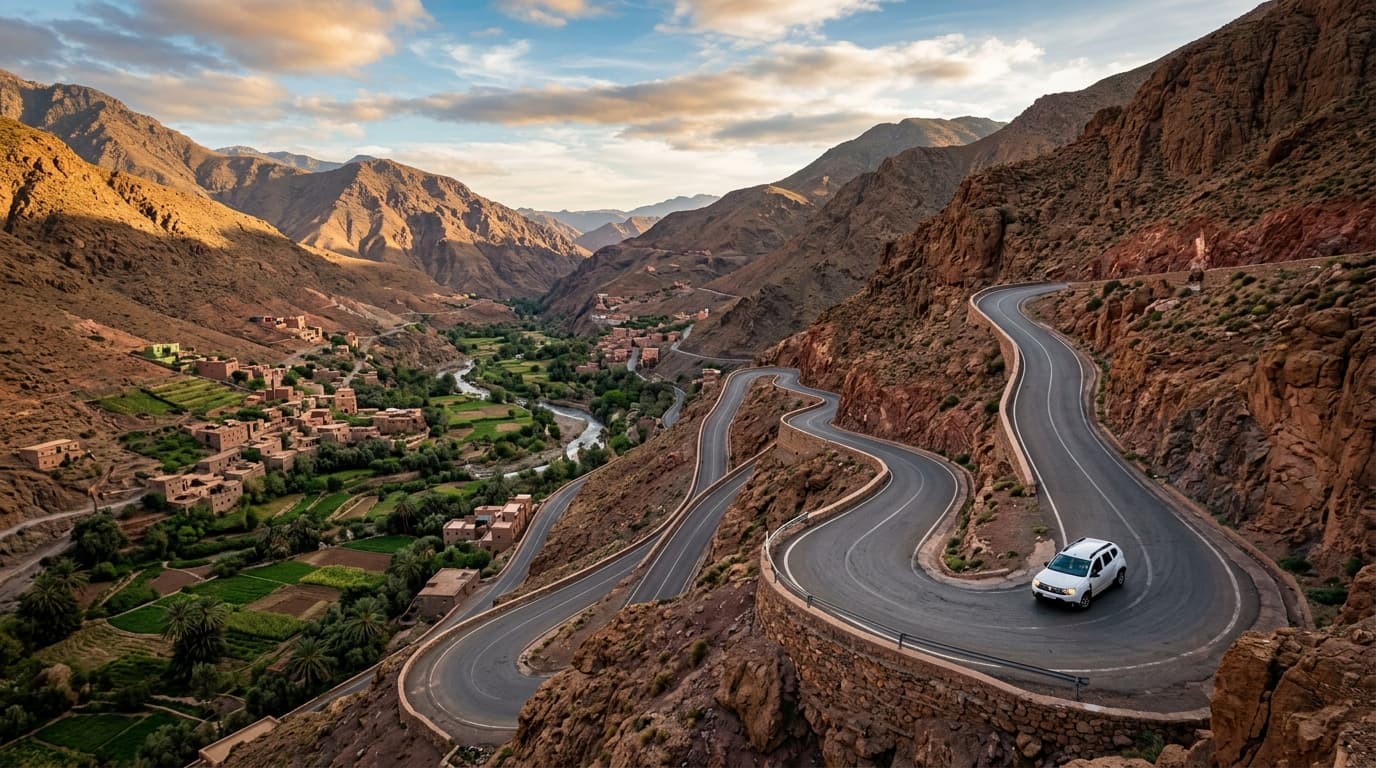
About 25 km north of Boumalne, the Dades Gorge road encounters its most extraordinary section: five hairpin bends on a road that clings to the canyon wall with drops of 60–80 metres to the river below. This sequence is known locally as the 'Monkey Toes' (Doigts de Singe) for the shape the road makes against the cliff face when seen from the ridge above. The bends are tight enough that large vehicles need to reverse into them. The road surface is maintained but potholes develop after winter floods; drive slowly and do not attempt it in a standard hire car if it has been raining heavily. The view from the ridge above the hairpins — best seen by climbing the path to the left of the road before the first bend — is one of the great landscapes of Morocco.
I have driven passes in the Alps and the Dolomites. The Monkey Toes in the Dades were different — not the altitude but the colour of the rock, the desert heat rising from the valley, and the complete absence of guardrails. It felt genuinely ancient.
Sleeping in the Gorge
Several guesthouses are built directly into the canyon walls of the Dades Gorge, using the rock face as one wall of the building. These offer the extraordinary experience of sleeping inside a geological formation — the sound of the Dades River below, canyon walls glowing at sunrise, complete silence after 9 p.m. Properties like Auberge Tissadrine and Gite Ksar Mille Nuits sit within the gorge at roughly 27 km from Boumalne. Prices range from 200 to 500 dirhams including dinner. The cold in winter is real (altitude here is around 1,600m) — confirm heating before booking.
Todra Gorge: The Vertical Walls
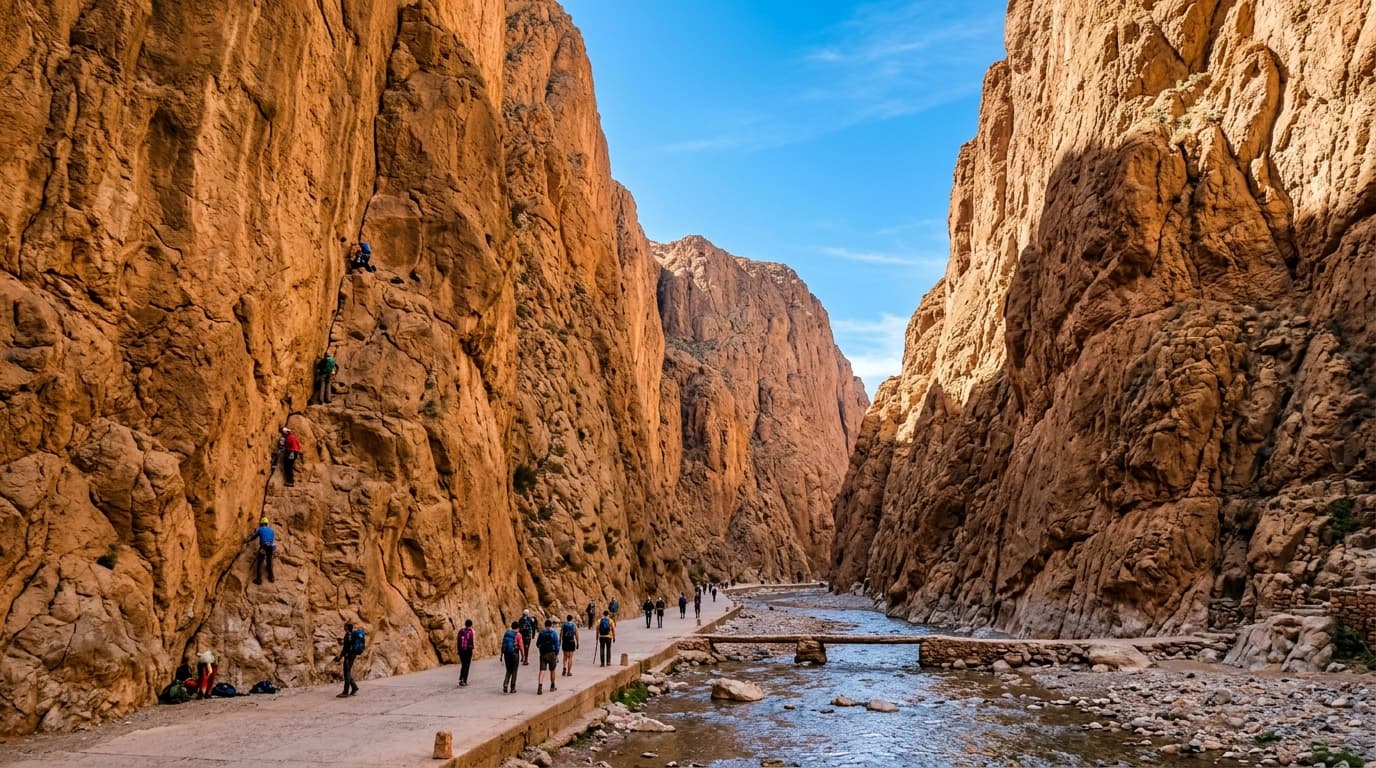
The Todra Gorge, reached from the town of Tinghir (50 km east of Boumalne), produces Morocco's most dramatic rock scenery. At its narrowest point — a 300-metre section where the canyon walls rise nearly vertically to 400 metres on either side of the road — the gorge is only 10 metres wide. The river runs along the canyon floor, ice cold even in summer (its source is in the Atlas snowfields), and the light angles down the canyon walls at mid-morning to create a golden-on-shadow contrast that makes the stone walls appear to glow. This is one of the most photographed natural sites in Morocco and one of the few where the reality exceeds the photographs.
Best Time of Day in the Gorges
Visit the Todra narrowest section between 10 a.m. and noon — this is when direct sunlight reaches the canyon floor and lights both walls simultaneously. The Dades Monkey Toes section photographs best in the 2 hours before sunset when the iron-red rock turns the colour of a coal fire. Avoid both gorges in the middle of summer afternoons when heat and tour buses peak simultaneously.
Rock Climbing in Todra
The Todra Gorge is a major destination for sport rock climbing, with over 150 established routes on the main gorge walls ranging from 5a to 8b. The rock is compact limestone with excellent friction, and the shaded canyon keeps temperatures manageable from March to November. Routes range from single-pitch beginner climbs to multi-pitch lines that reach the canyon rim 300 metres above. Equipment rental and guided climbing sessions are available from several operators in the gorge (300–500 dirhams per person per day including gear and guide). The climbing community here is international and welcoming; non-climbers can watch routes being worked from the valley floor cafes.