 Best Seller-21% OFF
Desert
Sahara Desert Adventure from Marrakech — 3 Days
Merzouga, Morocco
3 DaysModerate
4.9(248 reviews)
$299/ per person
$380
The Golden Dunes
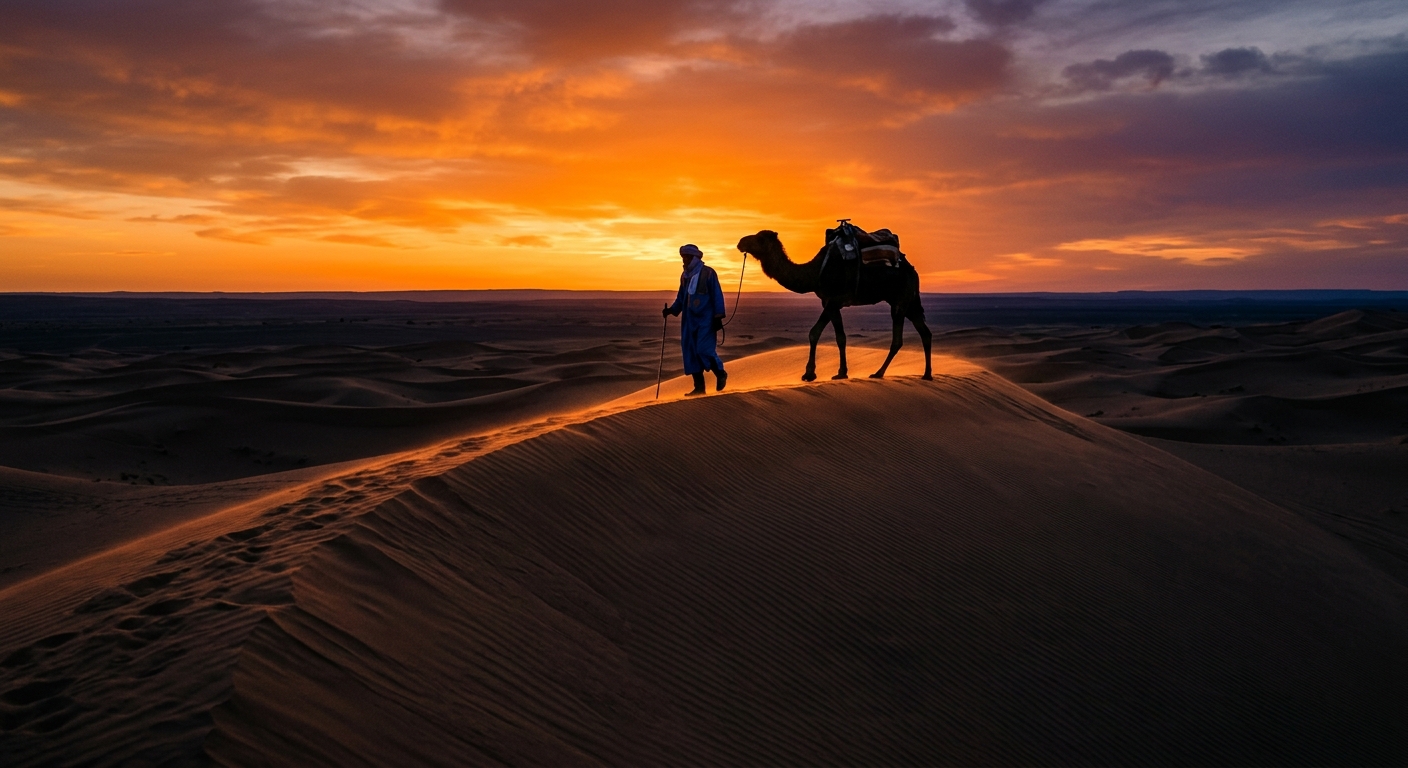
The Moroccan Sahara is one of the great wonders of the natural world — and nowhere does it reveal itself more dramatically than at Erg Chebbi, the vast sand sea near the village of Merzouga in the south-east of the country. Here, dunes of volcanic-orange sand rise to over 150 metres, their razor-edged crests shifting with every desert wind, their slopes casting shadows of extraordinary depth and colour at dawn and dusk. The silence is total, broken only by the soft percussion of sand grains in the breeze and the occasional cry of a desert bird. For many travellers, the first sight of Erg Chebbi at sunrise is the defining moment of their Morocco journey.
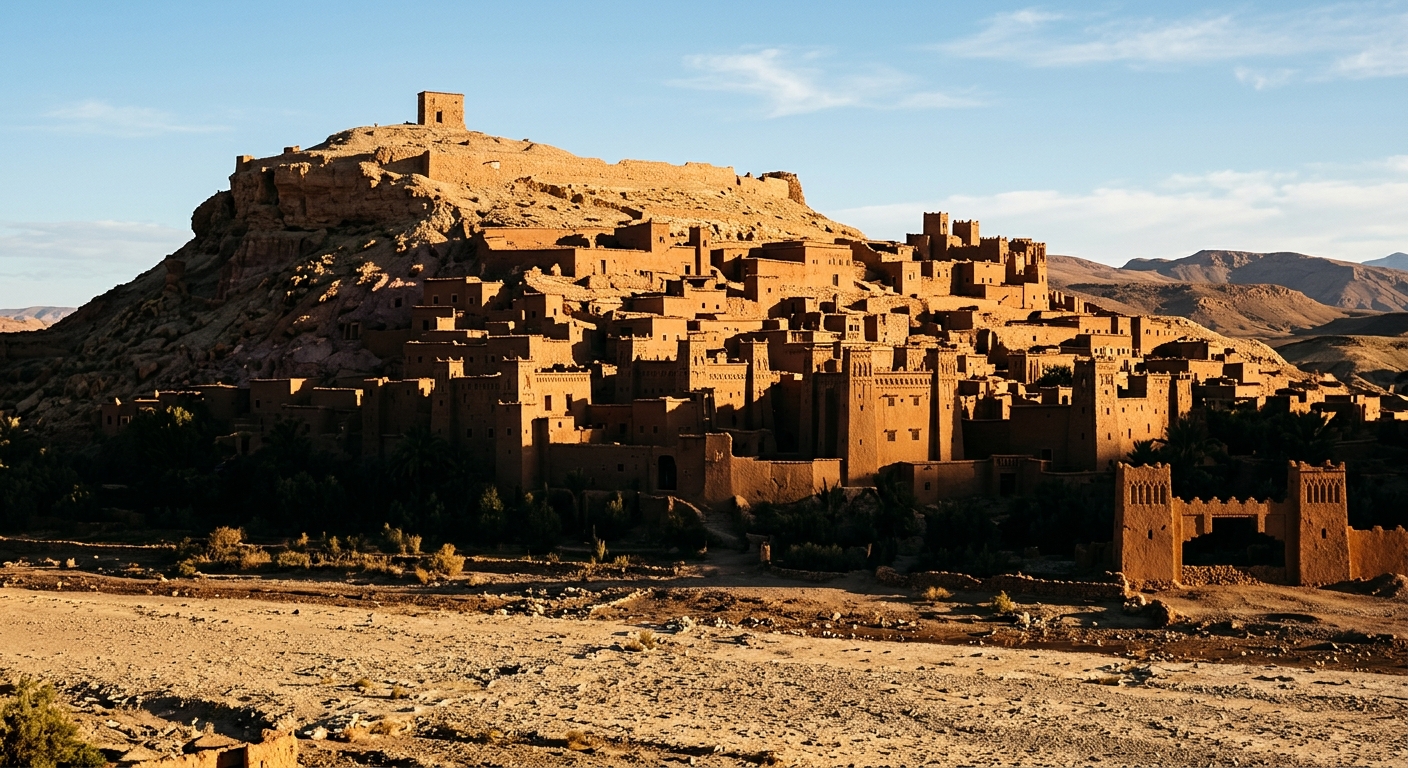
But the Sahara is far more than its dunes. The region surrounding Merzouga and stretching westward through the Draa Valley is one of the most historically and culturally layered landscapes in North Africa. The ancient caravan routes that carried gold, salt and slaves between sub-Saharan Africa and the Mediterranean passed through this terrain for centuries, leaving behind a chain of fortified villages — ksour — built from the same earth-red mud brick as the desert itself. The most celebrated of these, Ait Benhaddou, is a UNESCO World Heritage Site: a towering complex of kasbahs reflected in the shallow waters of the Ounila River, its silhouette so cinematic that it has served as a backdrop for dozens of films and television productions.
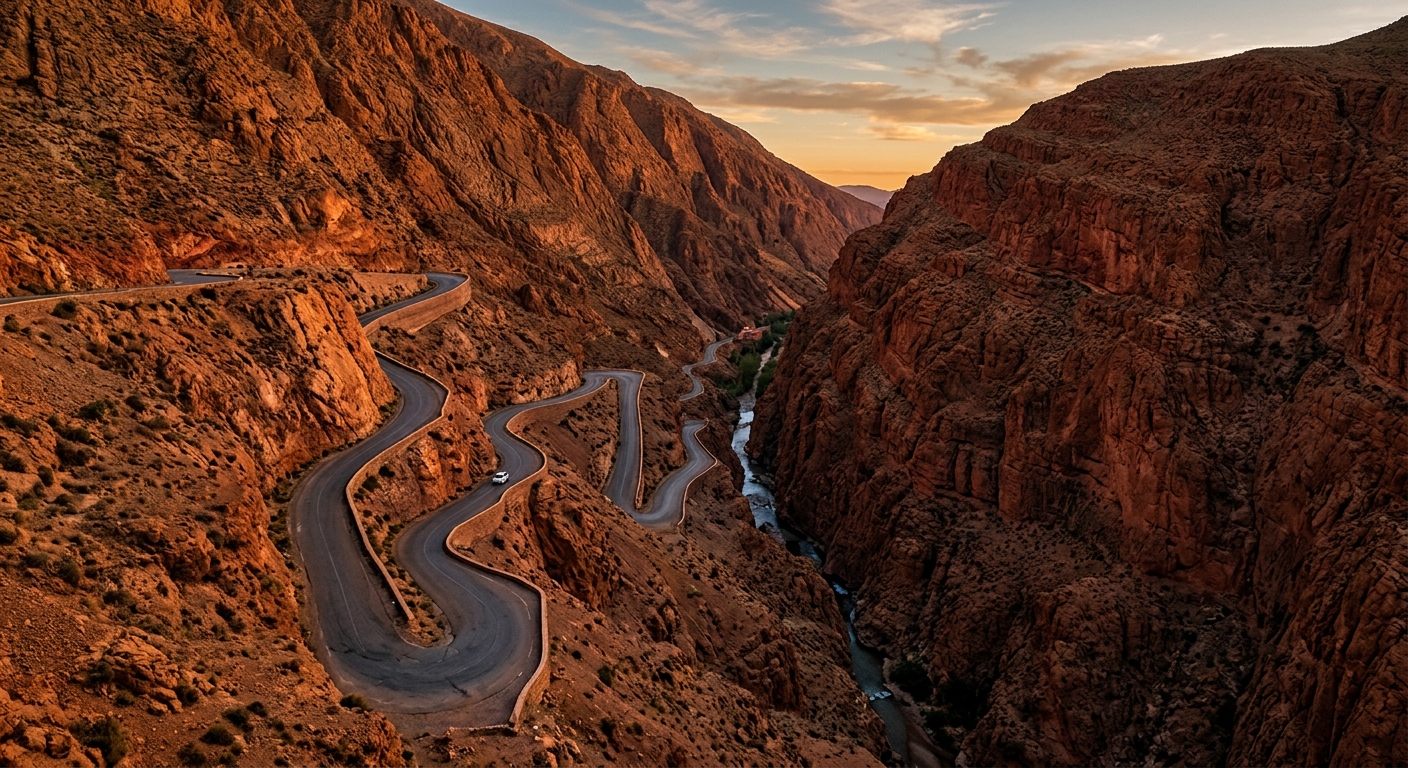
The journey south from Marrakech to Merzouga is itself a journey through deep time. The road passes through the High Atlas via the Tichka Pass, descends into the Ouarzazate basin — sometimes called the Hollywood of Africa — and then winds through the Dadès and Todra Gorges, whose sheer limestone walls rise hundreds of metres above narrow river beds carpeted in green. These gorges are among the most spectacular geological formations in the world and deserve at least a night each for hikers and rock climbers.
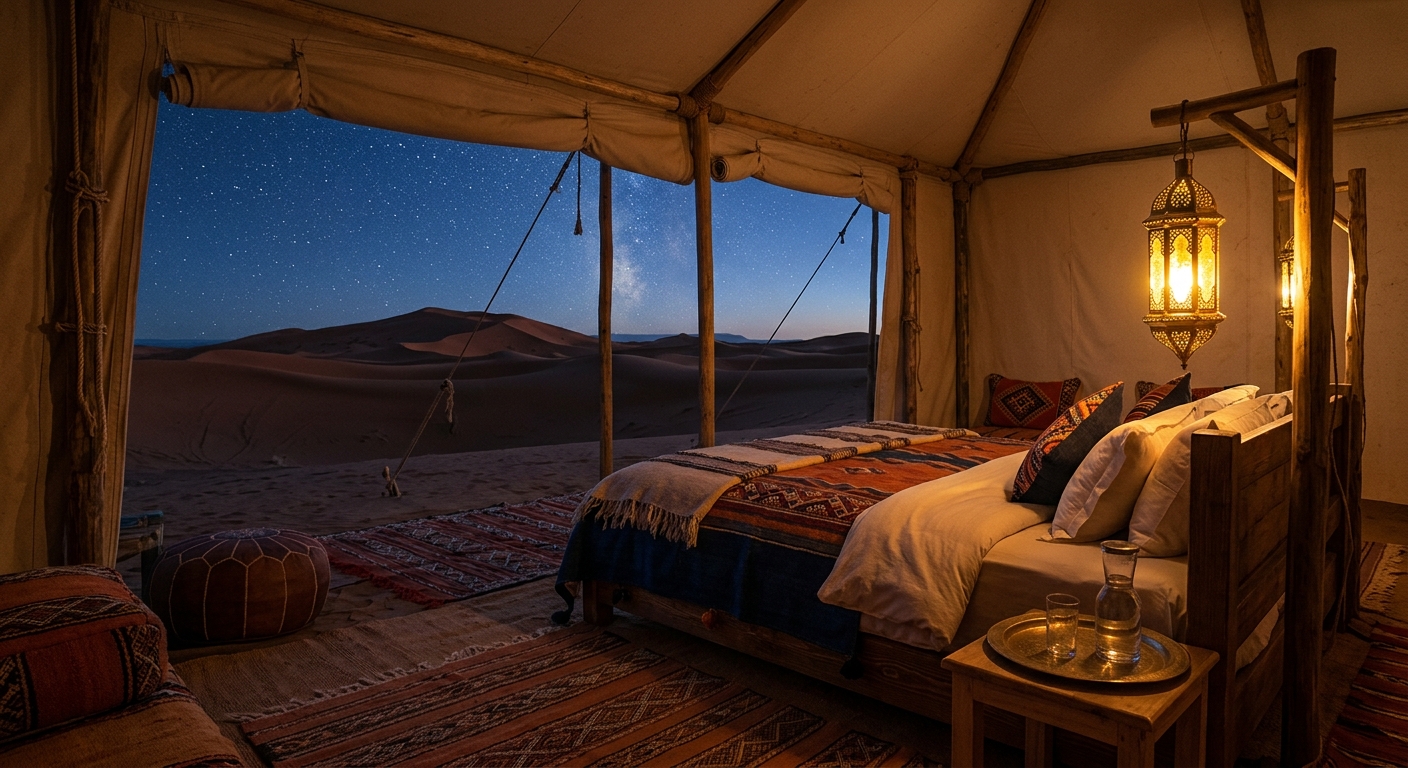
At the heart of this landscape, the Amazigh (Berber) people — whose ancestors inhabited these valleys long before the Arab conquest — maintain a culture of extraordinary warmth and integrity. In the desert camps of Merzouga and the kasbahs of the Draa Valley, travellers are welcomed with the ritualised generosity of mint tea poured from a height, with slow-cooked tagines eaten by firelight, and with music that has carried the stories of this desert people across generations. To sleep beneath the Saharan sky, with no light pollution and the Milky Way arching overhead from horizon to horizon, is an experience that most travellers describe as genuinely transformative.
Summer Temp
45°C
Winter Temp
5°C
Airport
Errachidia Airport (ERH) or Ouarzazate (OZZ)
Languages
Arabic, Tamazight (Amazigh)
Currency
Moroccan Dirham (MAD)
Timezone
GMT+1 (WET/WEST)
Best Time to Visit
The experiences and landmarks that define Sahara Desert as a destination.
The great sand sea at Merzouga, with dunes rising to 150 metres, offers the most spectacular desert scenery in all of North Africa.
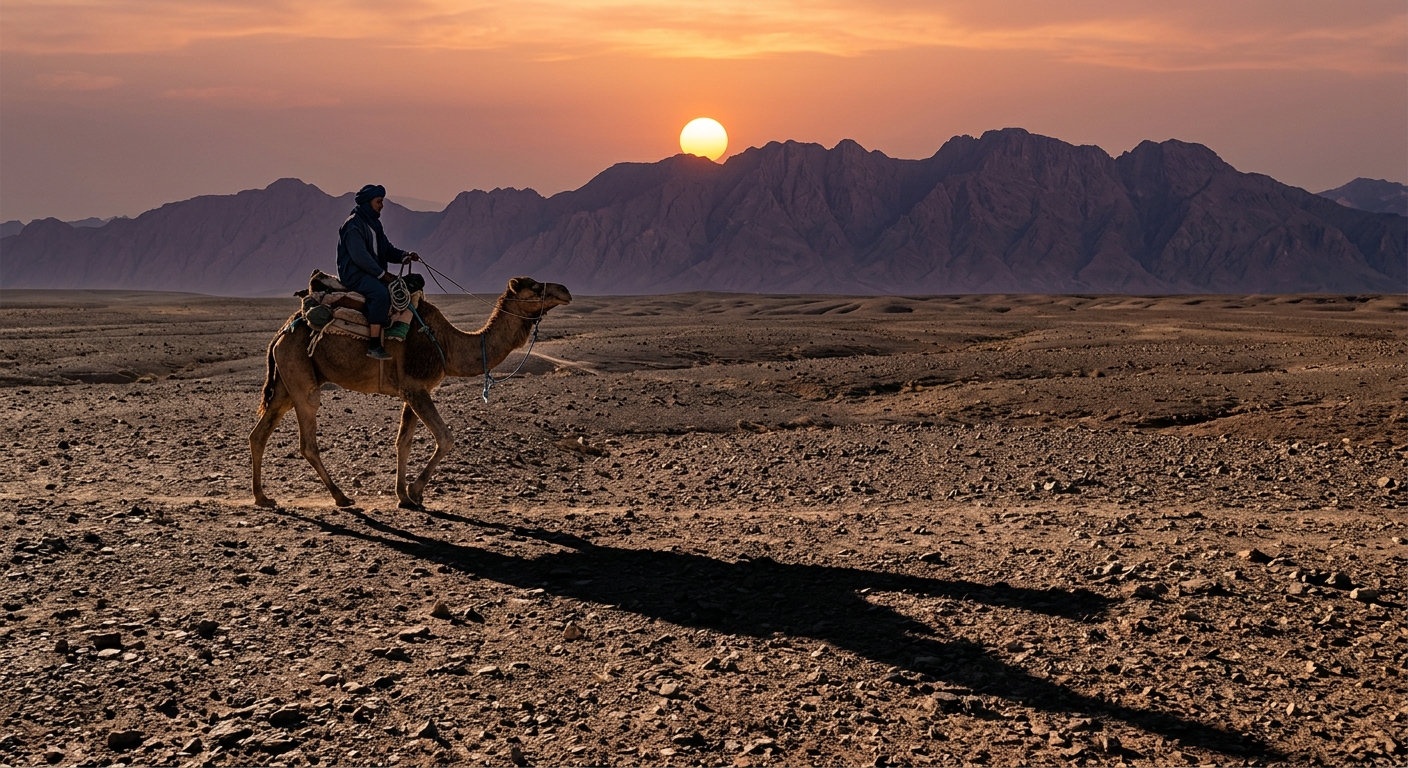
Ride atop a Dromedary camel into the golden heart of the dunes as the light turns the Sahara into a landscape of liquid copper and deep violet shadow.
Spend a night in a heated Berber tent beneath a canopy of stars, with traditional music, tagine dinners and a silence so complete it becomes its own kind of sound.
A UNESCO World Heritage fortress-village of layered mud-brick towers, once a major caravan stop on the salt and gold route between the Sahara and Marrakech.
Two of Morocco's most dramatic landscapes: vertical canyon walls rising hundreds of metres, carved by ancient rivers and painted in the warm reds of oxidised limestone.
With zero light pollution and skies of extraordinary clarity, the Sahara at Merzouga offers some of the finest naked-eye stargazing available anywhere on Earth.
The definitive Morocco desert experience: camel trek into Erg Chebbi, a night in a luxury desert camp with traditional Gnawa music, sandboarding at dawn and a scenic return through the Draa Valley kasbahs.
A shorter introduction to the Sahara — a two-hour camel ride into the dunes for sunset, followed by mint tea and traditional music at a desert camp before returning under the stars.
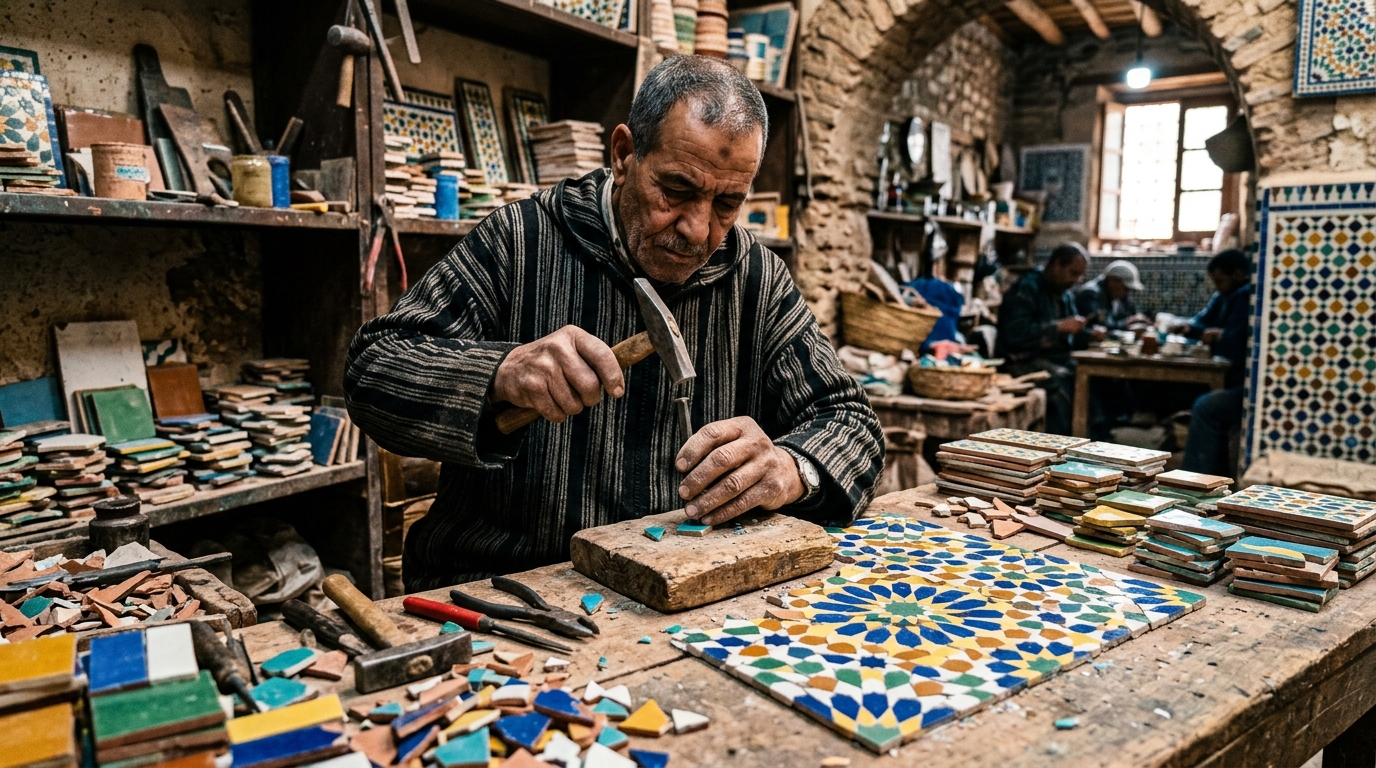
A classic southern Morocco circuit taking in the UNESCO-listed kasbah of Ait Benhaddou and the vertiginous switchbacks of the Dades Gorge — ideal preparation for the desert ahead.
Upgrade your desert experience to a private luxury camp with en-suite facilities, private terrace, personalised service and a private stargazing session with a Amazigh astronomy guide.
Best Seller-21% OFFMerzouga, Morocco
 Luxury-23% OFF
Merzouga, Morocco
 Road Trip
Ouarzazate, Morocco
 UNESCO
Ait Ben Haddou, Morocco
 Romantic
Agafay Desert, Morocco
Avoid visiting between June and August when temperatures regularly exceed 45C — spring and autumn offer the best balance of manageable heat and dramatic light.
Pack a headscarf or shemagh for the camel trek; wind-blown sand in your eyes and nose is a real hazard, and the cloth also provides sun protection.
Agree all camel trek and camp prices before departure — reputable operators provide written quotes and it protects both parties.
The dunes are coldest in the hour before dawn; bring a warm layer for early-morning sandboarding or sunrise climbs regardless of how hot the day was.
Bring extra cash — Merzouga and the surrounding villages have few ATMs and cards are not accepted at most desert camps.
Sunrise is consistently more spectacular than sunset in Erg Chebbi as the angled light throws the dune ridges into sharper relief — set your alarm.
The Sahara Desert region of Merzouga is approximately 550 kilometres south-east of Marrakech — a scenic 7-8 hour drive through some of Morocco's most extraordinary landscapes, passing Ouarzazate, the Draa Valley and the Dades Gorge. Many travellers choose a guided tour that incorporates these stops en route, making the journey itself a core part of the experience. Errachidia Airport (ERH) offers limited domestic connections from Casablanca if time is short. Alternatively, Ouarzazate Airport (OZZ) receives some charter and seasonal flights from Europe and provides a good base for a longer southern Morocco circuit.
Nearest Airport
Errachidia Airport (ERH) or Ouarzazate (OZZ)
Your Adventure Awaits
Our Morocco specialists will craft the perfect itinerary for your timeframe and budget.


