 Adventure-17% OFF
Mountains
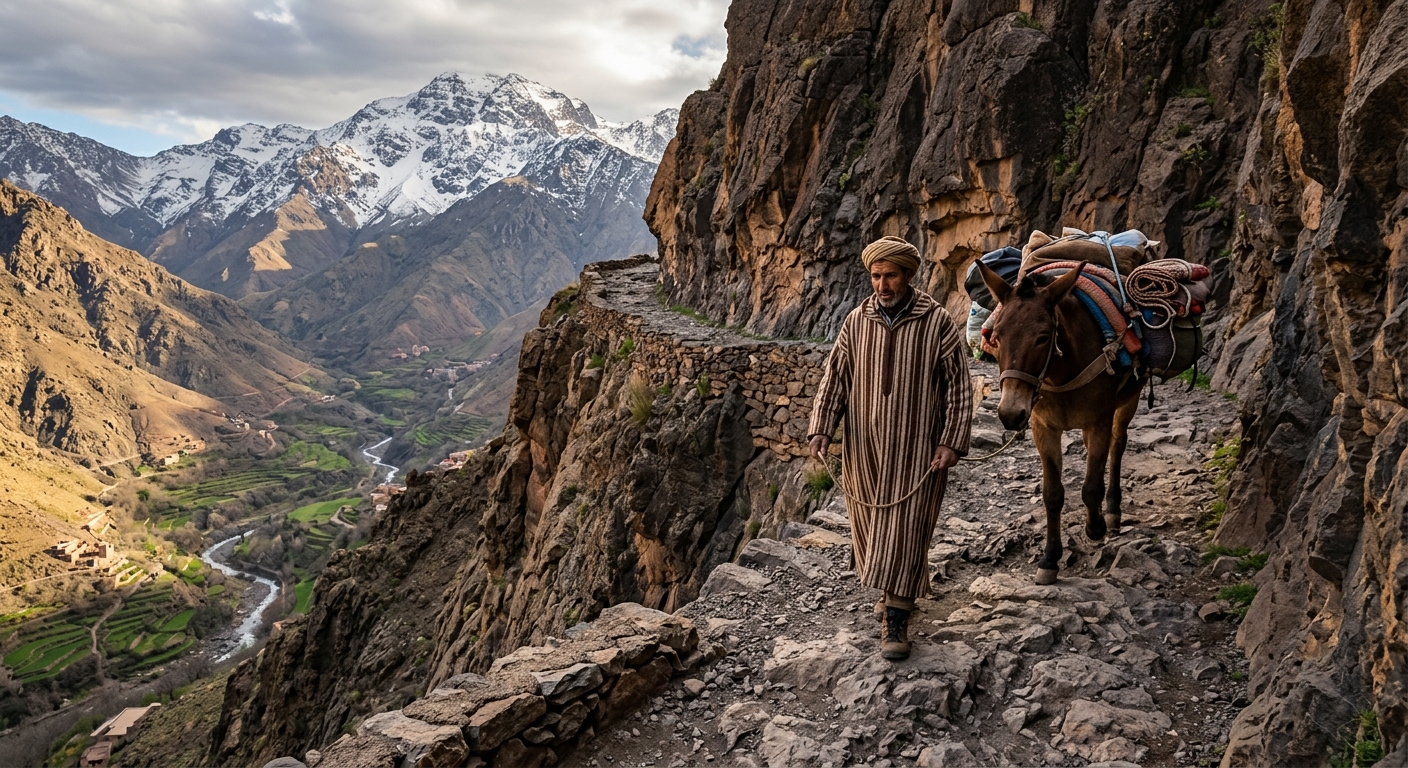
Atlas Mountains Berber Trek — 3 Days
Imlil, Morocco
3 DaysDifficult
4.8(167 reviews)
$249/ per person
$299
Peaks & Berber Villages
The Atlas Mountains are Morocco's dramatic spine — a 2,500-kilometre chain that divides the temperate, Mediterranean-influenced north from the Saharan south, sheltering fertile valleys and ancient Amazigh (Berber) villages that have remained largely unchanged for millennia. The High Atlas, with its peaks exceeding 4,000 metres, forms the most spectacular section of this range, and at its crown stands Jbel Toubkal: at 4,167 metres, the highest peak in North Africa, and one of the most accessible high-altitude summits on the continent for non-technical climbers.
The Atlas is first and foremost the heartland of the Amazigh people — the indigenous Berbers of North Africa — whose language, Tamazight, is written in a script older than Arabic and whose customs, cuisine and architecture are inseparable from the landscape they inhabit. Driving through the Atlas, you pass through a succession of villages where flat-roofed stone houses cluster around ancient kasbahs, walnut orchards and terraced wheat fields cling to near-vertical slopes, and mule-drawn ploughs still turn the soil in fields too narrow for machinery. The welcome in these villages is immediate and genuine: a glass of sweet mint tea, a seat on a carpet in the shade, the unhurried offer of conversation.
The Ourika Valley, within an hour of Marrakech, provides the gentlest introduction to the Atlas — a lush green corridor of market villages, argan groves and roadside tagine restaurants leading to waterfalls and the first Amazigh villages. For more serious engagement with the mountains, the Imlil valley, just beyond Asni, is the primary base for Toubkal ascents and multi-day trekking circuits through the Ait Bougmez valley and the remote Mgoun massif. Here, government-certified mountain guides lead routes through a landscape of extraordinary visual drama: glacial lakes, river crossings, passes at 3,000 metres with views stretching from the Sahara to the Atlantic.
What makes the Atlas genuinely special is not just the scenery but the sense of encountering a living culture at altitude. The annual moussem festivals, the collective agricultural practices of water management and harvest, the night skies from a mountain refuge at 3,000 metres — these are experiences that the coastal resorts and imperial cities of Morocco cannot replicate. The Atlas is where you come to understand that Morocco is, at its most fundamental, a mountain civilisation shaped by altitude, isolation and an extraordinary capacity for hospitality.
Summer Temp
22°C
Winter Temp
-5°C (at altitude)
Airport
Marrakech Menara Airport (RAK)
Languages
Tamazight (Amazigh), Arabic, French
Currency
Moroccan Dirham (MAD)
Timezone
GMT+1 (WET/WEST)
Best Time to Visit
The experiences and landmarks that define Atlas Mountains as a destination.
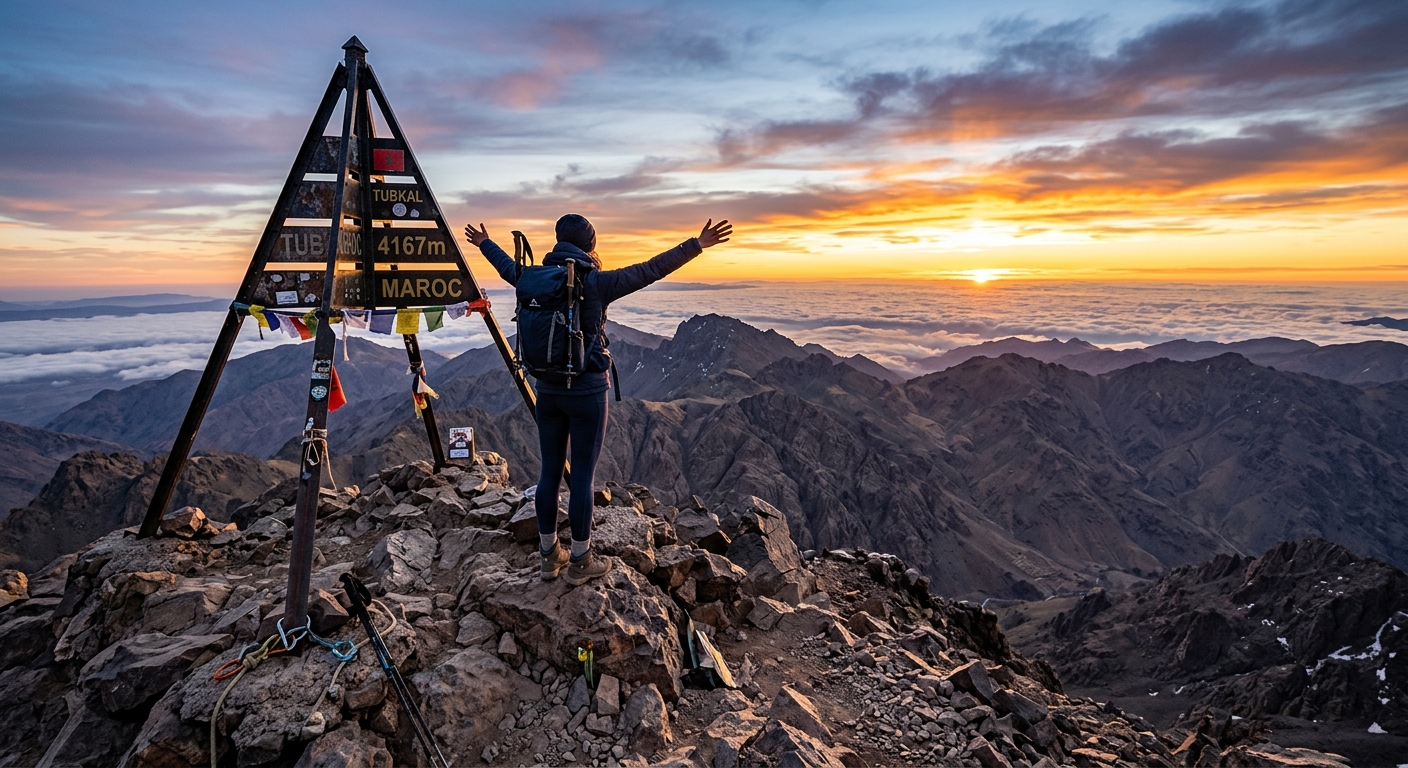
Africa's second-highest country's highest peak at 4,167 metres — a two-day guided ascent that requires no technical equipment but rewards with views from the Sahara to the Atlantic.
Spend a night in an Amazigh village house in the Imlil or Ait Bougmez valley, eating home-cooked tagine and sleeping under a ceiling of hand-woven carpet.
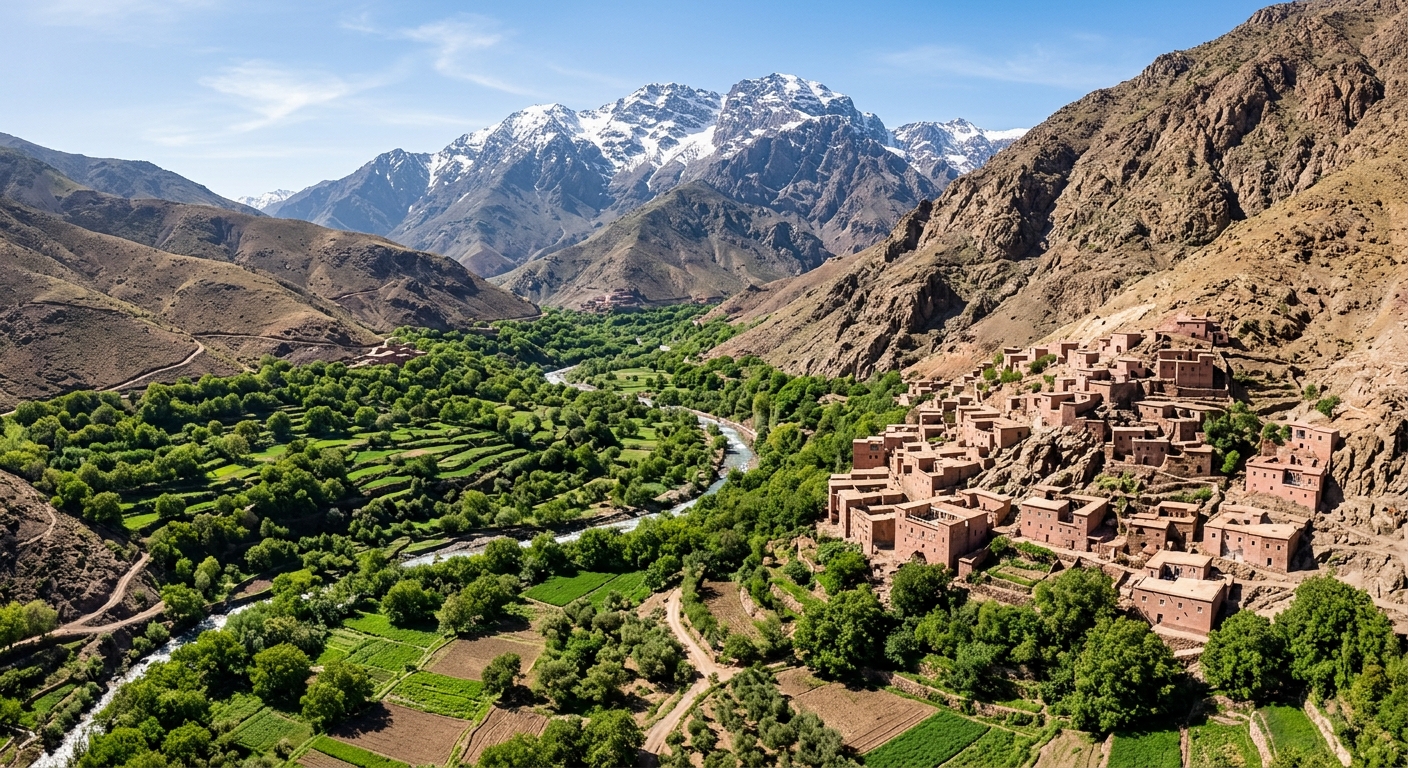
A lush green river valley just 30 minutes from Marrakech, lined with Amazigh market villages, waterfall hikes and the best lunch terraces in the Atlas.
A world-class walking destination with routes ranging from gentle valley walks to demanding multi-day circuits through remote passes and summer pastures.
Visit the women-run cooperatives of the Souss-Massa Valley where Amazigh women hand-press Morocco's famous argan oil — and purchase the real product direct from source.
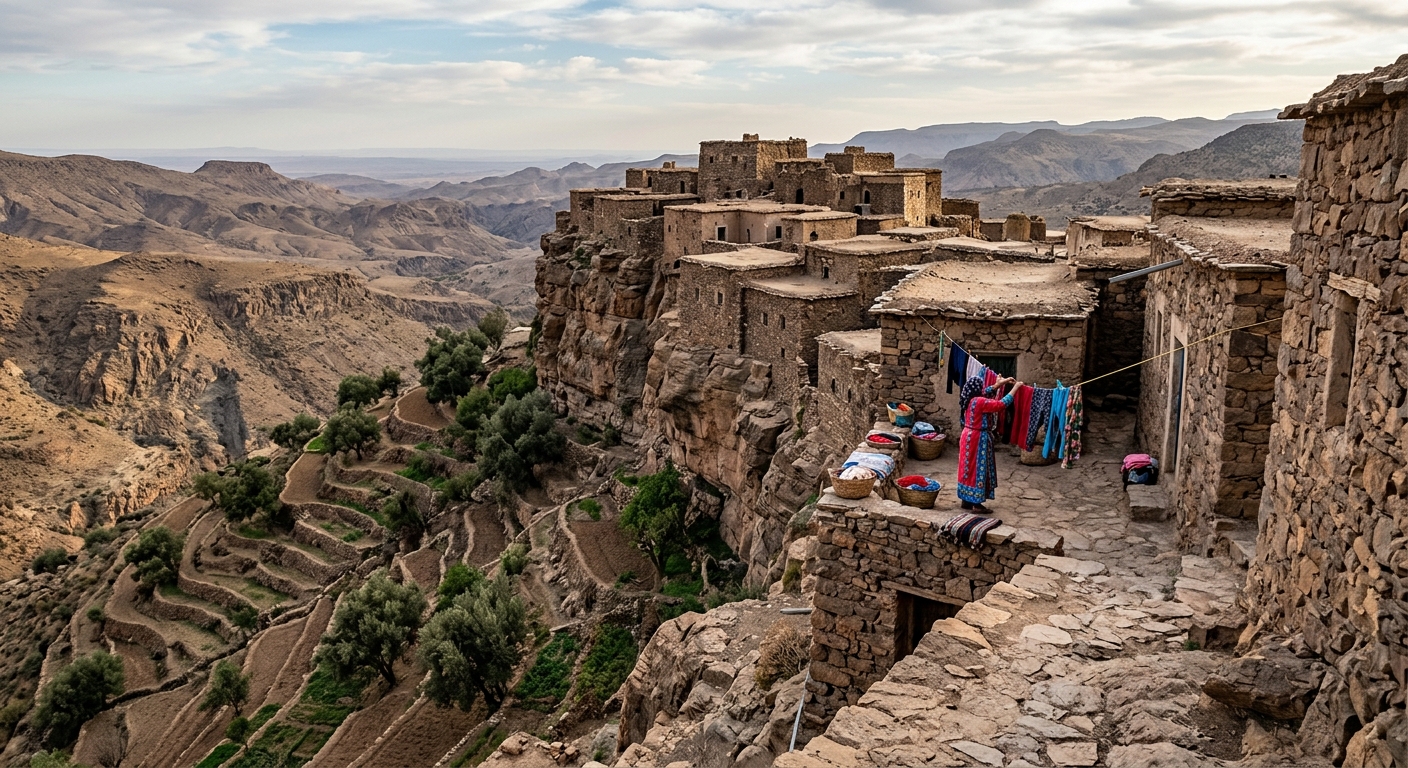
The great UNESCO-listed mud-brick fortress-village on the southern slopes of the Anti-Atlas — a testament to the architectural ingenuity of the pre-Saharan trading civilisation.
A two-day guided ascent of North Africa's highest peak, starting from the mountain hub of Imlil, overnighting at a mountain refuge at 3,207 metres and reaching the summit at dawn for a 360-degree panorama.
A three-day guided circuit through the remote valleys and Amazigh villages of the High Atlas, staying in village guesthouses, crossing mountain passes and learning about traditional Berber life.
A gentle introduction to the Atlas Mountains from Marrakech — a scenic valley drive, a hike to the Seven Waterfalls, lunch on a terrace overlooking the river and a visit to a saffron cooperative.
A half-day walk from the mountain village of Imlil into the surrounding walnut-tree valleys with a certified Amazigh guide, visiting traditional stone mills and a local family for tea.
Adventure-17% OFFImlil, Morocco
 Epic-15% OFF
Toubkal, Morocco
 Off the Beaten Path
Anti-Atlas, Morocco
 Day Trip
Ourika Valley, Morocco
Government-certified mountain guides (Guides de Montagne) carry official ID and are required for Toubkal summit attempts — always verify credentials before engaging a guide.
The Toubkal summit attempt should be treated as a serious mountain undertaking: altitude sickness is a real risk above 3,000 metres, so acclimatise for a night in Imlil before ascending.
The Ourika Valley market (souk) runs on Mondays and provides a wonderfully authentic alternative to the Marrakech souks — goat herders, spice traders and Amazigh weavers all attend.
Mountain guesthouses (gites d'etape) provide simple, clean accommodation at very reasonable rates — reserving ahead through the Imlil-based guide associations ensures quality control.
The months of April and May bring wildflowers to the Atlas valleys — almond blossom in February is an especially stunning spectacle on the southern slopes near Ait Benhaddou.
Always carry more water than you think you will need on Atlas treks — the dry mountain air at altitude dehydrates the body faster than most lowland walkers expect.
The High Atlas Mountains are accessed primarily from Marrakech, the nearest international gateway. Marrakech Menara Airport (RAK) is the ideal arrival point, with direct flights from London, Paris, Amsterdam and most major European cities. From Marrakech, the Atlas Mountains begin in earnest at the Tizi n'Tichka pass (2,260 metres), which is the main road route to the south. The Imlil valley, the base for Toubkal trekking, is 63 kilometres from Marrakech and reached by grand taxi or private transfer in approximately 90 minutes. The Ourika Valley is even closer at 35 kilometres. A 4WD vehicle is advisable for accessing more remote villages and southern slopes.
Nearest Airport
Marrakech Menara Airport (RAK)
Your Adventure Awaits
Our Morocco specialists will craft the perfect itinerary for your timeframe and budget.


