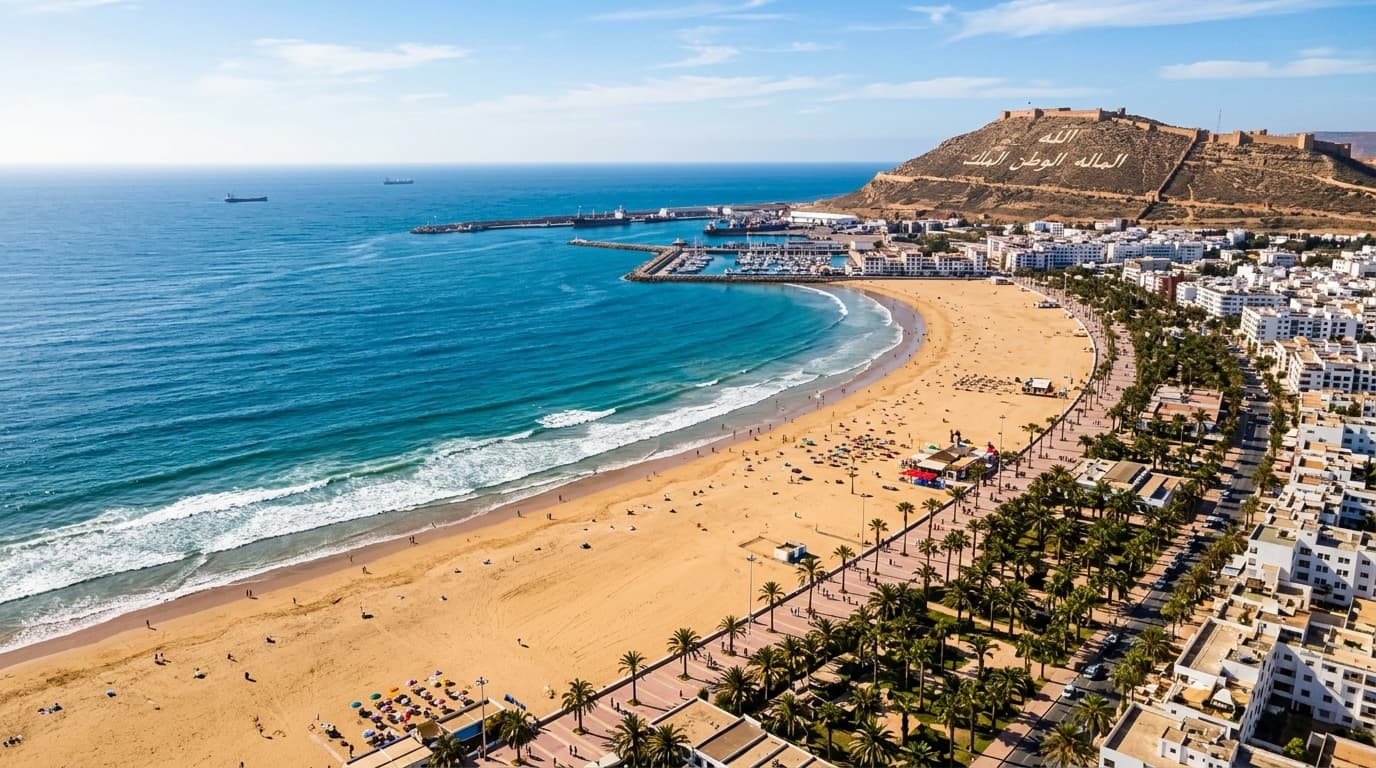
Agadir is Morocco's beach capital — a modern city rebuilt after a devastating 1960 earthquake with a wide sandy bay, reliable sunshine and an Atlantic seafood tradition that ranks among the best in the country.
Agadir in Context
On 29 February 1960, a 5.7-magnitude earthquake destroyed the old city of Agadir in 15 seconds, killing 15,000 people — a third of the population. The city was rebuilt from scratch on its current site, which explains its entirely modern character. Unlike Morocco's other major cities, Agadir has no medina, no historic architecture and no medieval street plan. What it has instead is a 10-km sandy beach that ranks among the finest in North Africa, 300 days of sunshine per year, a modern resort infrastructure, and access to some of the best food and landscape in the Souss Valley surrounding it.
Agadir at a Glance
300
Sunny days per year
10 km
Beach length
700,000
City population
25 km
Distance to airport (AGA)
1960
Year city was rebuilt
The Beach
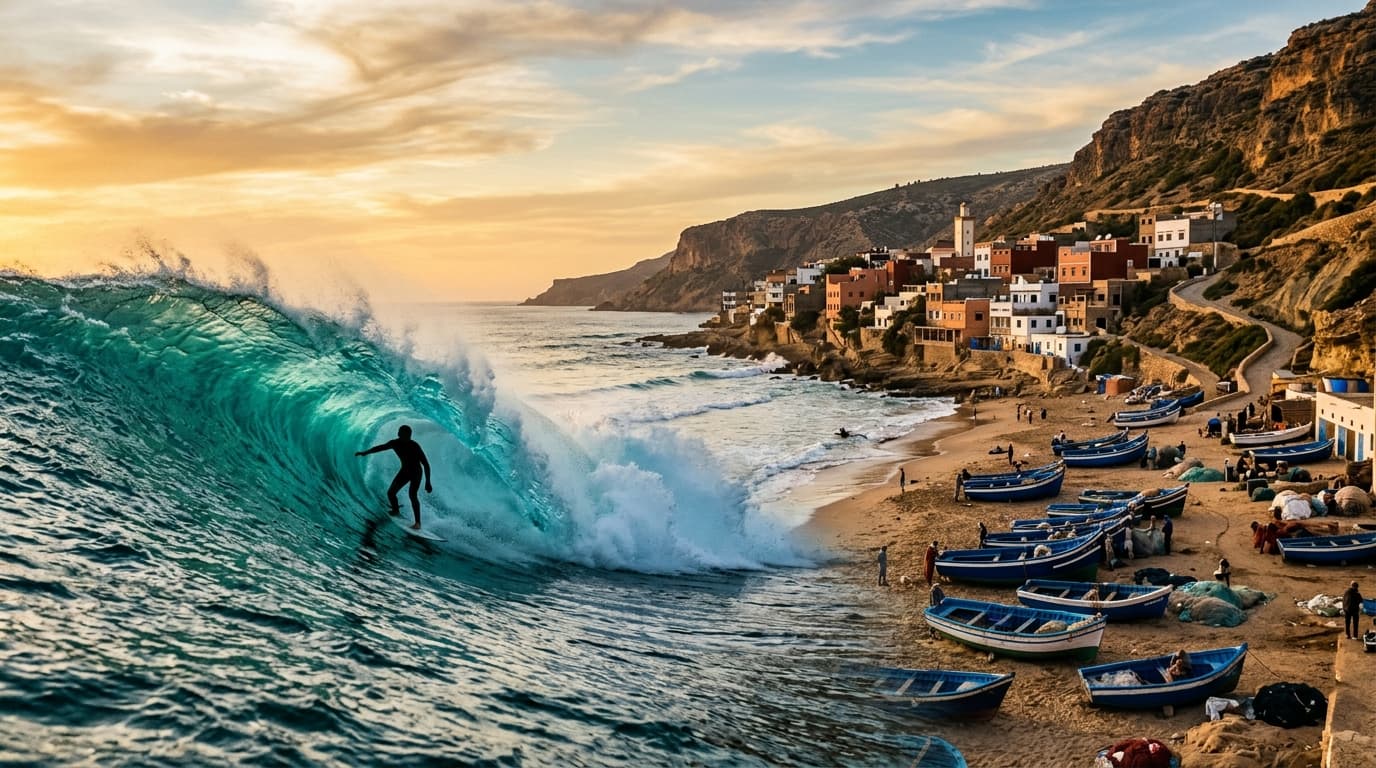
Agadir's beach — Plage d'Agadir — is a wide, gently shelving arc of golden sand that runs from the port in the north to the Oued Souss estuary in the south. The water is clean, the Atlantic swell is moderate, and the beach is well managed with lifeguards in summer. The northern end near the port tends to be windier and more suitable for water sports. The central and southern sections are calmer and better for swimming. Beach furniture is rented from operators directly on the sand at 60–100 dirhams per day for two sunbeds and a parasol.
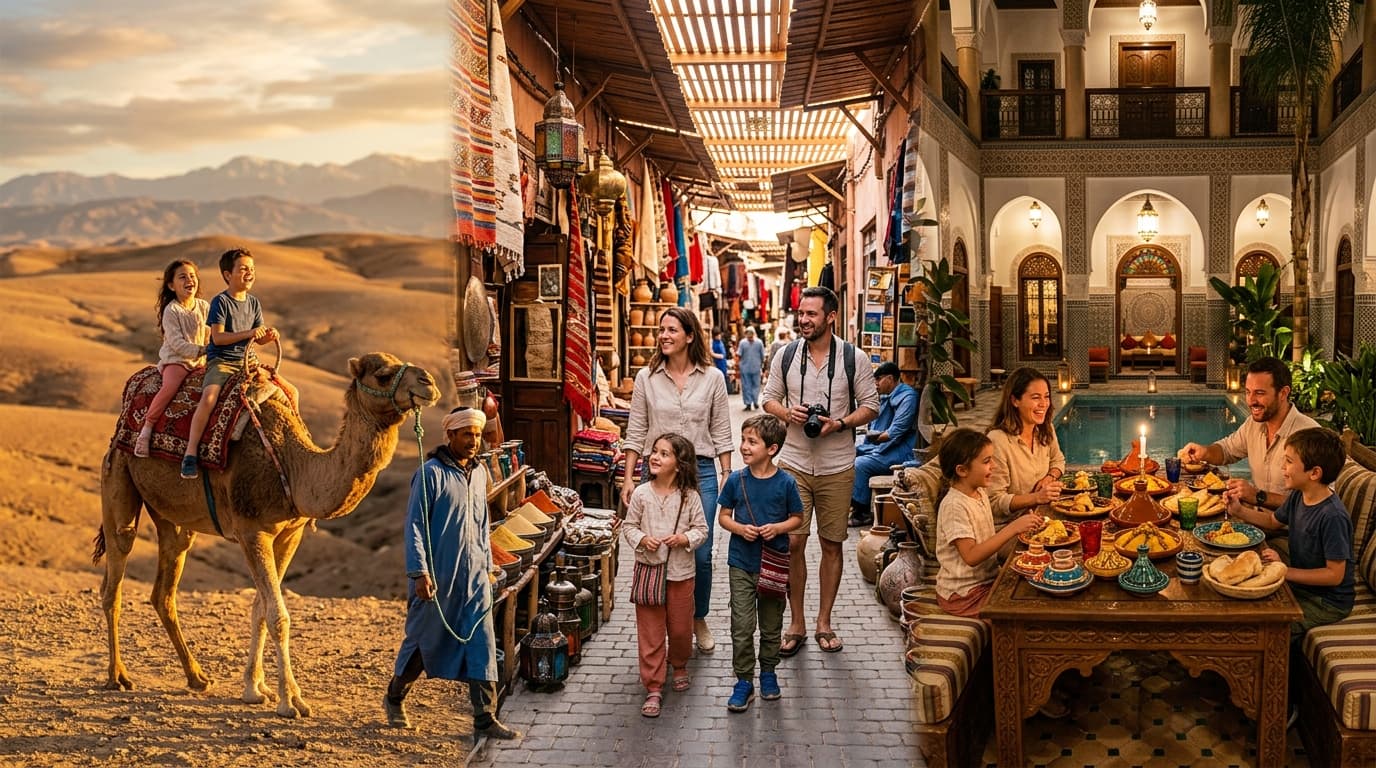
We have taken the kids to Agadir three times. The beach is safe, the sea is calm in the bay, and we can get a full grilled fish lunch for the four of us for under 300 dirhams. Nothing in Europe touches that value.
The Fish Market and Port
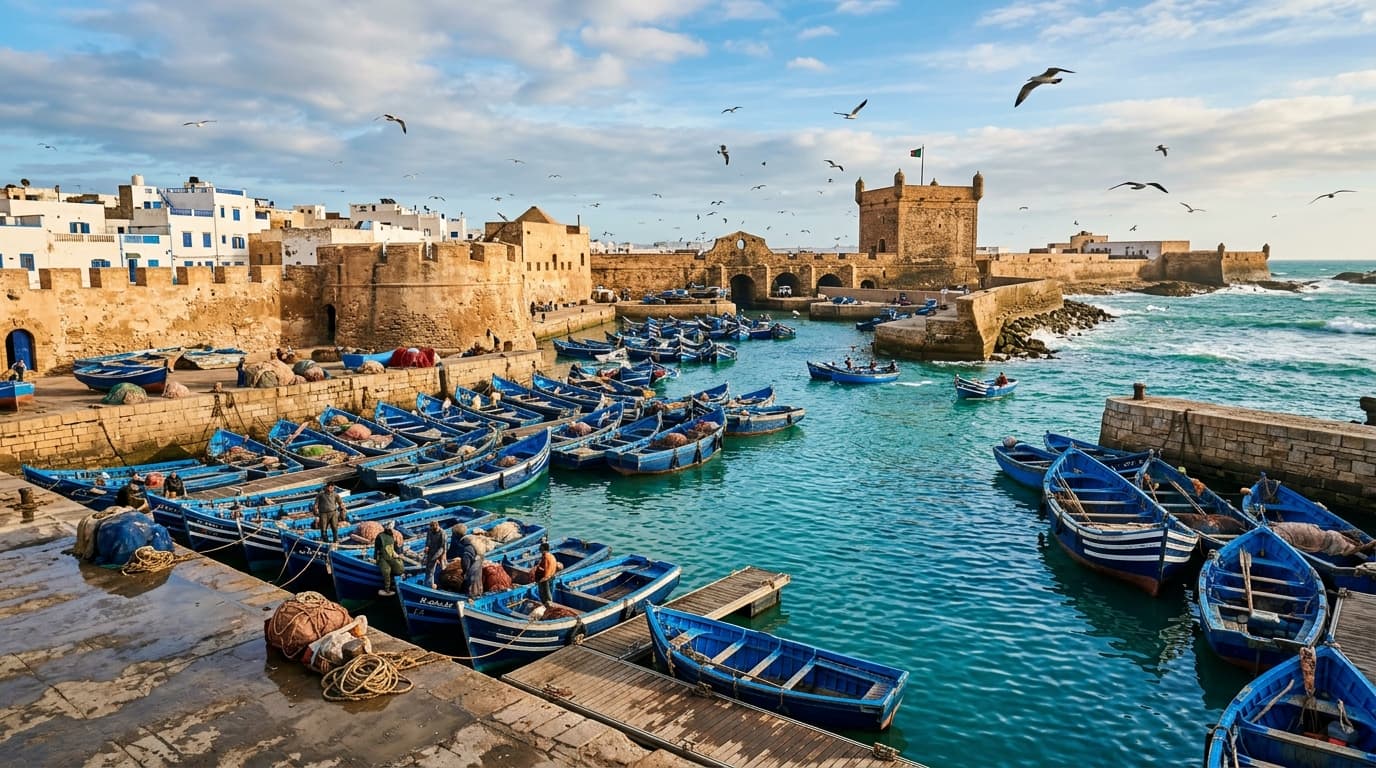
Agadir's fishing port, 2 km north of the main beach, is among the largest sardine fishing ports in the world by volume. The fish market on the port road sells catch from the night's boats every morning from around 7 a.m. — rows of fresh sardines, sea bass, dentex, sole, octopus and prawns sold by auction to local restaurants and traders. The row of fish restaurants along the harbour serves the best and cheapest seafood in Agadir: a full grilled sardine plate with bread and salad costs 40–60 dirhams. Arrive before 12:30 p.m. as the best fish sells out by early afternoon.
Best Things to Eat in Agadir
- Grilled fresh sardines at the port restaurants — 40–60 MAD for a full plate with bread
- Sea bass (loup de mer) cooked over charcoal with chermoula marinade
- Zaalouk — cold roasted aubergine and tomato salad with cumin, served alongside fish
- Argan oil amlou (almond and honey paste) at the Souss Valley cooperatives
- Tiznit almond pastries from the Anti-Atlas market towns 90 km south
- Fresh orange juice from Souss Valley citrus — 6–8 MAD per glass in the market
Old Agadir (Oufella) and the Kasbah
The ruins of the pre-earthquake kasbah and old city of Agadir — known as Oufella — sit on the hill above the modern city. The earthquake left virtually nothing standing, and the site today is a haunting open-air ruin covered with the outlines of former streets and buildings. The views from the hill across the bay of Agadir are the best in the city — particularly at sunset. A viewing platform with interpretive panels explains the pre-1960 history of the city. Access is by petit taxi from the city centre (30–40 dirhams) or on foot for the energetic.
Best Months to Visit Agadir
April to June and September to November offer ideal conditions: sea temperature 20–22°C, air temperature 24–28°C, and far fewer crowds than August. July and August bring peak-season prices and busy beaches. Winter (November to February) is mild at 18–22°C and largely rain-free — good for sightseeing and day trips, though the sea is cold for swimming.
Day Trips from Agadir
The Souss Valley immediately inland from Agadir produces the majority of Morocco's export citrus, argan oil and saffron. The weekly souk at Inezgane (a large market town 10 km south-east) is one of the most authentic market experiences accessible from a beach resort in Morocco. Immouzer des Ida Outanane, a mountain village with waterfalls 60 km north-east, makes an excellent half-day trip into the western High Atlas foothills. Paradise Valley, 60 km north-east, is a palm-filled gorge with natural swimming pools — a popular picnic destination for Agadir residents.
Tiznit and the Anti-Atlas
Tiznit, a silver-working town 90 km south of Agadir, is worth a half-day visit for its functioning silver souk and intact town walls. The Amazigh Tachelhit-speaking craftsmen here produce some of the finest silver jewellery in southern Morocco — heavy bracelets, ankle cuffs and ceremonial headdresses. An hour's drive further south takes you into the Anti-Atlas plateau, a landscape of granite and argan forest that feels entirely different from the Sahara's sand or the Atlas's rock. The almond-blossom season in February is one of Morocco's most beautiful and least-visited spectacles.
Practical Notes for Agadir
Agadir Al Massira airport (AGA) is served from the UK by Ryanair, easyJet and TUI. It is 25 km from the city; a petit taxi costs 100–150 dirhams. The city has no medina to navigate and is perfectly manageable without a guide. Hire a car for any day trips to the Atlas or Tiznit — the roads are good and the distances manageable. Accommodation ranges from budget guesthouses at 250 MAD to five-star beach resorts at 2,500 MAD and above.