Morocco is a genuinely family-friendly travel destination — Moroccans adore children, the food is accommodating, and the variety of experiences available keeps different ages engaged. Here is how to plan a trip that works for the whole family.
Why Morocco Works Well for Families
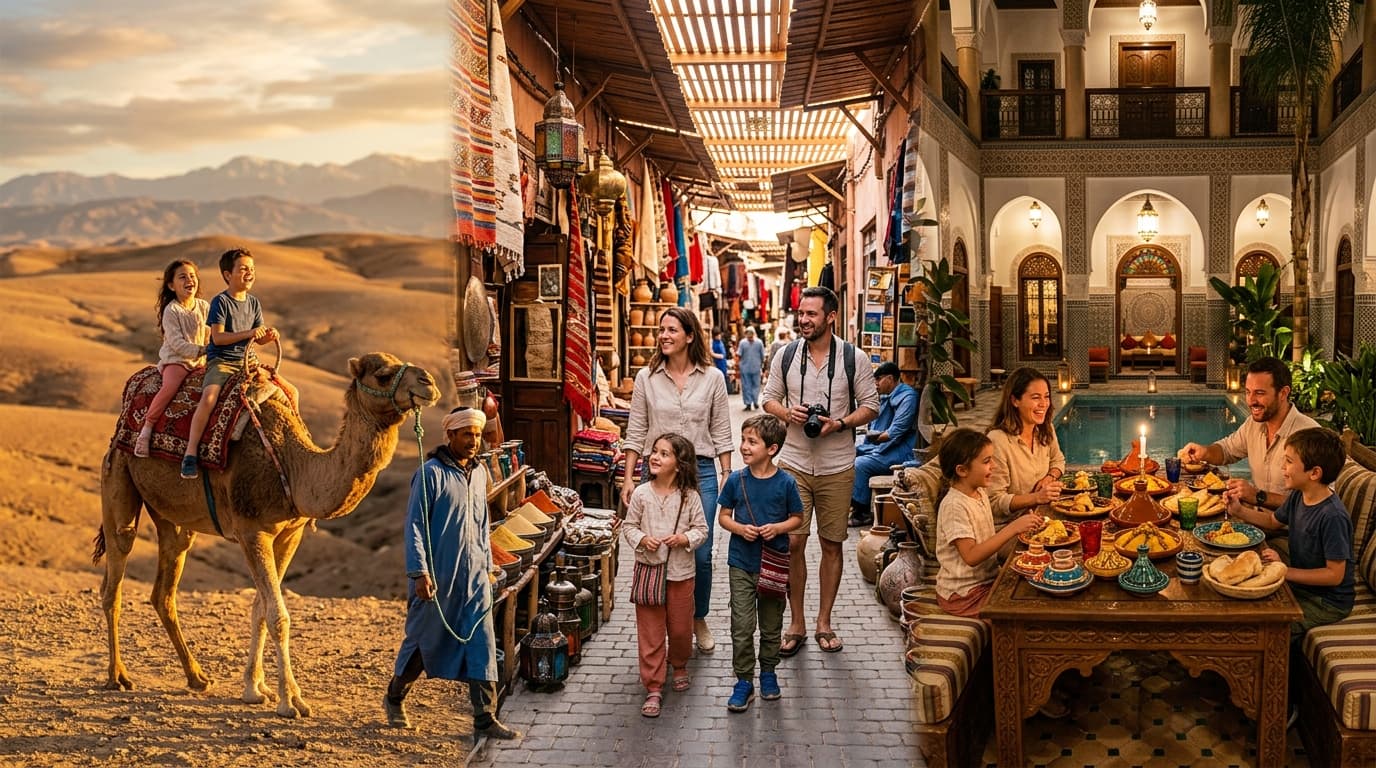
Moroccan culture is profoundly child-centred. Children are welcomed unreservedly in restaurants, riads, shops and public spaces in a way that can feel remarkable to visitors from northern European backgrounds. A family arriving at a riad with young children will find them fussed over, given extra food, and often entertained by staff members with a natural warmth that is not performance. This cultural attitude extends across the country — from the medinas to the Sahara — and makes the logistics of travelling with children significantly easier than the sensory complexity of Morocco might suggest from the outside.
Family Morocco by the Numbers
6+
Ideal minimum age for full circuit
10 km
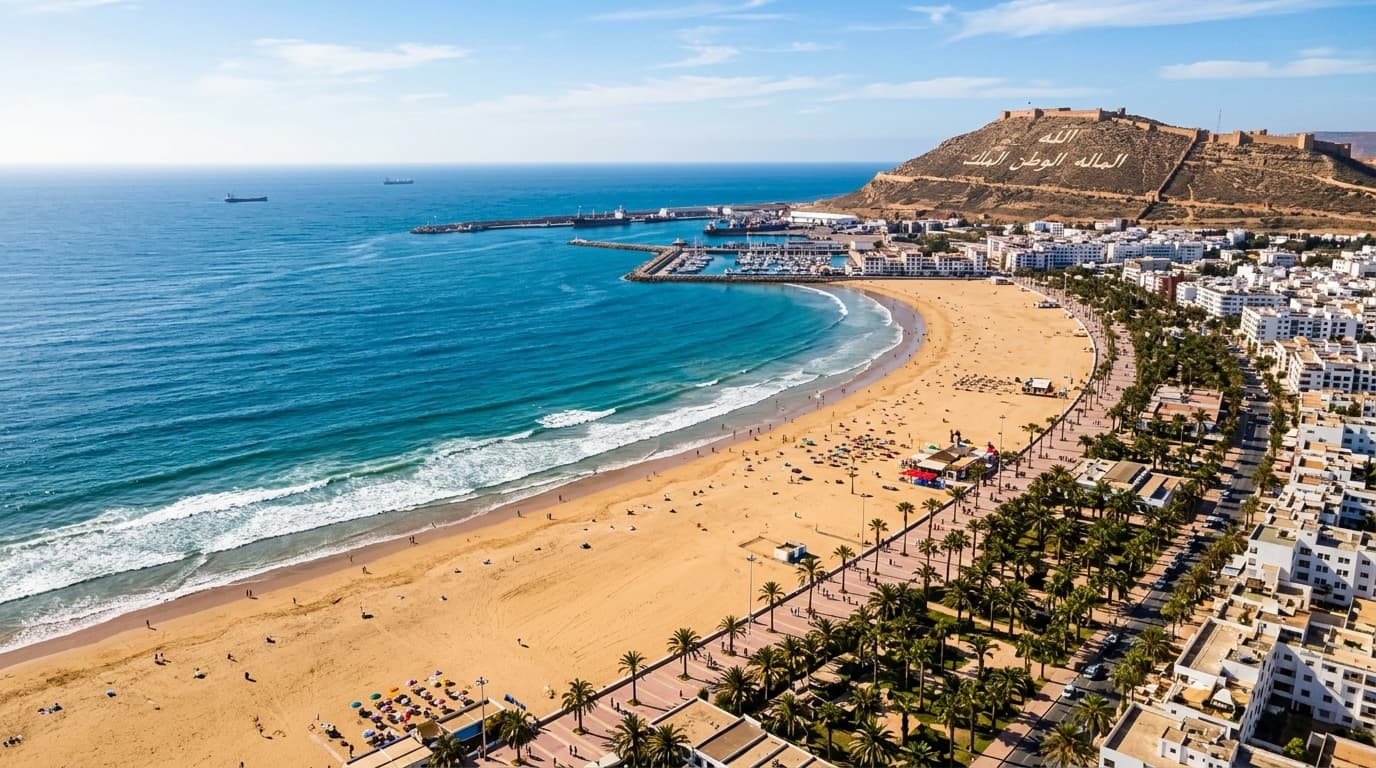
Agadir beach length
150m
Height of Erg Chebbi dunes
300 MAD
Typical family fish lunch at Agadir port
2 hrs
Recommended cooking class for kids
Best Ages for Morocco
Morocco is manageable with children of any age, but the sweet spot is roughly 6–14. Children under 3 can find the noise, sensory intensity and walking distances of medina exploration tiring; stroller navigation in the Fes and Marrakech medinas is essentially impossible on the uneven, narrow lanes. Children from 6 upwards find the combination of camels, kasbahs, Sahara sand dunes and souk exploration genuinely exciting rather than merely tolerable. Teenagers typically respond very positively — the visual stimulus, the food, the surfing culture in Taghazout and the Atlas Mountains all offer something engaging.
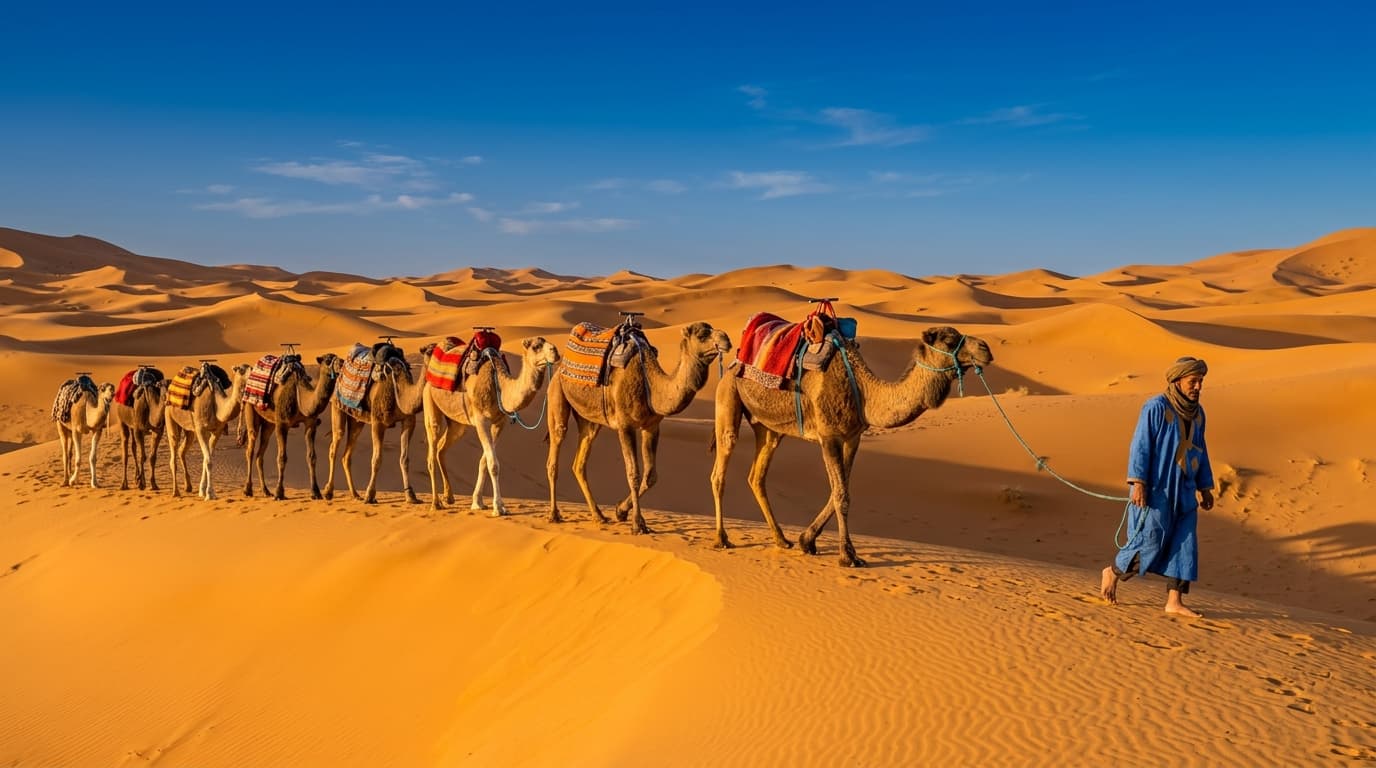
My son is nine and spent the entire camel ride asking the guide questions about how the dunes move. At the camp, a Gnawa musician let him try the qraqab castanets. He still talks about it as the best night of his life.
Best Family Destinations
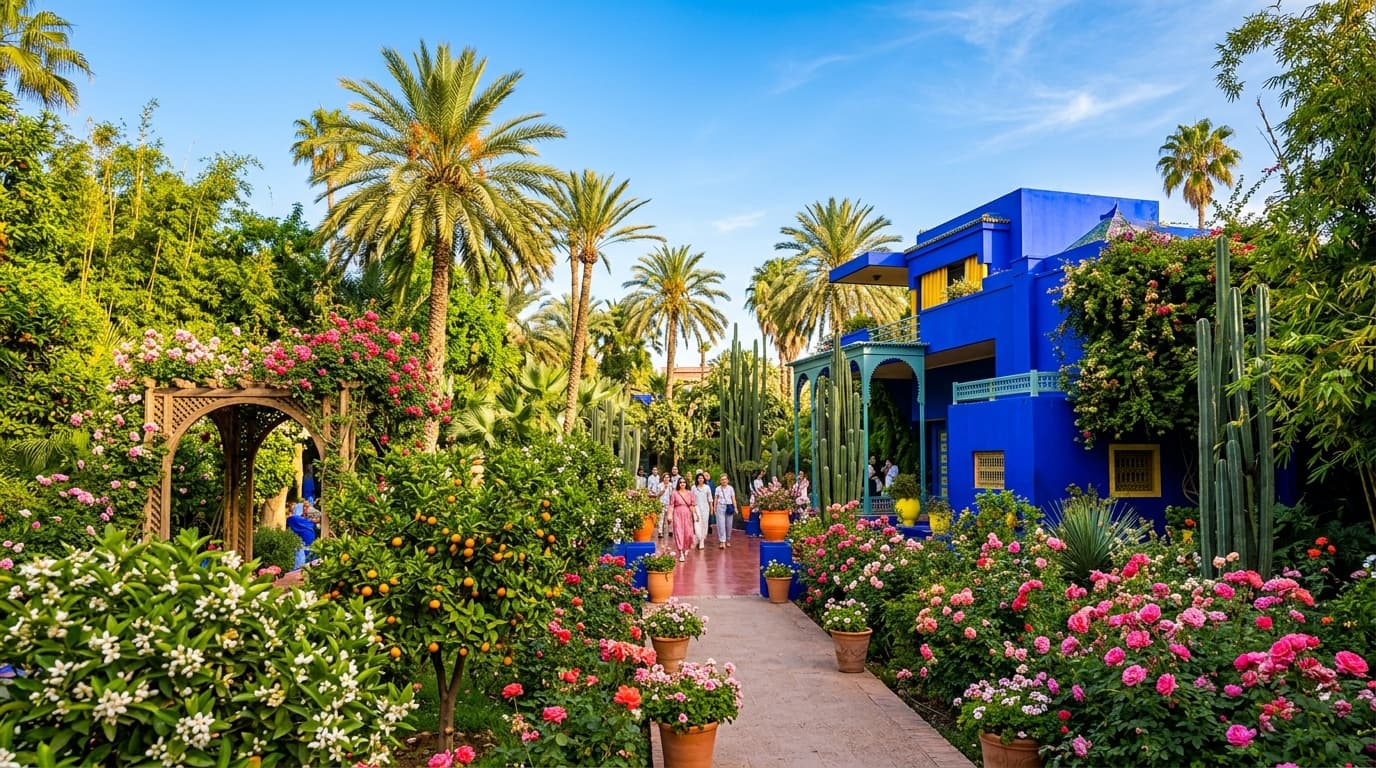
Agadir is the most straightforwardly family-friendly city in Morocco — a long beach, calm surf in the sheltered bay, wide promenade, no medina navigation required, and hotel infrastructure designed for families. Marrakech with children works well if you balance medina time with the Majorelle Garden, carriage rides on the Palmeraie road and day trips to the Ourika Valley. The Sahara is a highlight for children aged 6 and above who can manage the camel ride and overnight stay. Essaouira is excellent with children — the beach is wide and safe, the medina is navigable, and the port provides entertainment.
Activities Children Enjoy Most
- Camel ride to a Sahara camp and overnight in a tent under desert stars
- Majorelle Garden, Marrakech — vivid blue architecture, koi pond, exotic plants
- Horse-drawn calèche ride around Marrakech's Palmeraie
- Family cooking class (bread, tagine, mint tea) — available at many Marrakech riads from 250 MAD
- Imlil valley walk past watermills and Amazigh villages with mules and farm animals
- Ouzoud Waterfalls — 110m cascade with resident Barbary macaques, 150 km from Marrakech
Activities Children Enjoy
The camel ride to a Sahara camp is invariably the highlight of any family trip. The Majorelle Garden in Marrakech holds children's attention well. The horse-drawn carriage (calèche) ride around the Palmeraie is popular with younger children. Cooking classes designed for families are offered by several riads — a 2-hour session making bread, tagine and mint tea engages children from age 7 upwards. In the Atlas, Imlil valley walks past watermills and through Amazigh villages with mules and farm animals engage primary-school-age children particularly well.
Food and Children
Moroccan food is relatively accommodating for children. The foundation dishes — chicken tagine with preserved lemon, lamb with couscous, fresh bread, the sweet pastries, fresh orange juice and mint tea — contain nothing that most children find confrontational. The spice levels in tourist-oriented restaurant tagines are mild; family-run guesthouses and riads will reduce spice further if asked. Harira soup is particularly popular with children. Allergy note: sesame features in many Moroccan pastries; argan oil is a tree nut present in amlou; nuts appear in pastilla and many pastries. Inform properties of allergies specifically rather than generally.
Health Essentials for Families
Feed children only freshly cooked food and use bottled water for drinking and brushing teeth. Carry oral rehydration salts. Sun protection is critical — SPF 50, wide-brim hats and UV-protective swimwear at Sahara and Atlas latitudes. Pharmacies across Morocco stock children's paediatric ibuprofen, rehydration salts and antihistamines. Travel insurance covering children's medical treatment and evacuation is non-negotiable.
Health and Safety with Children
The main health consideration for families is stomach upset from food or water. Feed children only freshly cooked food, use bottled water, and avoid ice in drinks outside of high-end hotels. Sun protection is critically important — Moroccan sun is intense even in spring and autumn at Sahara and Atlas latitudes, and children burn rapidly. High-factor sunscreen, wide-brim hats and UV-protective swimwear are essential. Pharmacies throughout Morocco are well-stocked with children's medications.
Practical Family Tips
Book riads with ground-floor rooms or properties with elevators if travelling with a baby or toddler. Private drivers rather than shared tours make family travel dramatically more flexible — you can stop when children need to, adjust the pace and return to the hotel when energy runs out. Riads with rooftop pools or splash pools are worth the premium with young children. The shoulder seasons (April to May and September to October) are the best family travel windows: temperatures are comfortable and major sites are not overwhelmingly busy. For the Sahara segment, book a private camp rather than a standard tourist camp — the private space and better sleeping arrangements make the experience manageable for children and adults alike.