Essaouira is Morocco's most distinctive coastal city — a whitewashed, blue-shuttered Atlantic port with a UNESCO-listed medina, world-class winds, excellent seafood and an artistic heritage that spans centuries. Here is everything you need to know.
Why Essaouira Is Different
Essaouira's character was shaped by its Atlantic exposure in ways that set it apart from all other Moroccan cities. The Portuguese built the first fortress here in the 16th century; the current ramparts and grid-pattern medina were designed in 1765 by a French architect, Théodore Cornut, working for Sultan Mohammed III — giving the city an unusual French-influenced layout inside an Arab-Berber context. The result is a medina that is navigable in a way Marrakech and Fez are not, with straight lanes and a logical sequence of squares. The wind — trade winds that arrive from the north-west every afternoon from June to September — defines the city's pace, its activities and its reputation.
Essaouira at a Glance
1765
Year of current medina design
6 km
Length of main beach
500,000
Visitors at Gnawa Festival
25–35 kts
Average trade wind speed (June–Sept)
26°C
Maximum August temperature
The Medina and Ramparts
Essaouira's UNESCO-listed medina is smaller and more manageable than those of Fez or Marrakech. The main arteries — Avenue Sidi Mohammed Ben Abdallah and Rue Zerktouni — are lined with boutiques, galleries and craft workshops. The city has a long association with artisan woodworking using thuya root — a burl wood unique to the Moroccan Atlantic coast that produces a swirling grain pattern used for jewellery boxes, chess sets and decorative objects. The ramparts themselves, the Skala du Port and the Skala de la Ville, offer sea views across the Atlantic and are accessible for free. The view north along the beach from the Skala de la Ville at sunset, with the rampart cannon in the foreground, is one of the iconic Moroccan images.
The Port and the Fish Grills
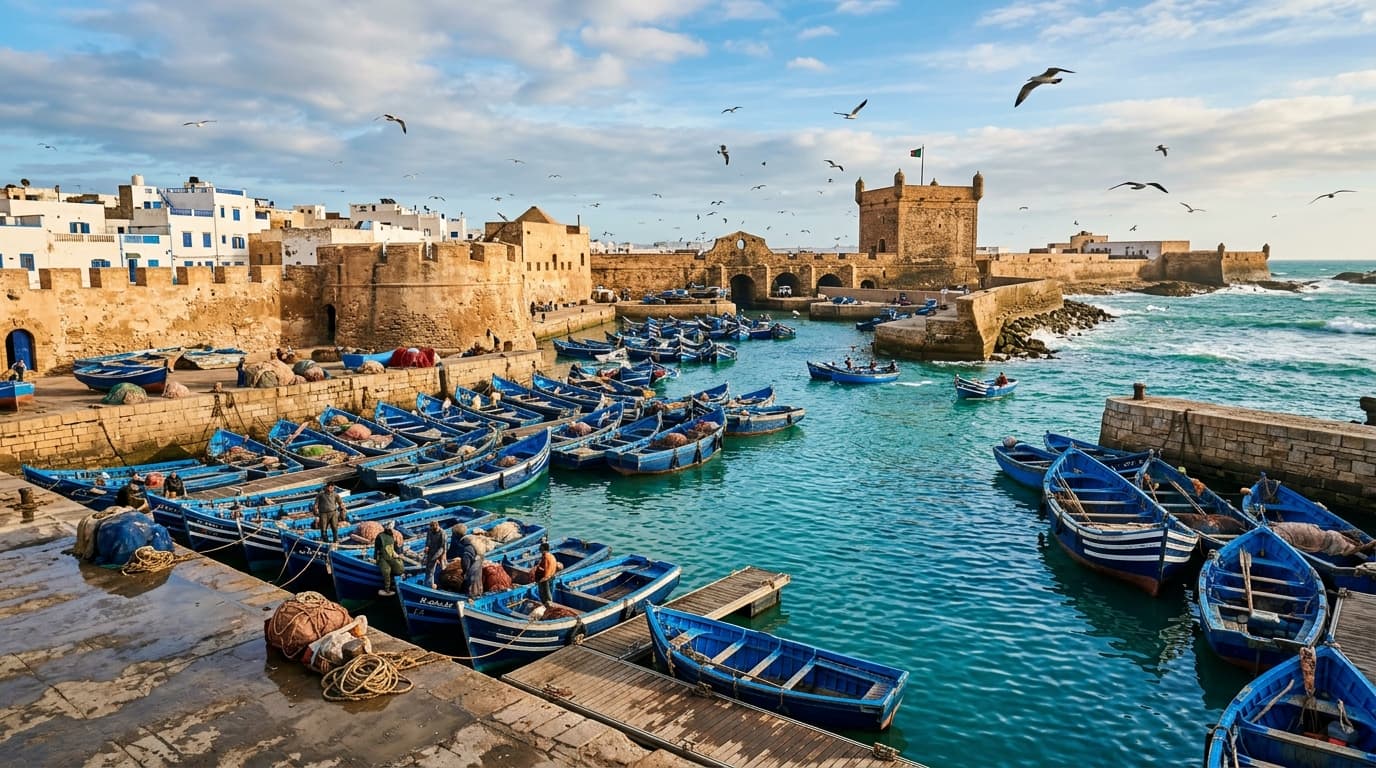
Essaouira's working fishing port sits directly below the Skala du Port ramparts and unloads its catch every morning from around 8 a.m. The port-side restaurants along the quay — a row of numbered stalls with fish, lobster, sardines and prawns displayed on ice — are among the most reliable and keenly priced seafood options in Morocco. You choose your fish by weight from the counter, it is grilled over charcoal while you wait and served with bread, olives, zaalouk and chermoula. Expect to pay 80–150 dirhams for a full grilled fish meal. Arrive before 12:30 p.m. as the best fish sells out. The sardines in particular — Essaouira processes some of the finest Atlantic sardines in the world — are worth making the trip for.
I ate grilled sea bass at the port stalls for three consecutive days. Each time the fish had been unloaded that morning. I have eaten at expensive fish restaurants across Europe and nothing came close to 100 dirhams beside the Atlantic wall.
Gnawa Music and the Festival
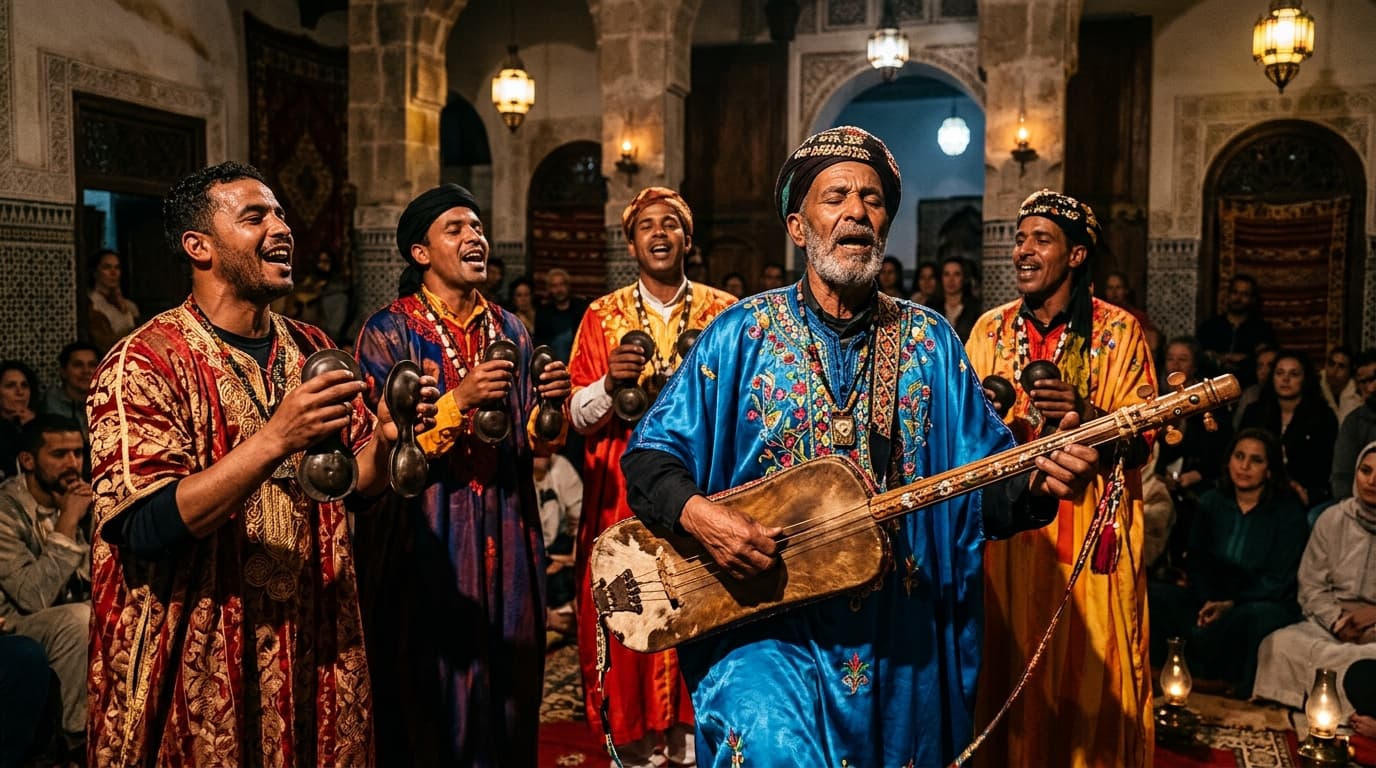
Essaouira is the global home of Gnawa music — a trance music tradition brought to Morocco by sub-Saharan slaves and used historically in spiritual healing ceremonies. The Gnawa and World Music Festival, held each June in the central squares and on the beach, draws 500,000 visitors over four days and is one of the largest free music festivals in Africa. International musicians collaborate with master Gnawa musicians (maalemeen) on the main stage, while more intimate lila ceremonies — the traditional all-night healing rituals — take place in private settings around the city. Outside festival season, the Place Moulay Hassan hosts impromptu Gnawa performances most evenings that are equally authentic and completely free.
Best Time to Visit Essaouira
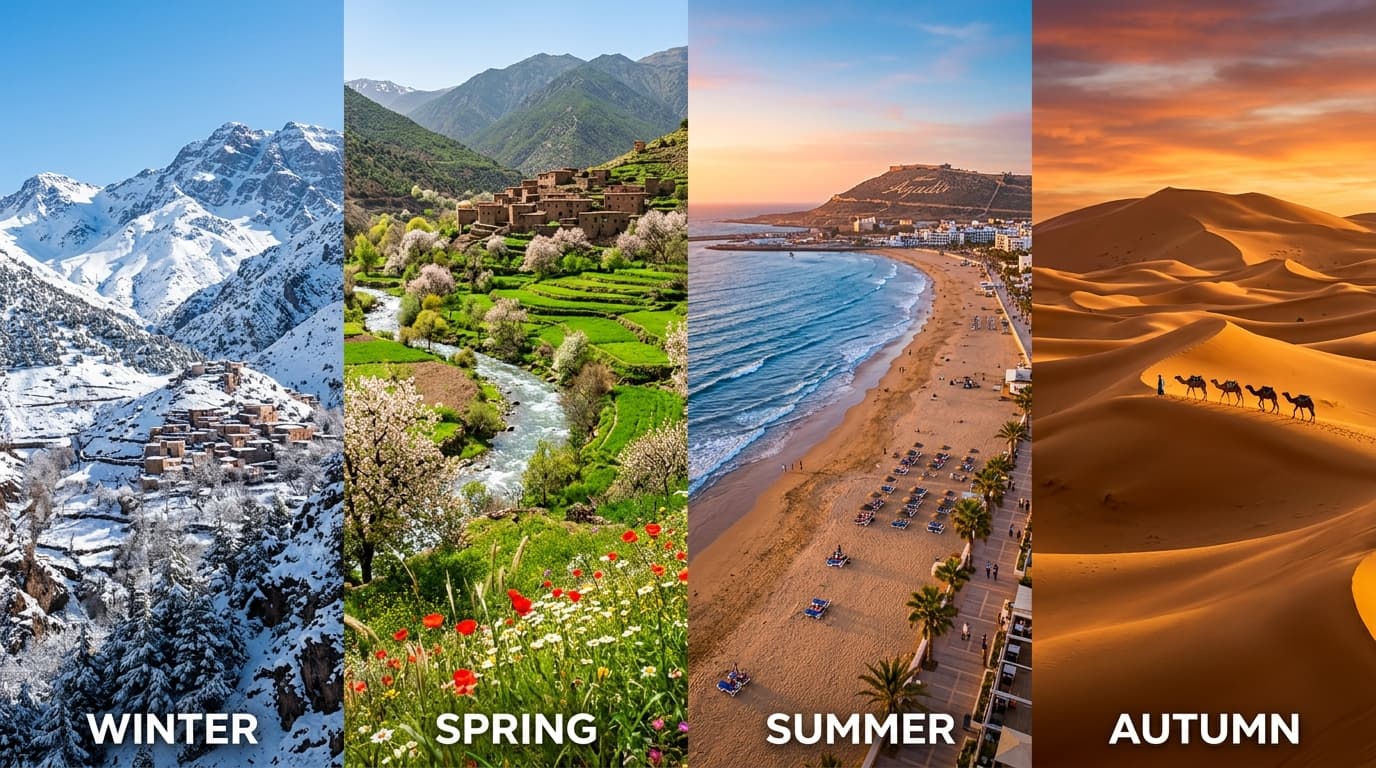
April to June and September to October are ideal — warm, calm enough for swimming, and pleasantly uncrowded. Avoid the Gnawa Festival week in June if crowds concern you; book 3 months ahead if you want to attend it. July to September the afternoon trade winds are strong (perfect for kite surfing, less so for beach days).
Beaches and Wind Sports
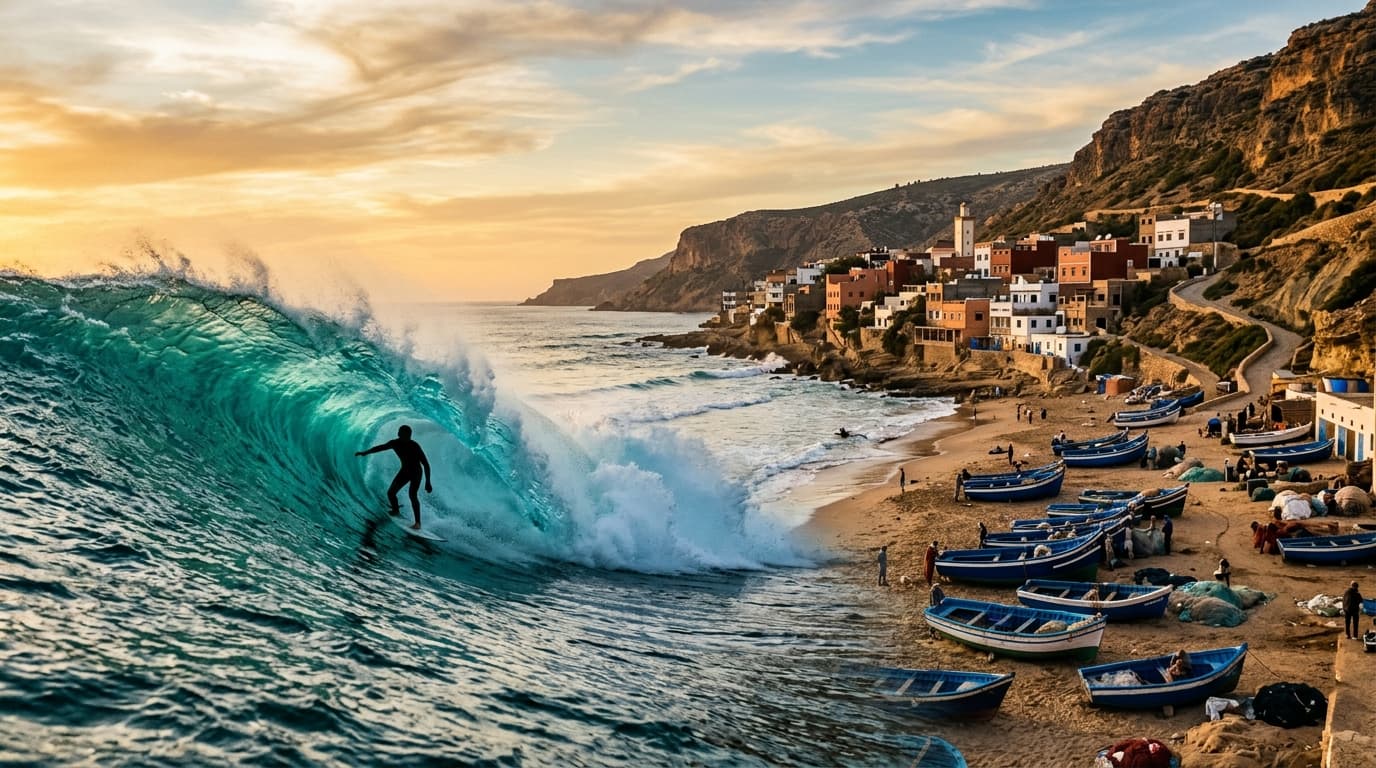
Essaouira's main beach, stretching 6 km south of the city toward Diabat, is one of the longest sandy beaches in Morocco. The persistent afternoon trade winds make it unsuitable for swimming in summer but ideal for kitesurfing and windsurfing. Several schools on the beach offer kitesurfing instruction (half-day courses from 500 dirhams). The village of Sidi Kaouki, 25 km south, has even more consistent wind and a small cluster of guesthouses and surf camps. For swimming, the early morning before the wind picks up — between 8 and 11 a.m. in summer — is pleasant. Autumn and spring offer calmer conditions and are the best seasons for beach walking and horse riding, which is available from several operators on the beach.
What to Do in Essaouira
- Walk the Skala du Port and Skala de la Ville ramparts at sunset — free entry
- Buy fresh fish by weight at the port stalls and watch it grilled — 80–150 dirhams
- Browse thuya wood workshops on Rue de la Skala for unique, locally made gifts
- Hear live Gnawa music on Place Moulay Hassan most evenings — free
- Take a kitesurfing lesson at Sidi Kaouki — half-day from 500 dirhams
- Day trip to Mogador Island by boat from the harbour — 60 dirhams return in summer
- Visit an argan oil cooperative on the Agadir road for genuine cold-pressed oil
Day Trips and Surroundings
The argan forest surrounding Essaouira — one of the last large argan tree forests in Morocco — produces the best argan oil in the country. Women's cooperatives on the road between Essaouira and Agadir produce and sell cold-pressed argan oil, argan soap, and amlou at prices well below what you pay in a Marrakech tourist shop. The ruins of the Portuguese fort at Mogador island, visible from the Skala du Port, are accessible by boat from the harbour in summer months (60 dirhams return). The Ile de Mogador is also a breeding site for Eleonora's falcon — one of the few colonies of this migratory raptor on the Moroccan Atlantic coast.