Morocco is a year-round destination, but the difference between a comfortable trip and a genuinely magical one comes down to timing. This month-by-month guide tells you exactly when to go — and when to avoid.
Why Timing Matters More in Morocco Than Most Countries
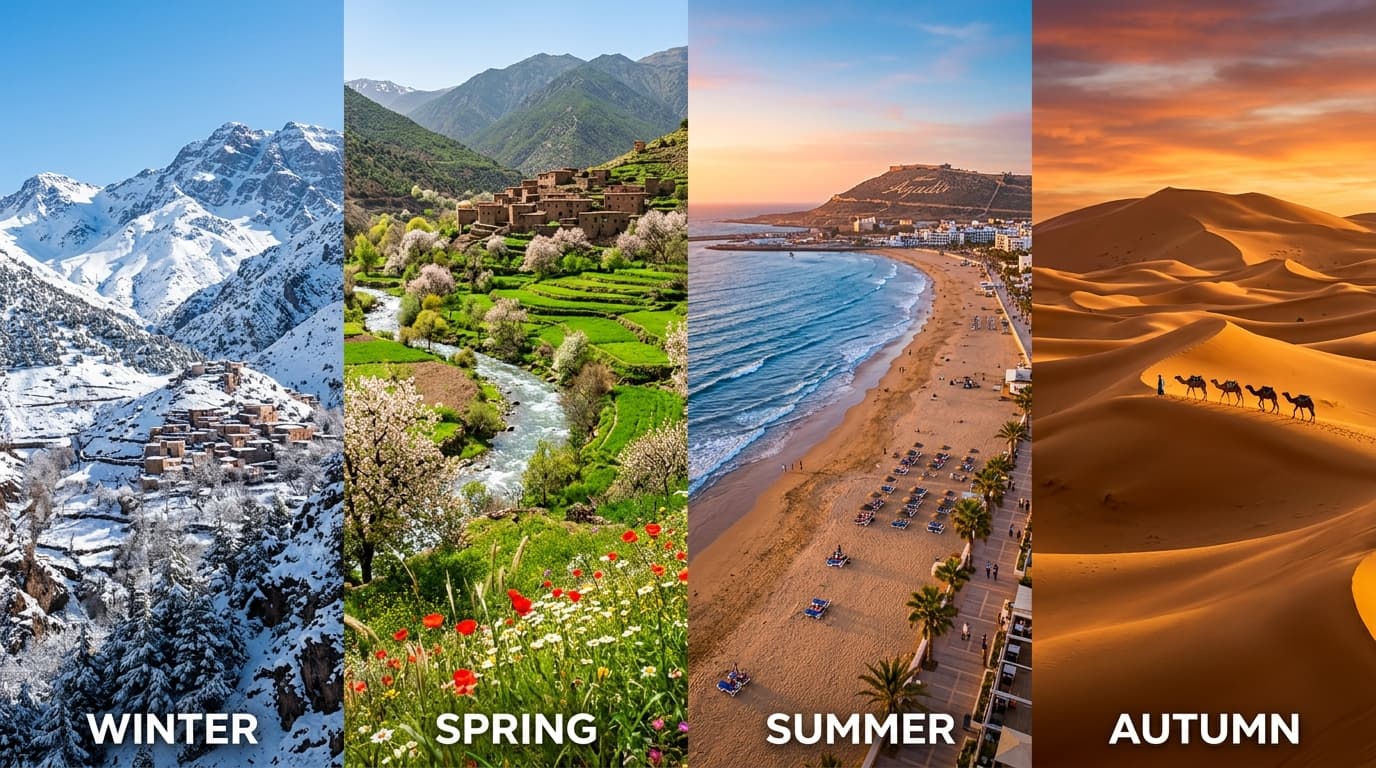
Morocco spans four distinct climate zones — Atlantic coast, Mediterranean north, High Atlas mountains and pre-Saharan desert — and they behave differently at different times of year. A week in Marrakech in July (40°C in the shade) bears almost no resemblance to a week in Marrakech in January (crisp 18°C days and cold nights). Getting the timing right is not about chasing perfection; it is about matching your trip to the experience you actually want.
Morocco Climate Snapshot by City
22°C
Marrakech average high in April
40–42°C
Marrakech peak July temperature
26°C
Essaouira max in August (Canary Current cooled)
18–28°C
Chefchaouen range in July
2–5°C
Merzouga overnight low in January
900mm
Annual rainfall in upper Rif valleys
March to May: The Sweet Spot
Spring is widely regarded as the best time to visit Morocco. Temperatures across the country are ideal — Marrakech averages 22°C in April, the Atlas Mountain passes are clear of snow, the Sahara is warm but not punishing, and the almond and cherry blossoms in the Ourika and Ounila valleys turn the foothills pink. The Valley of the Roses near El Kelaa M'Gouna peaks between late April and mid-May, coinciding with the annual Rose Festival. Crowds are moderate and accommodation prices have not yet hit summer peaks.
June: The Transition Month
June offers excellent conditions, particularly in the north. Chefchaouen, Fez and the Atlantic coast at Essaouira are all at their best — warm, dry and still manageable in terms of tourist numbers. South of the Atlas the heat builds rapidly from mid-June: Ouarzazate and Zagora regularly exceed 38°C by the third week. If your itinerary is north-focused (Tangier, Chefchaouen, Fez, Rabat), June is superb. If the Sahara is the goal, go before the 15th or wait until September.
October is the month I tell everyone to come. The summer crowds are gone, the Sahara is warm and golden, the Marrakech evenings are perfect for sitting on a terrace. The city belongs to you again in a way that it simply does not in August.
July and August: High Heat, High Season
The summer months are Morocco's busiest — and hottest. Marrakech regularly sees 40–42°C in July, making daytime sightseeing in the medina uncomfortable without very early starts. The saving grace is the Atlantic coast: Agadir, Essaouira and the beaches between El Jadida and Safi are cooled by the Canary Current to a pleasant 24–26°C, and these become the destination of choice for both European visitors and Moroccan domestic tourists. Book well in advance for coastal accommodation, and expect Djemaa el-Fna to be significantly more crowded than at any other time of year.
September and October: A Second Sweet Spot
Early autumn rivals spring as the best time to visit Morocco. The intense summer heat breaks by mid-September, the Sahara is warm and beautiful rather than brutal, and the light across the pre-Saharan region in October has a low, golden quality that photographers describe as the best in the world. The crowds thin noticeably after the August school holiday peak. Temperatures in Marrakech settle around 28°C by day in October and drop to a comfortable 15°C at night. The Anti-Atlas region around Tafraoute is at its best in October when the granite massif glows amber in the afternoon sun.
Best Month by Activity
- Toubkal trekking: May–June and September–October (snow-free, stable weather)
- Sahara camel trekking: October–April (avoid June–August: 42°C+ by midday)
- Atlantic coast beaches: May–June and September–October (wind moderate, water warm)
- Valley of the Roses: late April to mid-May only (bloom window is short)
- Chefchaouen and northern cities: April–June and September–October
- Atlas Mountains road trip: March–May and September–November (passes open, heat manageable)
- Skiing at Oukaïmeden (2,650m): January–March
November to February: Winter Travel
Winter in Morocco is underrated by most travel guides. The cities — Marrakech, Fez, Rabat — have clear blue skies and temperatures between 16 and 20°C during the day, cool evenings requiring a jacket, and a fraction of the summer tourist numbers. The Sahara in December and January is cold at night (near freezing) but dramatically beautiful during the day with sharp, low light and zero haze. The High Atlas and Rif mountains are snow-covered and spectacular, and Marrakech's proximity to the Oukaïmeden ski resort (North Africa's highest ski area, at 2,650 metres) makes a winter city-and-ski combination genuinely possible.
Ramadan: A Special Case
Ramadan in Morocco is a profound cultural experience that every traveller should consider, but it changes the logistics of a trip significantly. Restaurants are closed during the day, the pace of life shifts, and the evenings — when the fast breaks at the iftar meal — are genuinely magical in the medinas. For 2025, Ramadan fell approximately in late February to late March. Eating and drinking publicly during daylight is legal for non-Muslims in Morocco, but discretion is respectful. The experience of sitting down to iftar as a guest of a Moroccan family is one of the most memorable things the country offers.
Quick Reference by Region
Marrakech and the south: March–May and September–November. Sahara: March–April and October–November. Atlantic coast (Agadir, Essaouira): May–June and September–October. North (Chefchaouen, Fez, Tangier): April–June and September–October. Atlas trekking: May–June and September–October. Skiing at Oukaïmeden: January–March.
Quick Reference by Region
For Marrakech and the south: March–May and September–November. For the Sahara: March–April and October–November. For the coast (Agadir, Essaouira): May–June and September–October. For the north (Chefchaouen, Fez, Tangier): April–June and September–October. For Atlas trekking: May–June and September–October. For skiing at Oukaïmeden: January–March.