From almond blossom in the Anti-Atlas to rose harvest in the Dades Valley, spring transforms Morocco into something extraordinary — and most visitors miss it entirely.
Why Spring Is Morocco's Best-Kept Secret
Most travellers arrive in Morocco during summer or the winter holiday period. Both times have their merits, but spring — roughly February through May — offers something neither season can match: a country in full bloom, under skies that have not yet turned the bone-white of July heat, with guesthouses that still have rooms available. The temperatures in Marrakech sit between 18 and 24 degrees Celsius through April and May. The mountain roads have largely cleared of snow but remain flanked by green. The Sahara, still cooled by winter, is approachable without the physical punishment of midsummer. If you have flexibility in when you travel, spring is the answer.
February: The Almond Blossom of Tafraoute
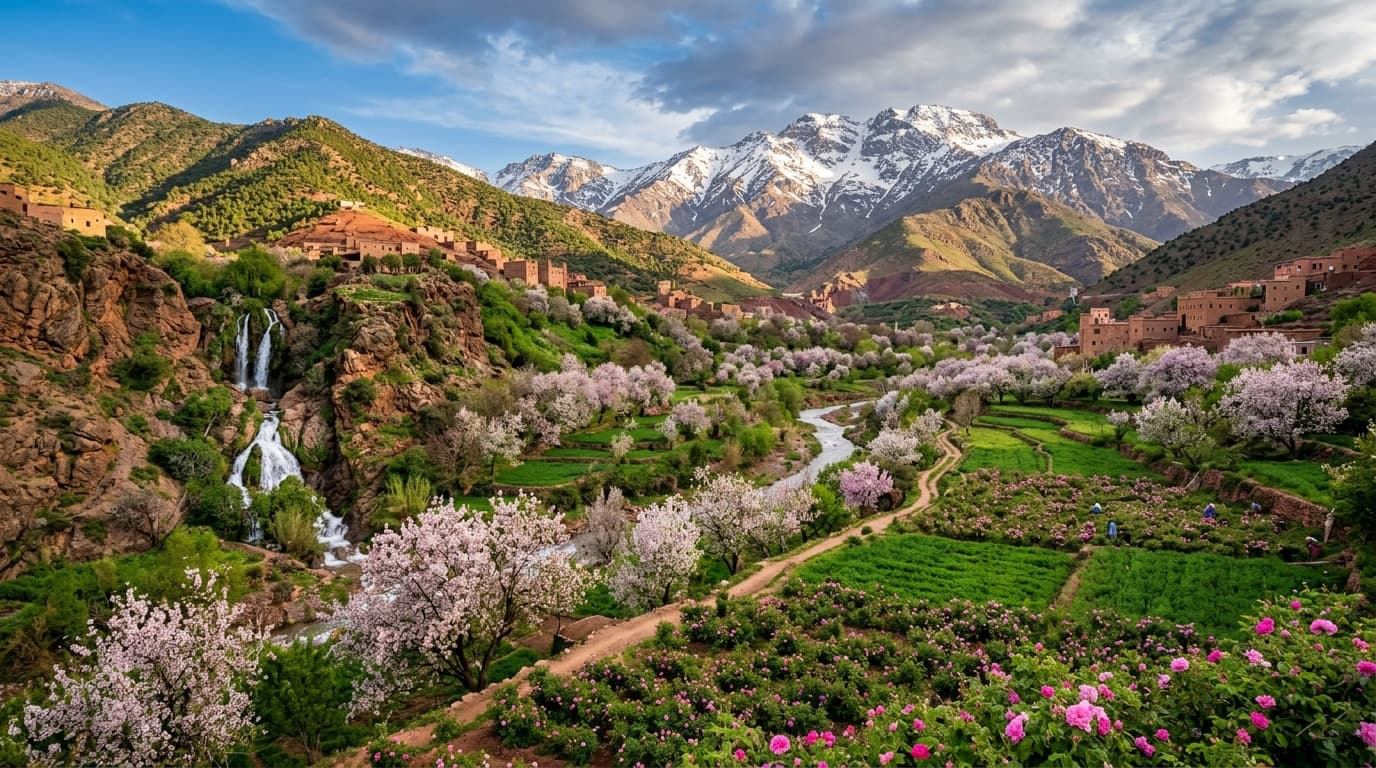
The Ameln Valley near Tafraoute, deep in the Anti-Atlas mountains roughly 170km east of Agadir, produces one of Morocco's most underrated natural spectacles. For approximately two weeks in mid-to-late February — the precise timing shifts by a week or two depending on rainfall and temperature — the valley's almond trees burst into pink-white blossom. The effect against the ochre and rose-granite massifs of the Ameln is striking in the original sense of that word: it stops you. Local families harvest the almonds in late summer, but the blossom is purely visual, purely transient. The village of Oumesnat, reached by a 3km walk from Tafraoute, sits among the densest groves. Accommodation in Tafraoute is limited — there are a handful of small hotels and guesthouses in the 250-450 MAD per night range — so booking several weeks ahead is sensible if you are targeting blossom season.
Morocco in Spring: Key Numbers
18-24°C
Average Marrakech daytime temperature in April
2 weeks
Duration of almond blossom in Tafraoute
1,800m
Altitude of the Dades Valley rose fields
4,167m
Summit of Jebel Toubkal — snow-free from May
170km
Distance from Agadir to Tafraoute
April: The Rose Harvest in the Dades Valley
The Dades Valley and the surrounding area around Kalaat M'Gouna — approximately 240km east of Marrakech — is planted extensively with Rosa damascena, the Damask rose used in perfume, rosewater and rose oil production. The roses arrive in late April and the harvest runs into early May. The picking is done before 7 in the morning, while the petals still hold their essential oils and before the heat of the day begins to degrade them. Walking through the rose fields at dawn, with the Atlas range catching its first light, is one of those Morocco experiences that resists easy description. The annual Rose Festival in Kalaat M'Gouna draws large local crowds and is worth attending if your dates align, but the harvest itself — spread across many smallholdings and cooperative gardens — is accessible independently by simply asking permission to walk the rows. A litre of local rosewater sold in the valley costs around 40-80 MAD depending on the producer.
We arrived expecting the gorges and left talking about the rose fields. We were there for two days at harvest and watched the same women pick the same rows every morning at 5:30am. By 8 it was done and the whole valley smelled of something you cannot bottle properly.
March and May: Wildflowers and Mountain Conditions
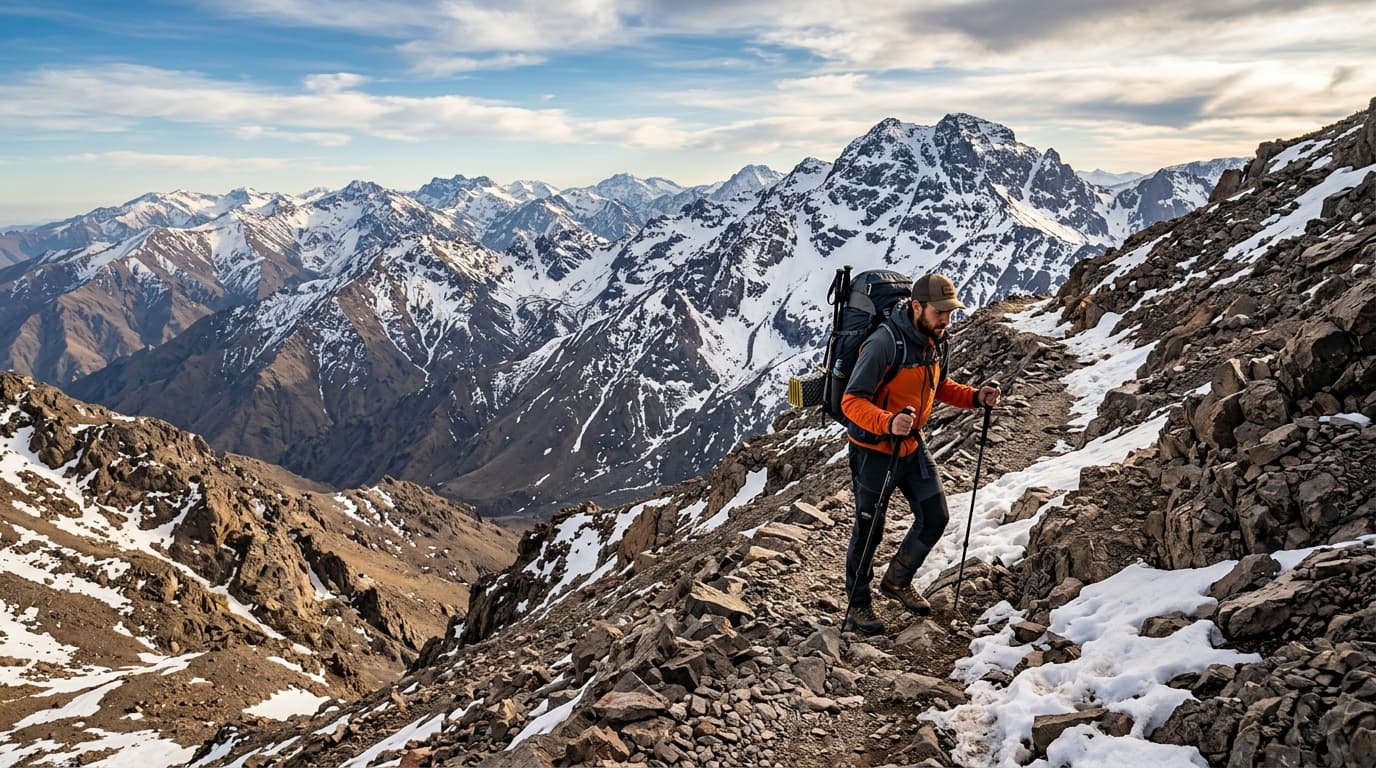
The Plateau du Rekkam in the northeastern Middle Atlas and the Rif mountains in the north both undergo a wild-flower transformation in March. Poppies, wild iris and asphodels cover ground that is bare and brown for most of the year. The Rif, particularly around Ketama and the villages south of Chefchaouen, runs green through the cedar and oak forests. For Jebel Toubkal, Morocco's highest peak at 4,167m, the conditions timeline matters practically. Snow lingers on the upper mountain through March and into April; serious crampons and ice axe competence are required then. By May the standard two-day ascent via Imlil and the Neltner Refuge becomes a manageable trekking undertaking for fit walkers with appropriate gear. The window from late May through June combines good visibility, manageable temperatures and largely snow-free trails.
Spring Highlights by Month
- February: Almond blossom, Ameln Valley near Tafraoute (mid to late February, weather-dependent)
- March: Wildflowers on Plateau du Rekkam; Rif mountains turn green; first spring warmth in Marrakech
- Late April: Rose fields open in Dades Valley and around Kalaat M'Gouna; Toubkal still partially snowed
- May: Rose Festival in Kalaat M'Gouna; Toubkal summit accessible without ice equipment; Imilchil moussem preparations begin
- May-June: Sahara at its most photogenic — post-winter moisture, green shoots some years, low heat haze at dawn
Sahara in Spring
After good winter rains, which occur roughly every three or four years, the desert edge near Merzouga shows patches of green grass and small wildflowers for a few weeks in March and April. Even in drier years, the lower sun angle and absence of summer heat haze makes spring the best season for desert photography. Dawn and dusk light in the Erg Chebbi dunes in April is consistently better than anything you will find in July.