Skoura sits between Ouarzazate and the Dades Gorge and most travellers drive straight past it. The ones who stop for a day or two tend to extend their stay.
The Oasis Most Travellers Miss
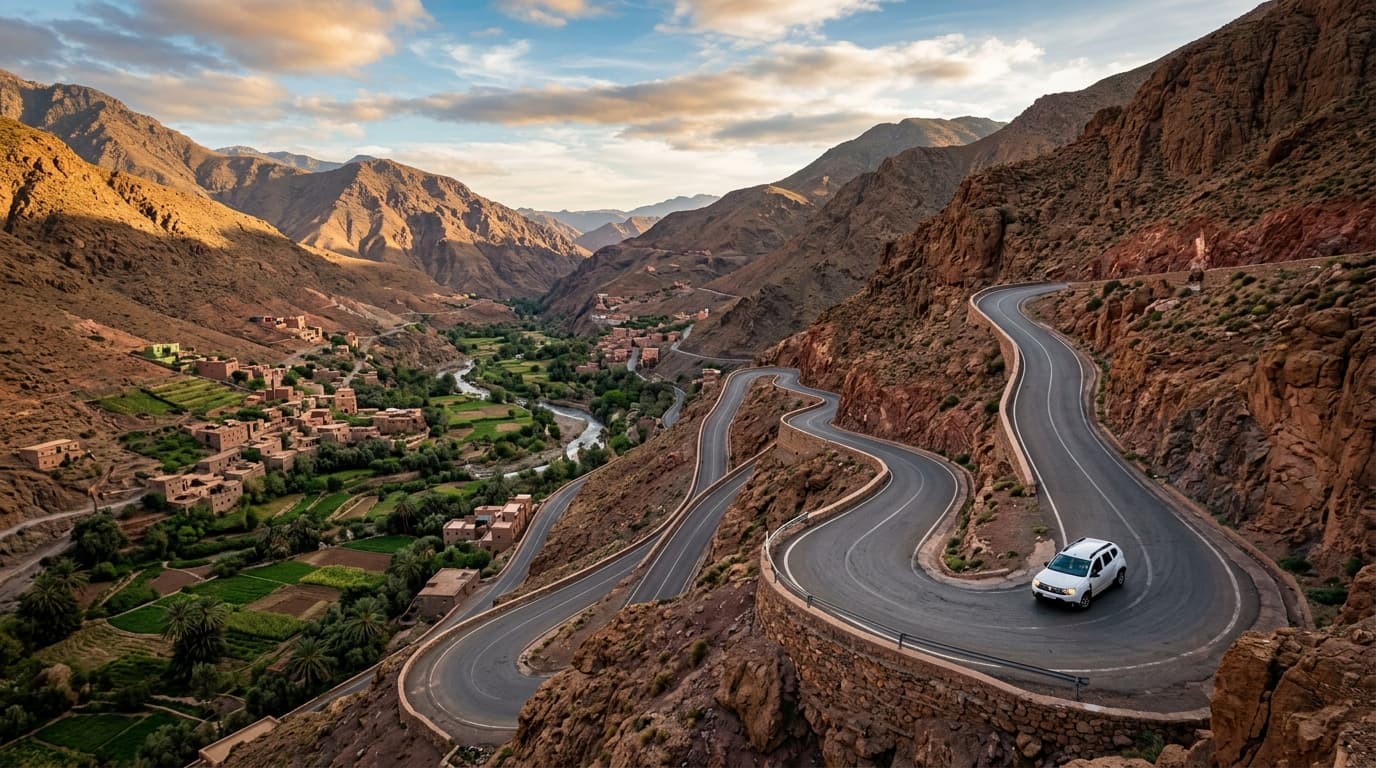
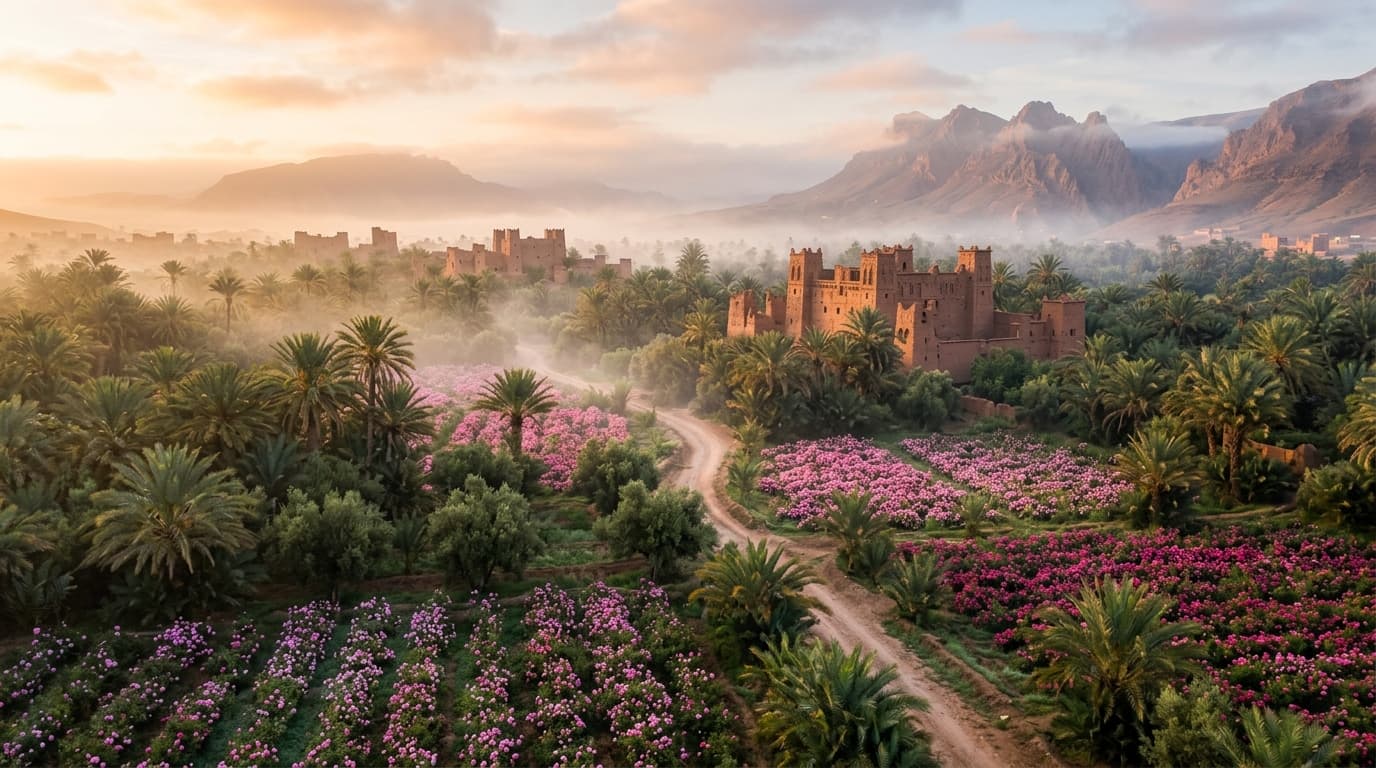
The N10 road between Ouarzazate and Boumalne Dades passes through some of the most consistently rewarding landscape in southern Morocco. Most travellers stop at Ait Ben Haddou, push on to Ouarzazate, then drive straight to the Dades Gorge without pausing. Skoura, 45 minutes east of Ouarzazate, is what they miss. The palmerie at Skoura covers several thousand hectares of date palms, olive trees, almond orchards and rose gardens irrigated by a network of underground channels that has been maintained by the surrounding villages for at least 800 years. The village of Skoura itself is small and unhurried. The guesthouses are inside the palm groves rather than on the road. The pace is different from anything in the tourist circuit an hour to the west. Travellers who have been moving quickly through Morocco for a week typically find Skoura makes them want to stop moving.
Kasbah Amerhidil and the Palmerie's History
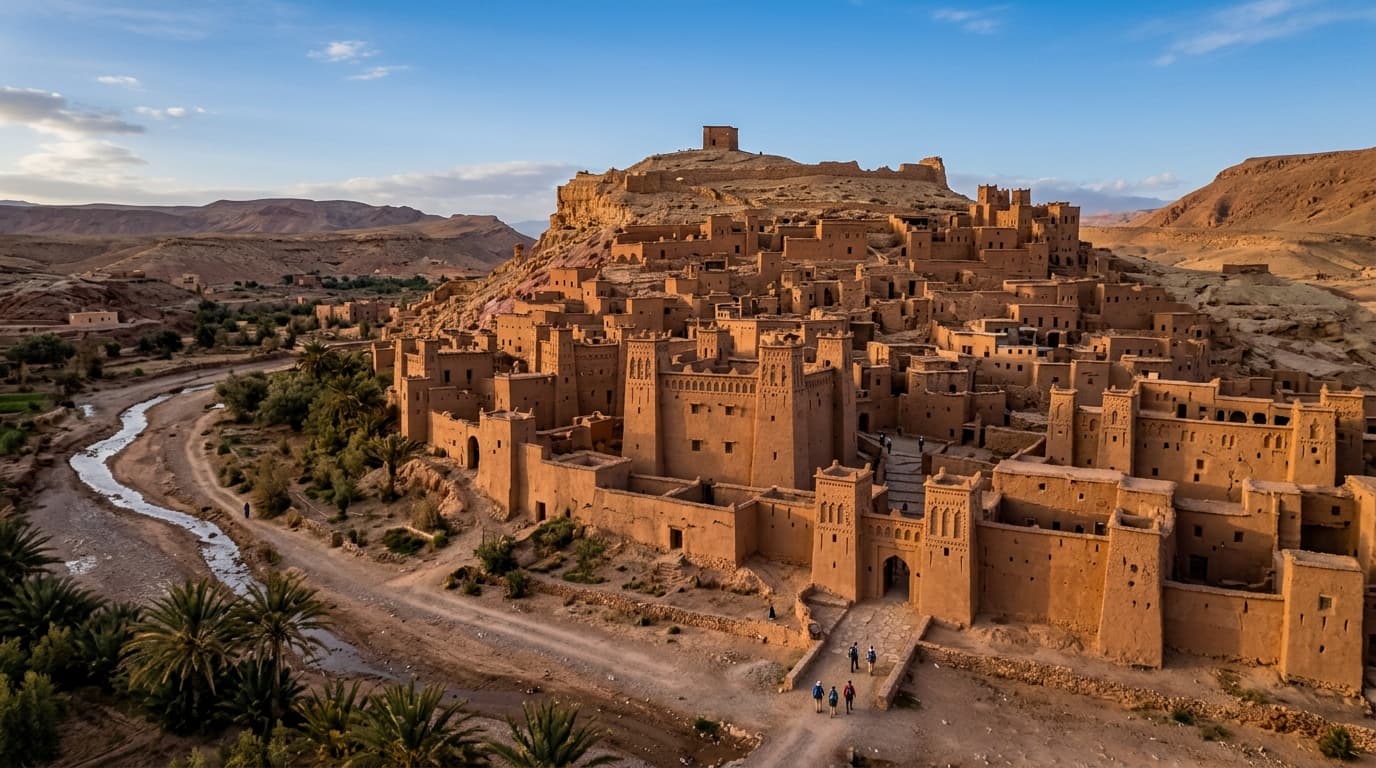
The Kasbah Amerhidil, a well-preserved 19th-century kasbah built by the Glaoui family who controlled much of southern Morocco in the late pre-colonial period, stands inside the palm groves roughly two kilometres from the main road. The kasbah has been used as a film location — it appears in several productions shot in the Ouarzazate region — and is maintained in reasonable condition. Entry costs 20 MAD. The interior includes the original stables, granary, and living quarters arranged around a central courtyard; the roof provides views over the palmerie that explain why this location was chosen. The Glaoui kasbahs across the Draa and Dades valleys were built not just for defence but as expressions of political authority over the agricultural communities that worked the palms and rose fields. Amerhidil is one of the better-preserved examples and one of the most accessible. Allow an hour for a thorough visit.
Skoura Oasis: Key Facts
45 min
Drive from Ouarzazate to Skoura
800+ years
Age of the khettara irrigation network
20 MAD
Entry fee to Kasbah Amerhidil
80 MAD
Daily bike rental at the palmerie entrance
5km
Palmerie circuit by bicycle
20km
Distance from Skoura to Kalaat M'Gouna rose centre
The Khettara: Underground Water for Eight Centuries
The khettara system — known as qanat in Iran and fogara in Algeria — is a network of underground channels and vertical shafts that carries groundwater from the water table beneath the mountains to the agricultural land of the oasis without the need for pumps or mechanical energy. The system at Skoura and across the Draa Valley is one of the most extensive surviving examples of this technology in Morocco, and sections of it have been in continuous use for over 800 years. Travelling through the palmerie, the rows of small earthwork mounds that mark the shaft locations are visible across the fields. The system requires constant maintenance — periodic clearing of accumulated silt, repair of collapsed sections — which is managed cooperatively by the communities that rely on it. In recent decades, drilling for modern wells has reduced dependence on the khettara in some areas, but much of the Skoura palmerie still relies on the traditional channels. Walking through a working oasis irrigated by a system designed in the medieval period gives a different weight to the landscape than a landscape simply viewed as scenery.
We cycled through the palmerie for two hours and got lost twice, which was the best thing that could have happened. There are paths that go on for kilometres between the trees and you can just follow them. We had lunch at a family house — not a restaurant, just a family who brought tea and bread and argan oil. Skoura was the part of the trip we talked about most when we got home.
Cycling, Rose Season and Getting the Most From a Visit
The 5km marked circuit through the palmerie, beginning from the entrance near the main road, is widely described as one of the most enjoyable easy cycling routes in Morocco. Rental bikes are available at the entrance for 80 MAD per day. The track passes through corridors of mature date palms, alongside rose gardens and past several working kasbahs in varying states of preservation. The circuit is flat and the surface mostly packed earth, manageable by any adult rider and most older children. April and May bring the rose season to Skoura before it moves east: the Rose Valley technically begins here and runs 20km to Kalaat M'Gouna, where the annual Rose Festival is held. The date palms produce several varieties, including Medjool and Boufegous — the latter a dry, fibrous variety favoured for cooking. Local dates are sold at roadside stalls throughout the summer and autumn harvest period. For a visit combining Skoura with the Dades Gorge, the gorge is 30 minutes further east from Skoura on the N10. A full day allows both sites comfortably.
What to Do in Skoura
- Kasbah Amerhidil: 19th-century Glaoui kasbah inside the palmerie, 20 MAD entry, allow 1 hour
- Palmerie cycling circuit: 5km loop, bikes 80 MAD/day at the entrance — get lost on purpose
- Khettara exploration: ask your guesthouse to point out the visible shaft mounds and explain the system
- Rose season (April-May): early morning walk through the rose gardens before petal harvest at dawn
- Date varieties: look for Boufegous alongside the ubiquitous Medjool at roadside stalls
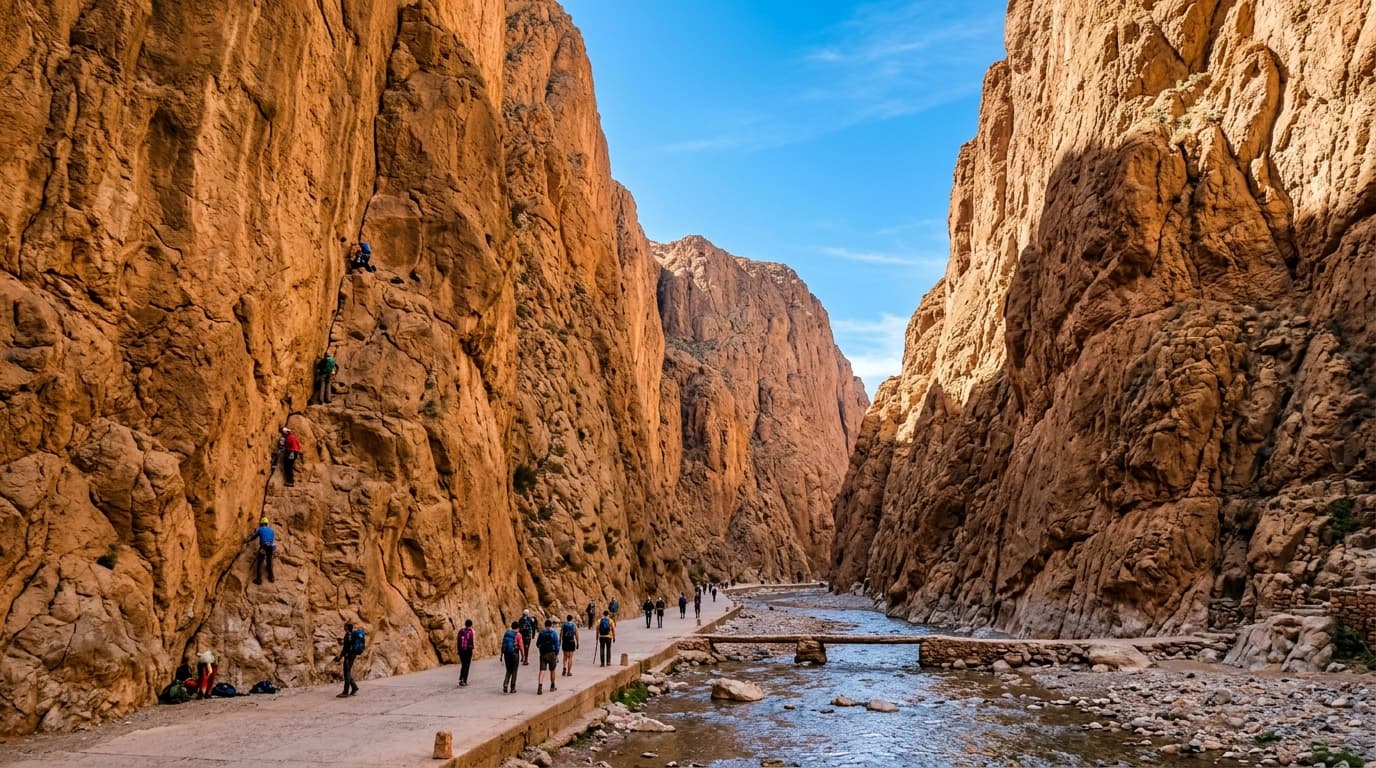
- Combine with Dades Gorge: 30 minutes east on the N10, pair as a full-day itinerary
Where to Stay Inside the Palmerie
Dar Ahlam is a legendary luxury kasbah hotel set inside the Skoura palmerie, from approximately 350 EUR per night, consistently ranked among the finest small hotels in Africa. It is genuinely exceptional and genuinely expensive. Kasbah Ait Ben Moro, at mid-range prices in the 600-1,200 MAD range depending on season and room, offers good food and a real kasbah atmosphere without the premium. Both require advance booking during rose season. For budget travellers, the village has several simple guesthouses on the main road from 200-350 MAD. Staying inside the palmerie rather than on the road is strongly recommended: the difference in atmosphere between waking to birdsong in a kasbah garden and waking to a main-road guesthouse is substantial.