Moroccan mint tea — atay — is not simply a drink. It is a ritual of hospitality, a social institution and, once you understand its history and symbolism, one of the most meaningful things Morocco offers visitors.
How Tea Arrived in Morocco
Tea reached Morocco not from the east but from the north. In the 18th century, British merchants seeking new markets for Chinese gunpowder green tea brought substantial quantities to the ports of Tangier and Essaouira. The Moroccan aristocracy adopted it rapidly, mixing it with the fresh spearmint that grew abundantly in the imperial garden cities of Fez and Meknes. By the 19th century, the combination of Chinese gunpowder tea, fresh spearmint and abundant sugar had become the national drink — a status it has never relinquished. Today, Morocco is one of the world's largest importers of Chinese green tea, consuming an estimated 50,000 tonnes per year.
Moroccan Tea in Numbers
50,000 t
Green tea imported per year
18th C
Tea arrived via British merchants
3
Glasses in a traditional ceremony
30–40 cm
Pouring height for foam
5–8 MAD
Cost of a glass in a local cafe
The Ritual of Preparation
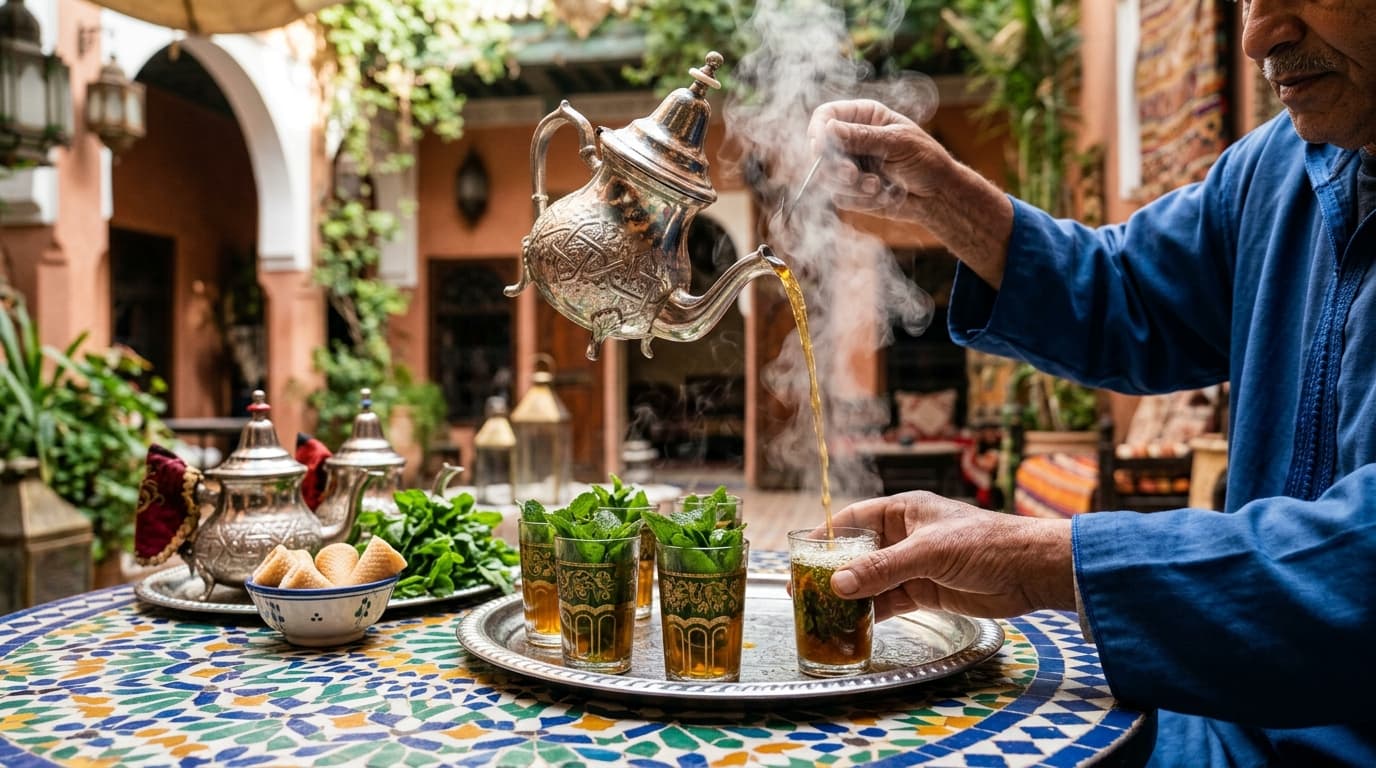
Proper Moroccan tea preparation is a deliberate, choreographed process. The teapot is warmed with a small amount of boiling water, swirled and discarded. A tablespoon of gunpowder green tea is added, covered with just enough boiling water to rinse the leaves (this first pour is discarded to reduce bitterness), then more water is added and the pot placed over a flame for two to three minutes. Fresh spearmint — not dried, always fresh — is pushed firmly into the pot, followed by a substantial quantity of sugar loaf. The mixture is then poured from height into a glass and back into the pot several times to aerate and blend. The finished tea is poured from a height of 30–40 cm into small glasses, creating the characteristic foam.
The Steps of Proper Moroccan Tea
- Rinse the pot with boiling water and discard — this warms the vessel
- Add one tablespoon of Chinese gunpowder green tea per 500ml
- Pour a small amount of boiling water over the leaves and discard — removes bitterness
- Fill the pot with fresh boiling water and heat over a flame for 2–3 minutes
- Pack fresh spearmint firmly into the pot — never dried mint
- Add two to three large pieces of sugar loaf — more than you expect
- Pour into a glass and back into the pot three times to blend and aerate
- Serve from 30–40 cm height into small glasses to create the signature foam
The Three Glasses
The traditional Moroccan tea ceremony involves three glasses, each with a distinct character. The first glass is bitter and strong — 'as bitter as life', the saying goes. The second is sweeter, more balanced — 'as sweet as love'. The third, with the most sugar dissolved and the spearmint fully expressed, is the sweetest — 'as gentle as death'. Whether or not you accept all three is a matter of personal preference, but declining the first glass in a formal hospitality setting is considered impolite. The proverb that accompanies the three-glass ritual varies slightly between regions but the sentiment — that life moves from difficulty through love to gentleness — is consistent.
My host in Fez spent twenty minutes making tea while we barely spoke. By the time the first glass arrived, I understood the point was not the tea at all. It was the twenty minutes of being attended to.
The Social Role of Tea
In Morocco, tea functions as the primary social lubricant. Business negotiations begin with tea; a purchase in a souk is sealed with tea; a visitor is greeted with tea before any conversation begins. The refusal of offered tea — particularly in a home or a traditional workshop — carries a social weight that the offerer interprets as a rejection of hospitality rather than simply a drink preference. The appropriate response to a tea offer in a social context you are not certain about is to accept, drink one glass, and thank the host warmly. In a commercial context (a carpet shop, a souk), accepting tea does not obligate you to buy — though it creates the social dynamic the merchant is counting on.
Regional Variations Worth Knowing
In the Sahara and far south, Tuareg tea uses dried mint over a sand fire — stronger, smokier and usually sweeter than the northern version. In the Rif Mountains, dried absinthe (sheba) is sometimes blended with the spearmint, producing a slightly bitter, aromatic variation. In the Anti-Atlas in winter, crushed walnuts are occasionally added for warmth.
Tea and the Hammam
The hammam (public bath) and tea are inseparable companions in Moroccan daily life. After a hammam session — which typically runs 45–60 minutes of steam, scrubbing and cold-water immersion — a glass of sweet mint tea is the standard recovery drink. The hammam-and-tea combination is not just tradition; the sweet tea restores blood sugar after the cardiovascular effort of the hot room and the scrubbing process, and the warmth of the glass in the hands while sitting in the cool of the changing room produces a physical contentment that is one of the best feelings Morocco offers. Most hammams are adjacent to or associated with a tea house for exactly this reason.