From saffron in Taliouine to ras el hanout in the Fes Attarin souk, Morocco's spice markets are a sensory education. Here is what to know before you walk in.
Why Moroccan Spice Culture Is Different
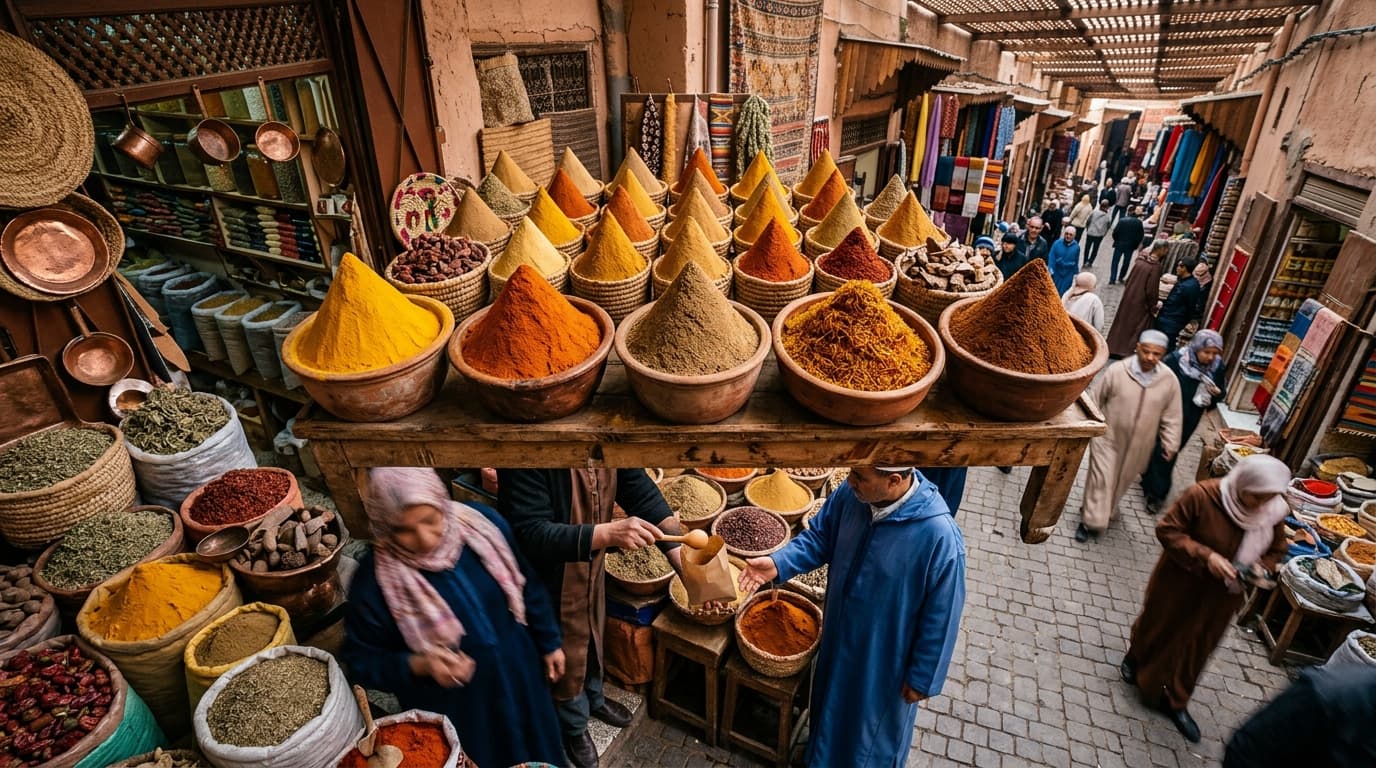
In most countries, spices are a pantry item. In Morocco, they are the architectural language of cooking. A Moroccan cook does not reach for a single spice bottle; they layer cumin over paprika over cinnamon over dried ginger and adjust the ratios by instinct developed over decades. The spice souk is not a specialty store for enthusiasts. It is where ordinary families buy their weekly supply, which is why you will find it operating at a completely different register of quality and price to anything available in a European supermarket. The smell when you enter a proper spice quarter is not background decoration. It is information.
Morocco Spice Facts
3.5 tonnes
Saffron produced annually in Taliouine
25+
Ingredients in a classic ras el hanout blend
1,200m
Altitude of Taliouine, Morocco's saffron capital
50g
Sensible buying quantity per spice for travellers
900 years
Approximate age of the Fes Attarin souk quarter
The Fifteen Spices Worth Knowing
Cumin is the king of the Moroccan kitchen. It appears in almost every savoury dish and is used in quantities that would seem aggressive to European palates. Cinnamon is the surprise: it is used in savoury tagines and couscous, not just pastries. Ras el hanout, meaning top of the shop in Arabic, is the shopkeeper's finest blend — each vendor's version is different, but a good one contains 25 or more ingredients including mace, cardamom, dried rose petals, cubeb pepper, and sometimes dried lavender. Turmeric, sweet paprika, and smoked paprika handle colour and base depth. Dried ginger and fenugreek appear in slow-cooked dishes. Coriander seed, distinct from the fresh herb, is used ground. Orange blossom water and argan oil round out the pantry. And then there is saffron: genuinely Moroccan saffron from Taliouine has a sharp metallic smell and a flavour so intense that four to six threads are enough to colour and scent an entire pot of rice. The dried red threads from safflower, the most common counterfeit, have no smell and dissolve into flat yellow.
The spice seller in Fes told me the price of his ras el hanout was the price of trust. He was not being poetic — he meant that his blend had never contained cheap fillers, and that reputation had kept the same families buying from him for forty years.
Marrakech Rahba Kedima vs Fes Attarin: A Real Comparison
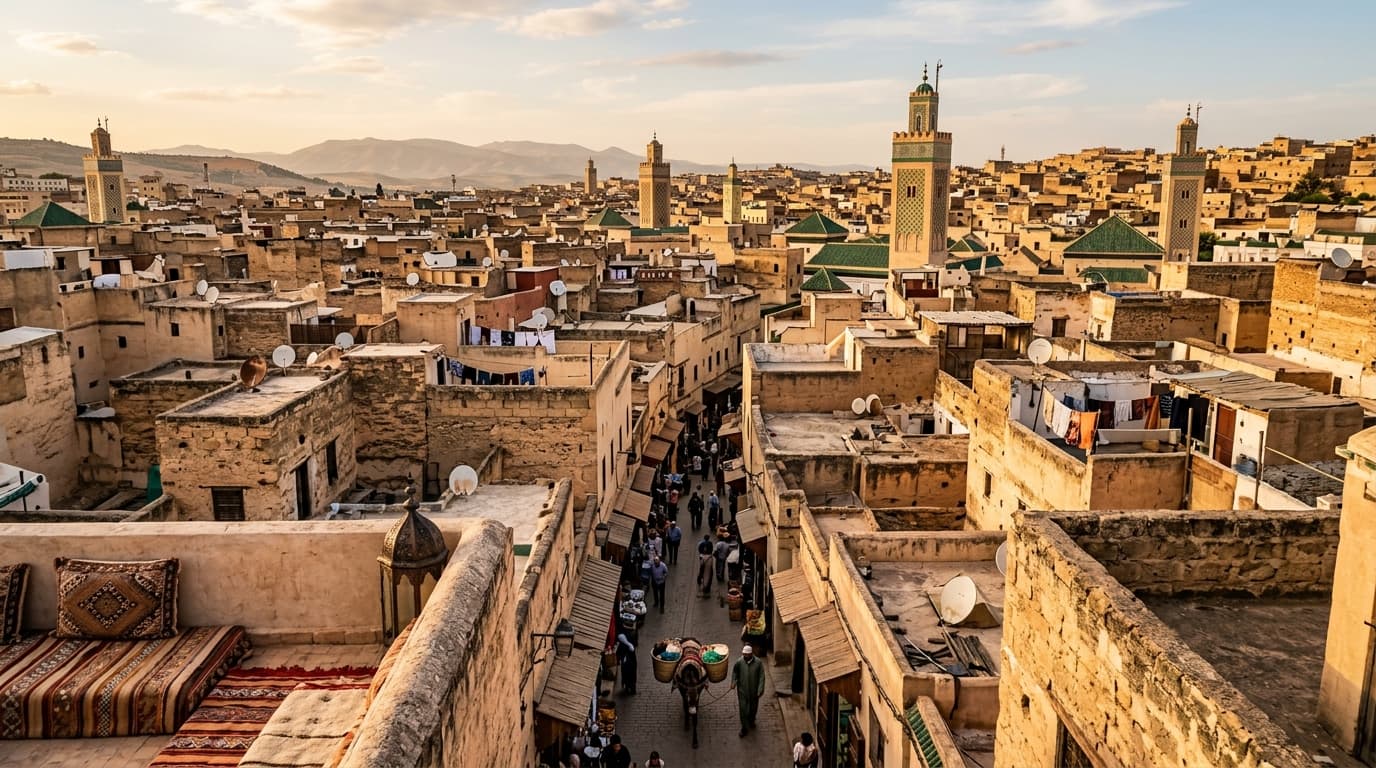
Rahba Kedima, sometimes called the Spice Square, sits in the northwest quarter of Marrakech's medina and has a slightly theatrical quality. It caters significantly to tourists alongside locals, the stall holders are confident English speakers, and the prices start high before negotiation. The quality is genuinely good, but you are paying for location. The holy trinity worth buying here without much angst is cumin, paprika, and ras el hanout: take 50g of each, agree a price upfront, and do not accept pre-packaged tourist sets. The Attarin souk in Fes is physically different — a covered medieval street lined with shops that have operated in the same buildings since the fourteenth century. The clientele is almost entirely Moroccan, the atmosphere is considerably quieter, and the prices are around twenty percent lower than Marrakech. If you are making a dedicated spice run, Fes rewards it. Bring an empty bag and buy by weight rather than accepting whatever is pre-scooped.
The Three-Spice Trinity to Bring Home
- Cumin (ground): the single most useful Moroccan spice in a home kitchen, far more aromatic than supermarket versions
- Paprika (smoked or sweet): Moroccan paprika has a depth and sweetness that European equivalents rarely match
- Ras el hanout: buy from a stall where you can smell it first — a good blend has a warm complexity; a cheap one smells predominantly of turmeric
- Bonus fourth: saffron from Taliouine, if you can verify the origin — a small envelope of ten to fifteen threads costs 20-30 MAD from a reputable vendor
Buying Smart in Any Spice Souk
Always buy by weight, not by the pre-filled bag. Ask for 50g as your standard quantity — enough to cook with seriously for months and light enough to carry home easily. Smell before you commit: any spice that smells faint or of nothing has lost its volatile oils and is not worth buying regardless of price. Genuine saffron should cost at least 20-25 MAD per gram; anything cheaper is almost certainly safflower or a blend. The phrase 'b-shal?' means 'how much?' in Darija and using it signals you are not a complete newcomer.