In Morocco, bread is not a side dish. It is the plate, the spoon, and the opening gesture of every meal. Understanding the five main varieties tells you more about Moroccan daily life than any guidebook summary.
Bread as Daily Architecture
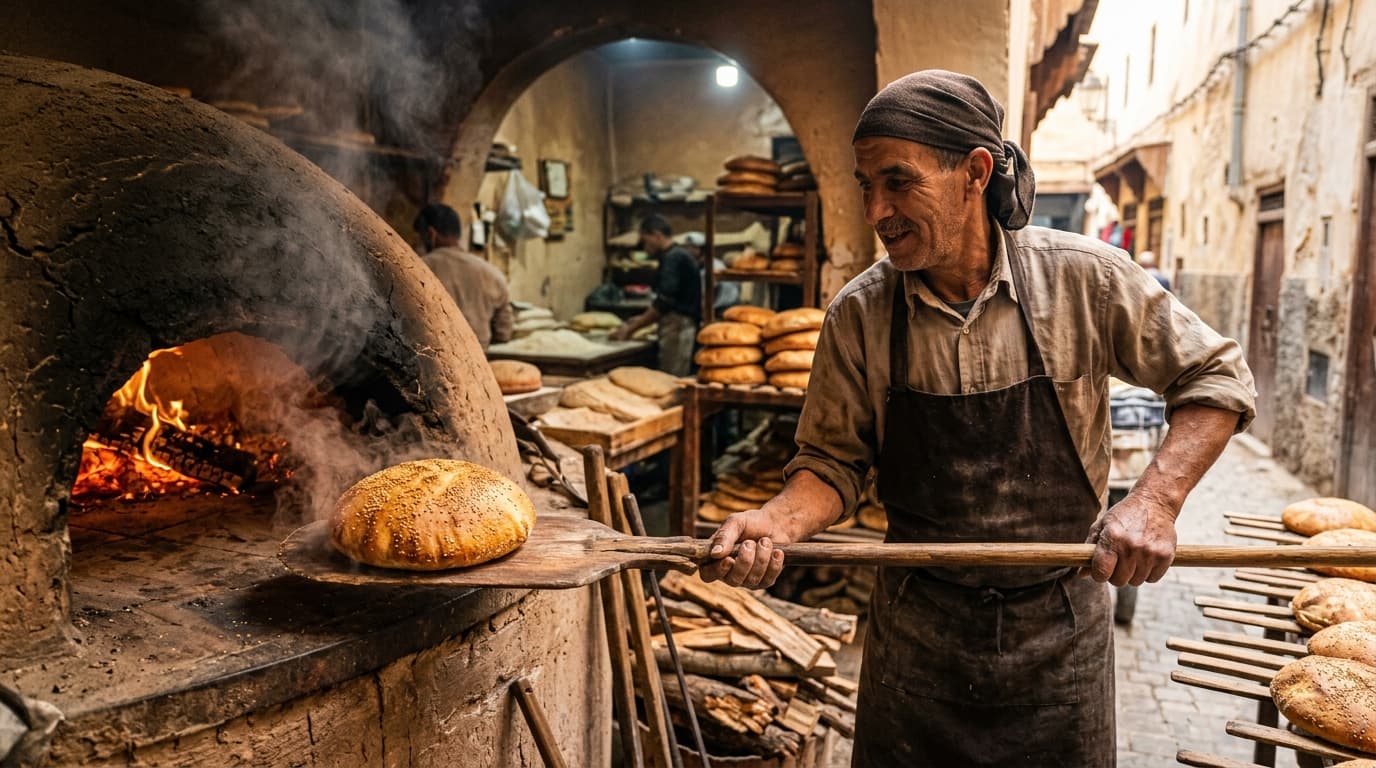
Walk through any Moroccan neighbourhood between seven and eight in the morning and you will notice women carrying round discs of raw dough on wooden boards covered with cloth, moving toward the same point in the street. That point is the farran: the communal neighbourhood furnace that operates at the centre of local food life. Families mix their dough at home, shape their loaves, and deliver them to the farran on the board. The baker marks each family's loaves with a stamped pattern or a piece of dough shaped into an identifying mark. Two hours later, the family sends someone to collect the baked bread, hot from the communal oven, for lunch. The system has operated in this form across Moroccan towns for at least a thousand years and continues in working medinas today. It explains why khobz, the round daily loaf, has a quality and freshness that commercial bread cannot match: it is baked twice daily in an oven that never fully cools.
Bread in Moroccan Life
2-3 MAD
Cost of a fresh khobz loaf from a farran
2x daily
Typical baking frequency at neighbourhood farrans
1,000+ years
History of the communal oven tradition in Morocco
5
Distinct everyday bread varieties in Moroccan cuisine
Khobz: The Loaf That Anchors Every Meal
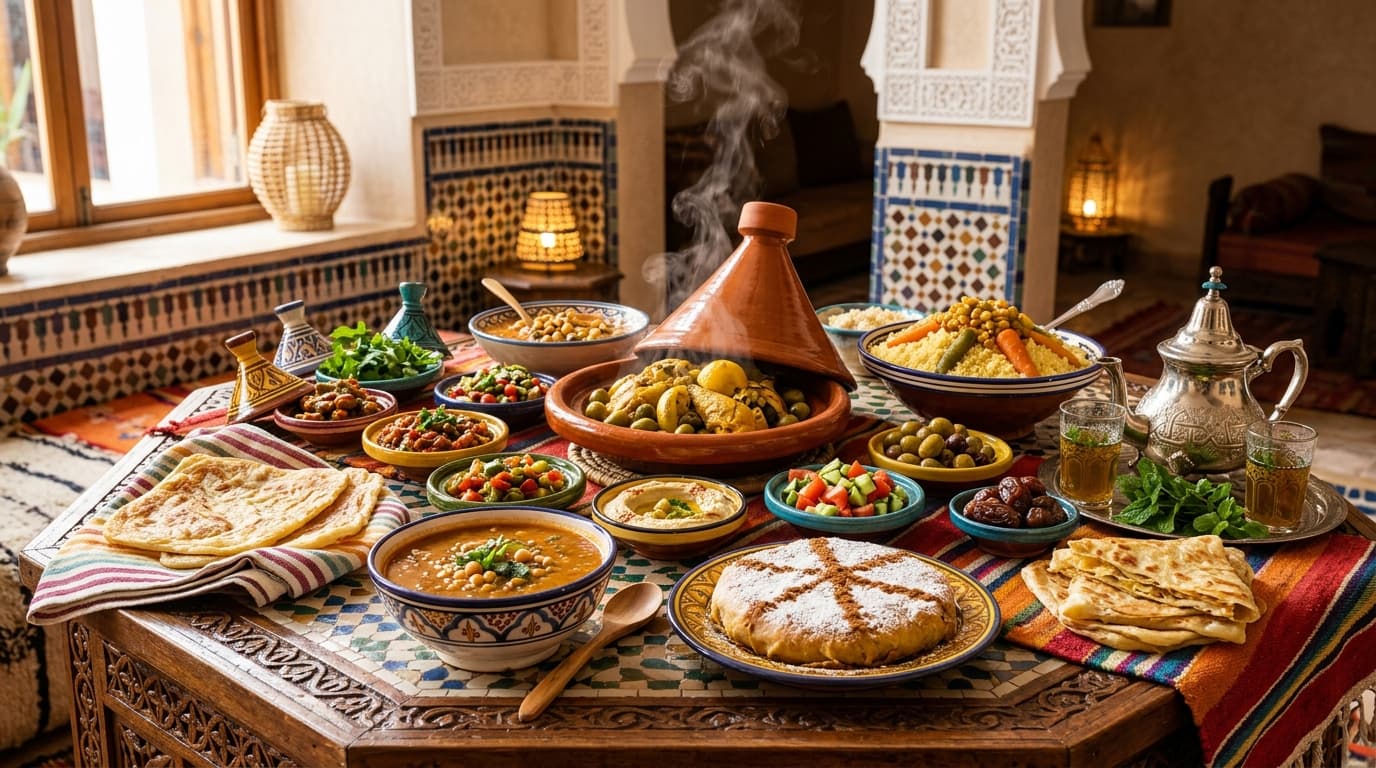
Khobz is a round, slightly domed flatbread about 25 centimetres across and two to three centimetres thick, baked until the crust is golden and firm and the interior soft. It is eaten at breakfast with olive oil and amlou, at lunch torn into pieces to scoop tagine sauce, and at dinner alongside harira soup. It is not a choice alongside a meal; it is a structural element of the meal itself. The price from a neighbourhood farran is two to three MAD per loaf, which makes it among the most affordable calories in Morocco. Placing khobz upside down on the table is considered disrespectful and is avoided instinctively by Moroccan hosts. Wasting bread — leaving it on the table rather than finishing it — carries a genuine cultural weight. Visitors who notice a host quietly folding leftover bread rather than leaving it are seeing a reflex that runs deep.
My host family in the medina would not begin any meal before bread was on the table and Bismillah was said. The bread was not the first course. It was the signal that the meal had started.
Msemen, Meloui, Harcha, and Batbout
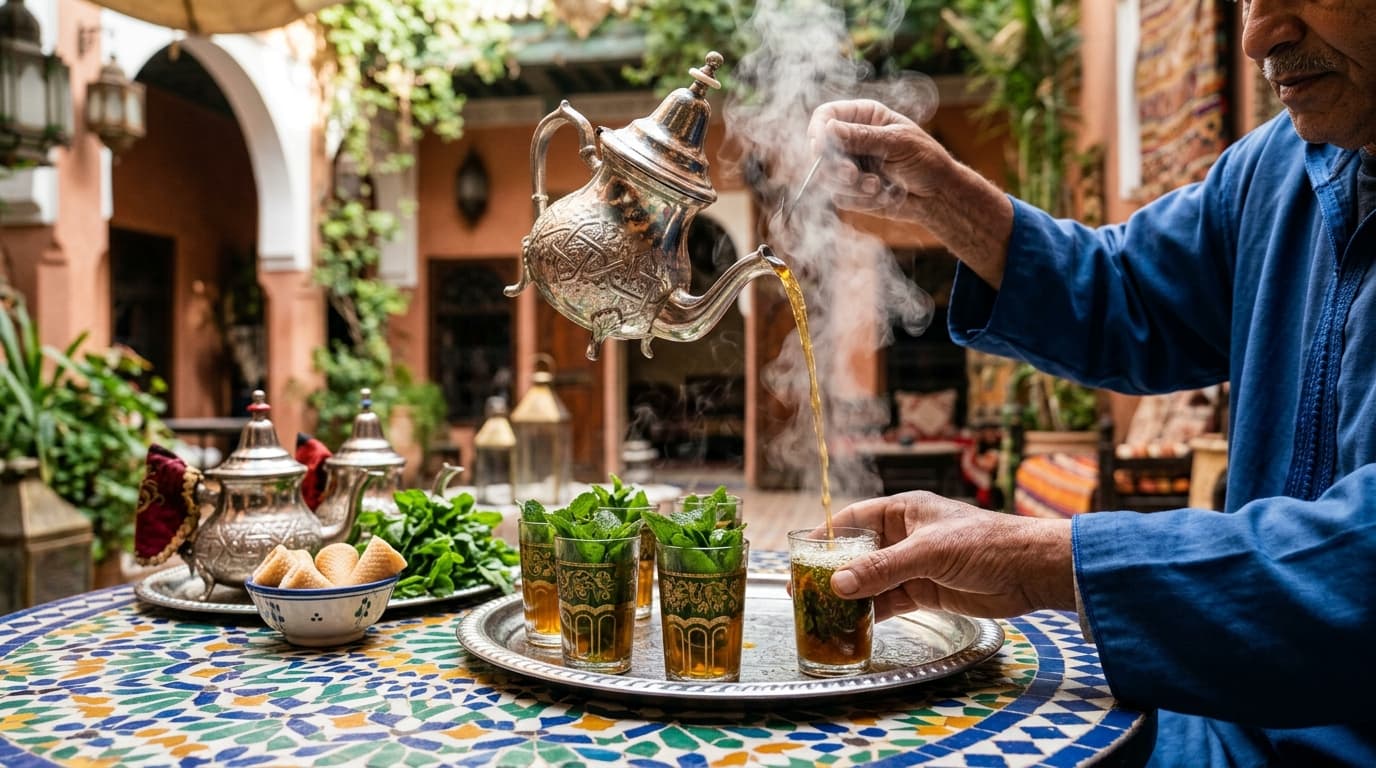
Msemen is a square layered flatbread made by folding dough repeatedly over itself with butter and fine semolina, then cooking on a hot griddle until puffed and flaky in a way that bears some resemblance to a laminated pastry. For breakfast it is eaten with honey and butter, or with a smear of amlou. For a midday snack it is folded around a filling of spiced ground kefta meat. Meloui follows similar logic but is rolled rather than folded, creating a spiral rather than a layered square: denser, chewier, equally good. Harcha is made from semolina rather than flour, cooked on a griddle, and produces a dense, crumbly disc that breaks rather than tears. It is a cafe breakfast staple, served with a glass of mint tea and a pot of honey, and it holds its shape better than other breads when dunked into liquid. Batbout is pocket bread: cooked on a flat cast iron plate, it puffs up as steam builds inside it, creating a cavity that can be filled with kefta, cheese, or egg. It is Morocco's answer to the sandwich, available from street stalls across city medinas for ten to fifteen MAD filled.
Cultural Rules Around Bread
- Never place bread upside down on the table — it is considered disrespectful and is noticed immediately by hosts
- Bread is always offered first at a meal and is used as the primary eating utensil alongside tagine and dips
- Leftover bread is not discarded but folded and saved, or left on a doorstep where others can take it
- In traditional households the bread for the day is made and sent to the farran before children leave for school
- Breaking bread with someone carries the same connotation it does in the Arab world broadly — an invitation into hospitality
- The farran baker is a figure of trust in the neighbourhood — sending raw dough and receiving baked bread without dispute is a daily act of community
Where to Eat the Best Bread in Any Moroccan City
The best bread is always the bread bought directly from a farran in a residential neighbourhood rather than a bakery near tourist sites. Ask your riad host which farran the neighbourhood uses and walk there before nine in the morning. You will pay two to three MAD per loaf and collect it directly from the baker. For msemen and harcha, look for a cafe near the medina that opens at seven: these are made fresh for breakfast and are usually finished by ten.