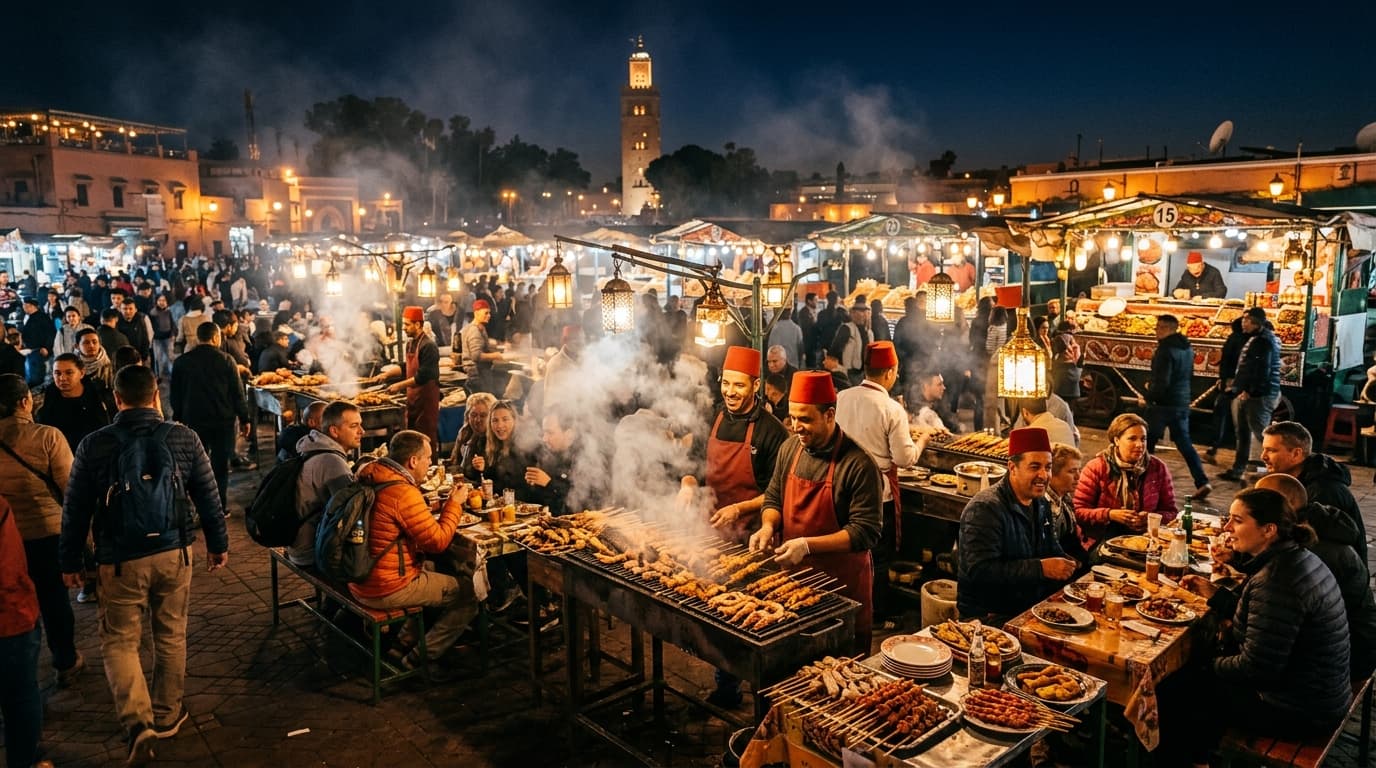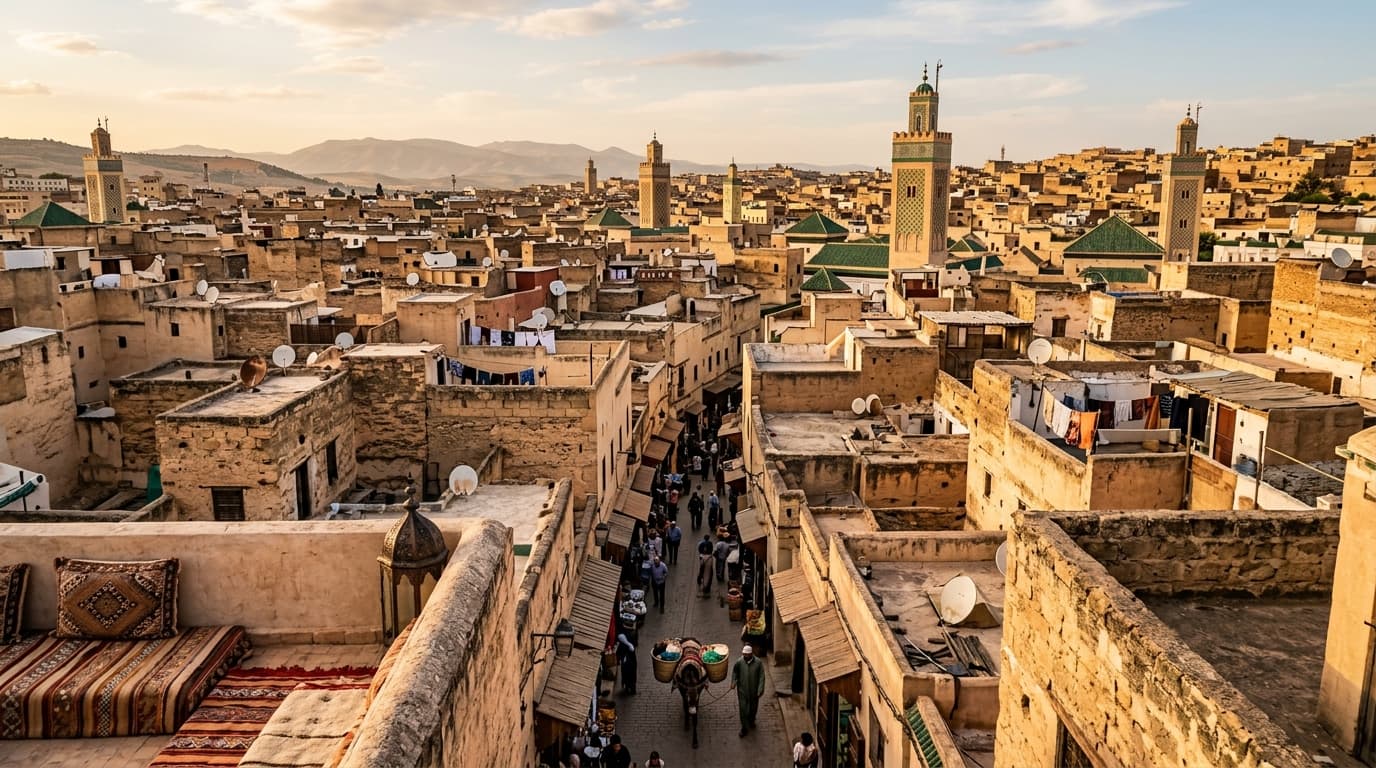
Everything you need to know before stepping into a Moroccan hammam — from the kessa scrub ritual and savon beldi soap to the best bathhouses in Marrakech and Fes, costs, and etiquette.
What a Hammam Actually Is
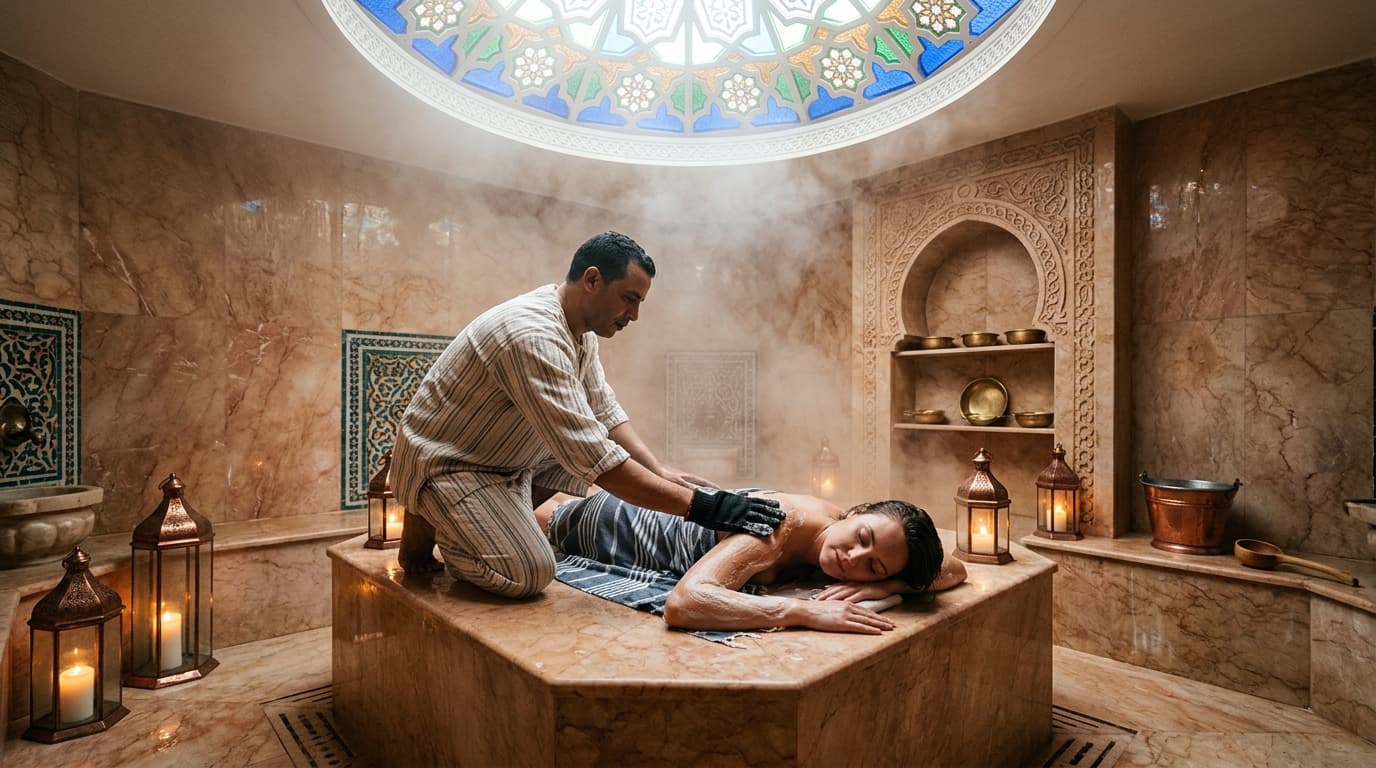
The hammam is one of the oldest institutions in Moroccan daily life. Far from being a tourist attraction invented for visitors, it is a functional bathhouse that Moroccan families have used for centuries as their primary bathing facility, a place for socialising, and a weekly ritual of physical and mental renewal. The structure is simple — successive rooms of increasing heat, moving from the cool antechamber where you undress through a warm intermediate room and into the hot chamber, where the actual scrubbing takes place. Unlike a sauna, which produces dry heat, the hammam environment is humid and dense, and the experience is built around the removal of dead skin rather than passive sweating.
The Ritual Step by Step
You arrive at the hammam with your kit, change into a swimsuit or underwear in the antechamber, and make your way into the hot room. You lie or sit on the marble or tiled surface and let the heat open your pores for ten to fifteen minutes. The attendant — or a friend, or yourself — then applies savon beldi, a dark, gel-like black soap made from olive oil and crushed olives that has been used in Morocco for over a thousand years. After the soap sits on the skin for several minutes, the kessa, a rough woven mitt, is used to scrub vigorously in long strokes. The visible rolls of exfoliated skin that come away are not dirt; they are the accumulated dead skin cells that have built up over the week. A rhassoul clay mask may follow, applied to the face, scalp, or full body. The clay, mined from deposits in the Middle Atlas, draws out impurities and leaves the skin noticeably soft. The final stage is a cold water rinse, which closes the pores and leaves the skin with a clean, almost polished sensation that is unlike anything a shower alone produces.
Hammam Facts and Costs
15-20 MAD
Entry to a local neighbourhood hammam
100-300 MAD
Tourist hammam with full treatment included
40-60 MAD
Cost of a kessa scrub add-on at local hammam
1,000+
Estimated active hammams in Marrakech medina
1hr
Typical duration of a full local hammam session
I was nervous going alone as a woman with no Arabic. The attendant at El Bacha took one look at me and just took over — she knew exactly what I needed and when. I came out feeling like a different person. The skin on my arms was genuinely silky for three days.
Tourist Hammam vs Local Neighbourhood Hammam
The tourist hammam and the neighbourhood hammam are two very different experiences, and neither is inherently better — they serve different purposes. A local hammam like the ones found in every medina neighbourhood charges between 15 and 20 MAD for entry, with scrub services available for a further 40 to 60 MAD. The environment is communal, the atmosphere is animated, and you will be the only non-Moroccan in the room most of the time. You need to bring your own savon beldi and kessa (available at any souk hardware stall for a few dirhams), or buy them from the attendant for a small premium. Tourist hammams — purpose-built facilities aimed at visitors, often within riads or dedicated spa centres — charge between 100 and 300 MAD for a full package that includes all products, towels, and an attendant who guides you through every step. The experience is calmer, more private, and more comfortable for first-timers, but it is further from the authentic social experience that makes the hammam meaningful in Moroccan culture.
What to Bring to a Local Hammam
- A pair of flip-flops for the wet floors
- Swimsuit or underwear you do not mind getting wet
- A kessa mitt (available at souk hardware stalls, around 10 MAD)
- Savon beldi black soap (sold by weight at the souk, roughly 20-30 MAD for a session's worth)
- A spare plastic bag for wet items
- A large towel for drying off in the antechamber
- Small change for the entry fee and for tipping the attendant (10-20 MAD is appropriate)
- Optional: rhassoul clay powder, mixed with water into a paste before you go
Going Alone vs With a Guide
Your first local hammam visit is considerably smoother with a Moroccan friend or local guide who speaks Darija. Communication with attendants is entirely in Arabic, and the unwritten protocol around when to move rooms, how to request services, and how much to pay for add-ons is not posted anywhere. That said, seasoned solo travellers manage perfectly well — a confident smile, a few words of 'shukran', and willingness to follow the lead of other customers gets you through. Tourist hammams sidestep this entirely and are genuinely first-timer-friendly without any guidance.
The Best Hammams in Marrakech and Fes
In Marrakech, Hammam El Bacha on Rue Fatima Zohra in the northern medina is one of the most historically significant public bathhouses in the city, built in the early twentieth century to serve the Dar el-Bacha palace complex. It operates separately for men and women at different hours, charges local prices, and the tiled interior is beautiful even by hammam standards. Nearby, Hammam Dar el-Bacha is a slightly more polished variant that caters to a mixed local and tourist clientele. In Fes, the neighbourhood hammams near Bab Guissa and in the Andalusian quarter of the medina offer the most authentic experience in the country, situated in buildings that have been operating for hundreds of years. For visitors who want a higher-end experience in Fes, several riads in the Batha and R'cif neighbourhoods offer private hammam treatments using traditional methods.
Moroccan Hammam vs Turkish Hammam
The Turkish hammam (hamam) and the Moroccan hammam share the same Ottoman-era lineage but diverged significantly in practice. The Turkish version centres on a heated marble platform called the gobek tasi, where an attendant scrubs you with a rough mitt while you lie flat. The Moroccan version places greater emphasis on the black soap application phase and the rhassoul clay mask, and the rooms tend to be less ornate. Turkish hammams are generally aimed at a tourist market with set service menus; Moroccan neighbourhood hammams remain genuinely community facilities where the majority of customers are locals.