Morocco's UNESCO-protected argan forest produces one of the world's rarest oils. Here is how to visit the women's cooperatives, watch the process, and buy the real thing without overpaying.
The Only Place on Earth It Grows
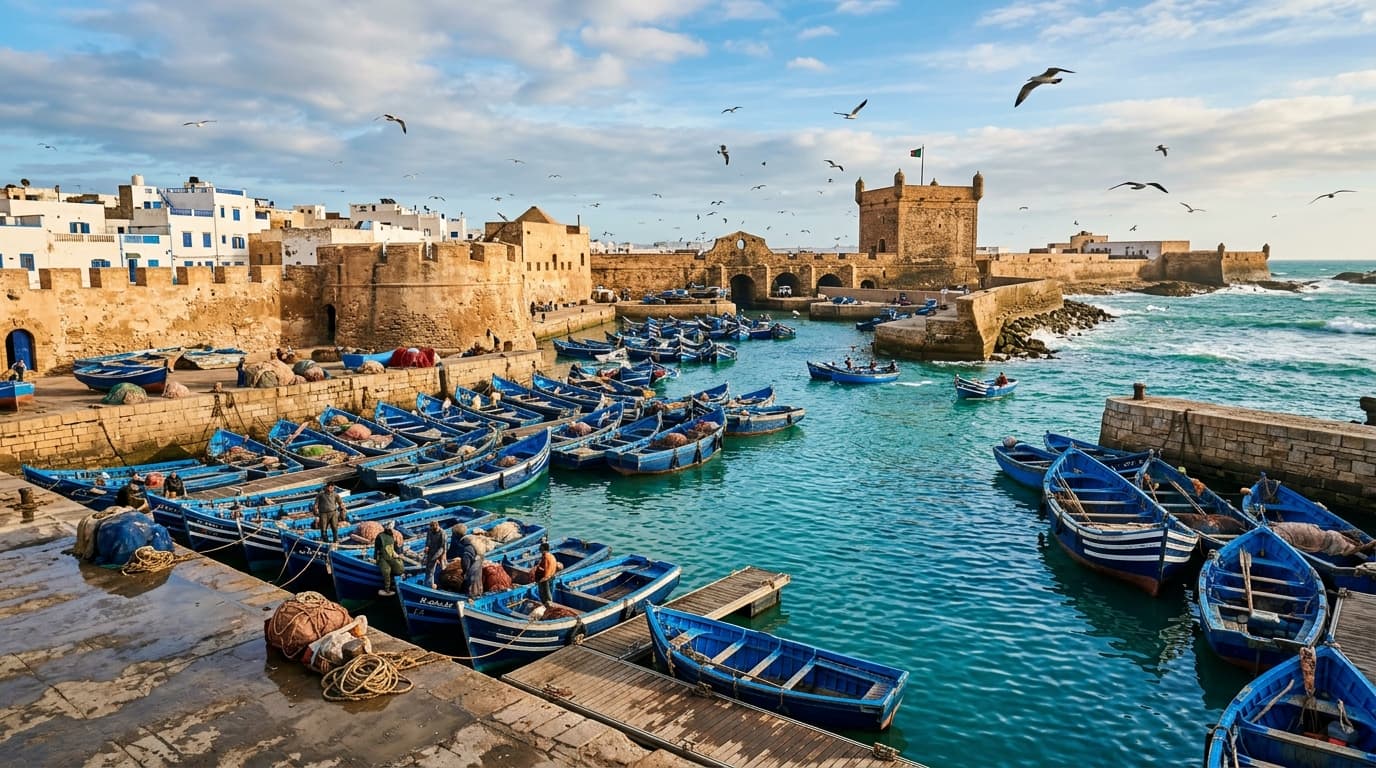
Argania spinosa is one of the most stubborn trees in existence. It sends roots twenty metres into dry soil, lives for two hundred years, and grows absolutely nowhere outside a 7,500 square kilometre crescent of semi-arid land between Essaouira on the Atlantic coast and Agadir in the south. UNESCO recognised this Souss-Massa-Draa biosphere in 1998. The argan tree is not cultivated elsewhere commercially because it resists transplanting and takes fifteen years to fruit. That geographic monopoly is the reason genuine argan oil commands the price it does and why the counterfeiting industry is so aggressive.
Two Oils, Two Completely Different Products
Most visitors do not realise that argan oil comes in two entirely distinct forms made through different processes for different purposes. Culinary argan oil is made from roasted kernels. The roasting releases deep nutty flavours, dark amber colour, and a smell that sits somewhere between sesame and hazelnut. It is drizzled over couscous, mixed into amlou, and splashed over fried eggs. It is never used as a cooking oil because heat destroys its flavour. Cosmetic argan oil is cold-pressed from raw, unroasted kernels. It is pale golden, nearly odourless, and rich in vitamin E and oleic acid. It is used on skin and hair. Buying the wrong type is a common mistake: a tourist who wants a face oil does not want the nutty-smelling culinary version, and a cook who wants the roasted flavour will find the cosmetic oil tasteless.
Argan Forest in Numbers
7,500 km2
UNESCO Biosphere Reserve area
200 years
Lifespan of an argan tree
15 hrs
Hand labour to produce 1 litre of oil
2.5 million
Rural Berber women supported by argan sector
100 MAD
Minimum fair price for 100ml at a cooperative
Visiting the Cooperatives
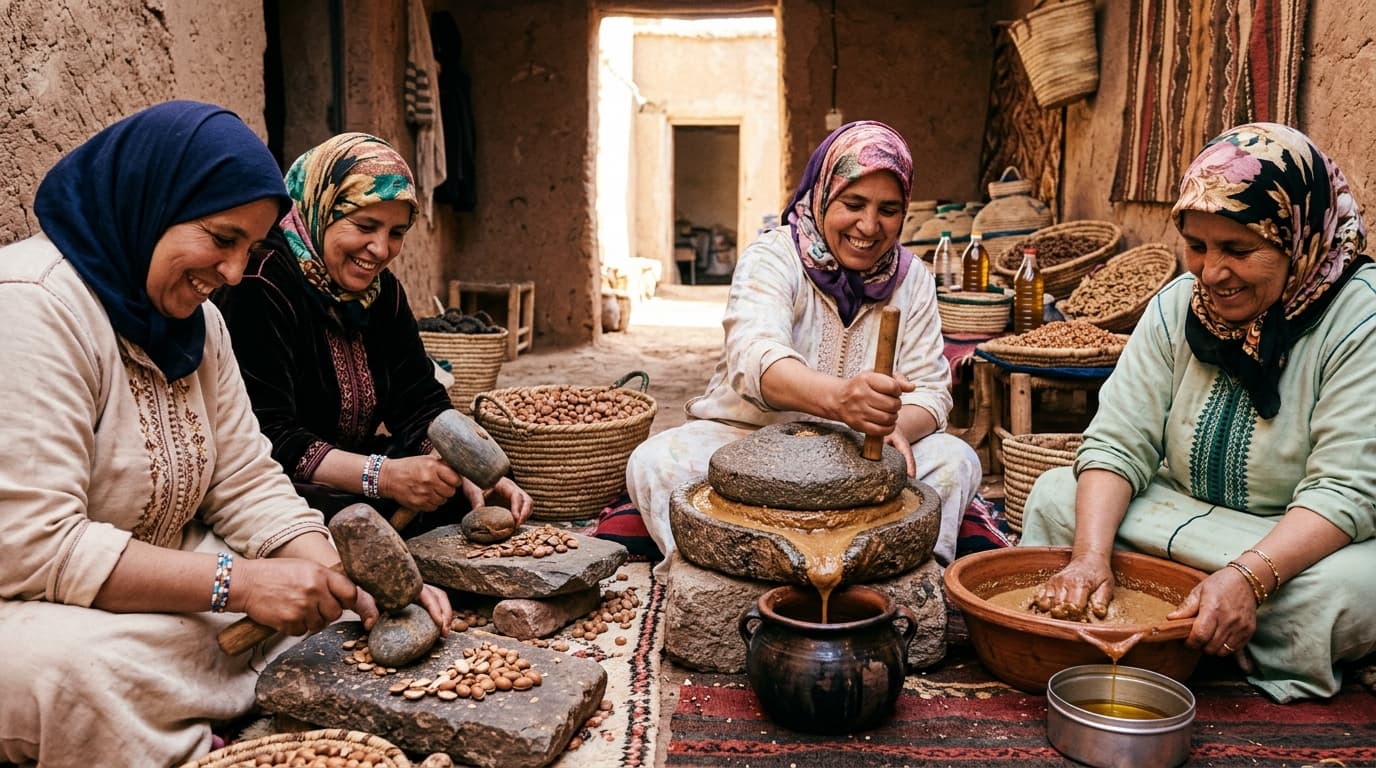
There are two cooperatives worth a dedicated visit. Cooperative Marjana is located about 15 kilometres east of Essaouira on the road towards Marrakech, and Cooperative Targanine sits roughly 60 kilometres north of Agadir near the village of Aoulouz. Both welcome visitors without prior booking during working hours, roughly 8am to 5pm on weekdays and shorter hours on Saturdays. The drill is the same at both: a member of staff walks you through the production stages, women crack argan nuts by hand with two flat stones in what is genuinely skilled work, you see the stone mills grinding the paste, and then you arrive at the shop. The demonstrations are authentic, not theatrical. The women cracking nuts are doing so as their actual daily work, not a performance for tourists. There is no entrance fee. The implicit understanding is that you will look at what is for sale, though there is no pressure to buy.
I watched one woman crack forty nuts in the time it took me to crack three. My thumbs ached for two days. That was the moment I understood why the oil costs what it costs.
How the Oil is Made
The argan fruit looks like a large olive. The outer flesh is removed, leaving a hard-shelled nut. Each nut is cracked open by hand between two stones to extract one to three pale kernels. For culinary oil, the kernels are lightly roasted over low heat and then ground in circular stone mills. Water is added gradually and the resulting brown paste is kneaded by hand for up to an hour until the oil separates out. The leftover paste, called amlou when mixed with ground almonds and honey, is one of Morocco's great unsung breakfast foods. For cosmetic oil, the kernels skip the roasting step and go straight into cold pressing. Producing one litre of oil takes roughly fifteen hours of hand labour, which explains both the price and why cooperative-produced oil is more expensive than factory-made versions.
How to Spot Fake or Diluted Argan Oil
- Price below 100 MAD for 100ml of cosmetic oil almost always means dilution with cheaper vegetable oil
- Culinary oil should smell distinctly nutty after roasting — odourless culinary oil is suspicious
- Fine sediment at the bottom of culinary oil is normal and a sign of minimal processing
- Cosmetic oil sold in clear glass bottles degrades rapidly in light — it should come in dark amber or opaque containers
- Safflower oil is the most common adulterant — it has no smell and similar colour to cold-pressed argan
- Very pale, water-clear cosmetic oil has likely been refined and deodorised, losing most of its active compounds
- Ask for the cooperative's registration certificate — legitimate cooperatives are registered with the National Federation of Argan Cooperatives
What to Pay and Where
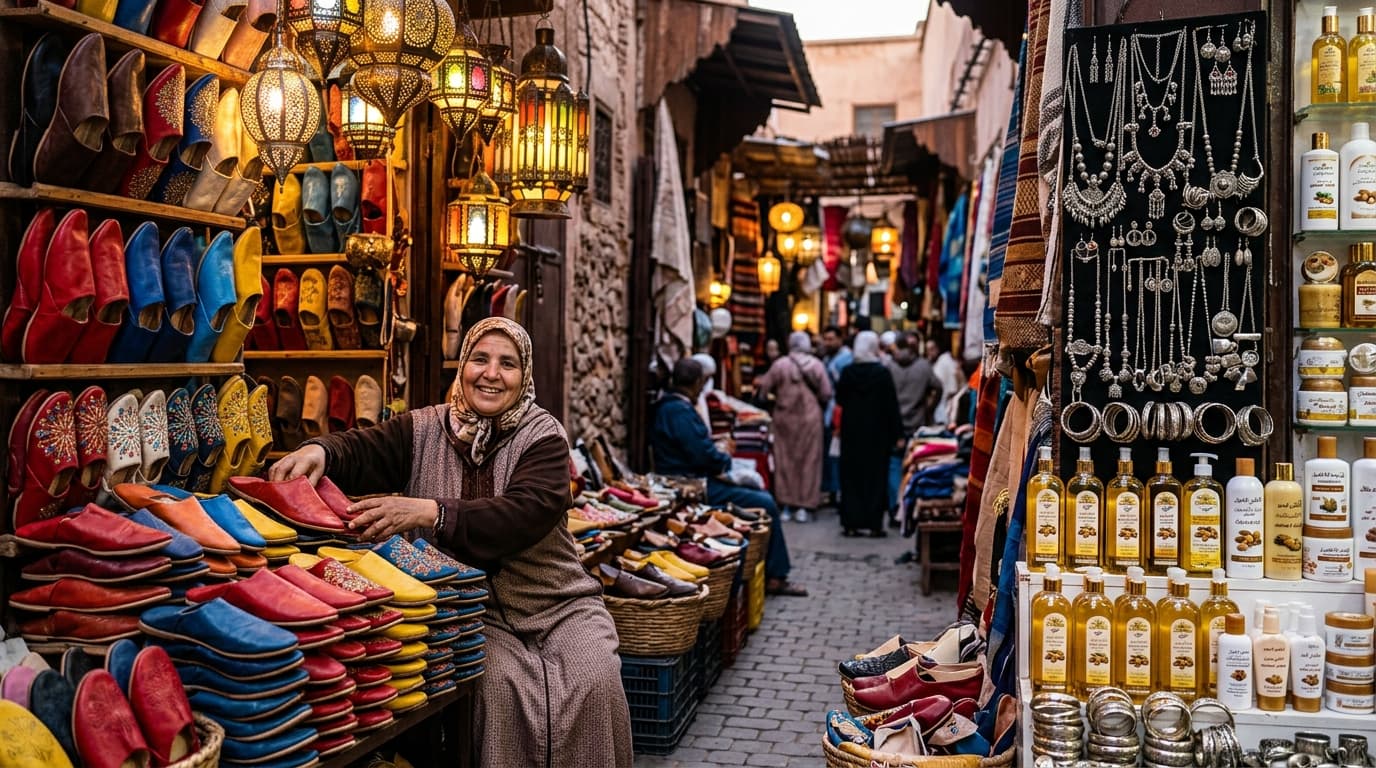
At a registered cooperative: 80-120 MAD for 100ml cosmetic, 60-80 MAD for 100ml culinary. In medina tourist shops: 200-300 MAD for the same volume. Online from Moroccan cooperatives: 150-200 MAD per 100ml including shipping. The cooperative price is not simply cheaper because it cuts out the middleman — it is also more traceable. Amlou paste runs about 50-60 MAD for 250g at the cooperative and is worth carrying home more than almost any other food souvenir.