Ramadan changes Morocco profoundly. Restaurants close by day, the medinas slow down, then erupt at sunset. Whether it enhances or complicates your trip depends entirely on what you came for.
The First Thing to Know: When Is Ramadan?
Ramadan follows the Islamic lunar calendar, which means the dates shift approximately ten days earlier each year relative to the Gregorian calendar. In 2026 Ramadan falls in late February to late March. In 2027 it will begin in mid-February. There is no fixed answer to when Ramadan is — you must check the current year's dates specifically. The month lasts 29 or 30 days depending on the moon sighting, ending with Eid al-Fitr, a three-day celebration. If you are planning a trip and do not know the current year's Ramadan dates, this is the first thing to look up. The changes to daily life in Morocco during Ramadan are significant enough that you want to know before you book, not after you arrive.
What Actually Changes
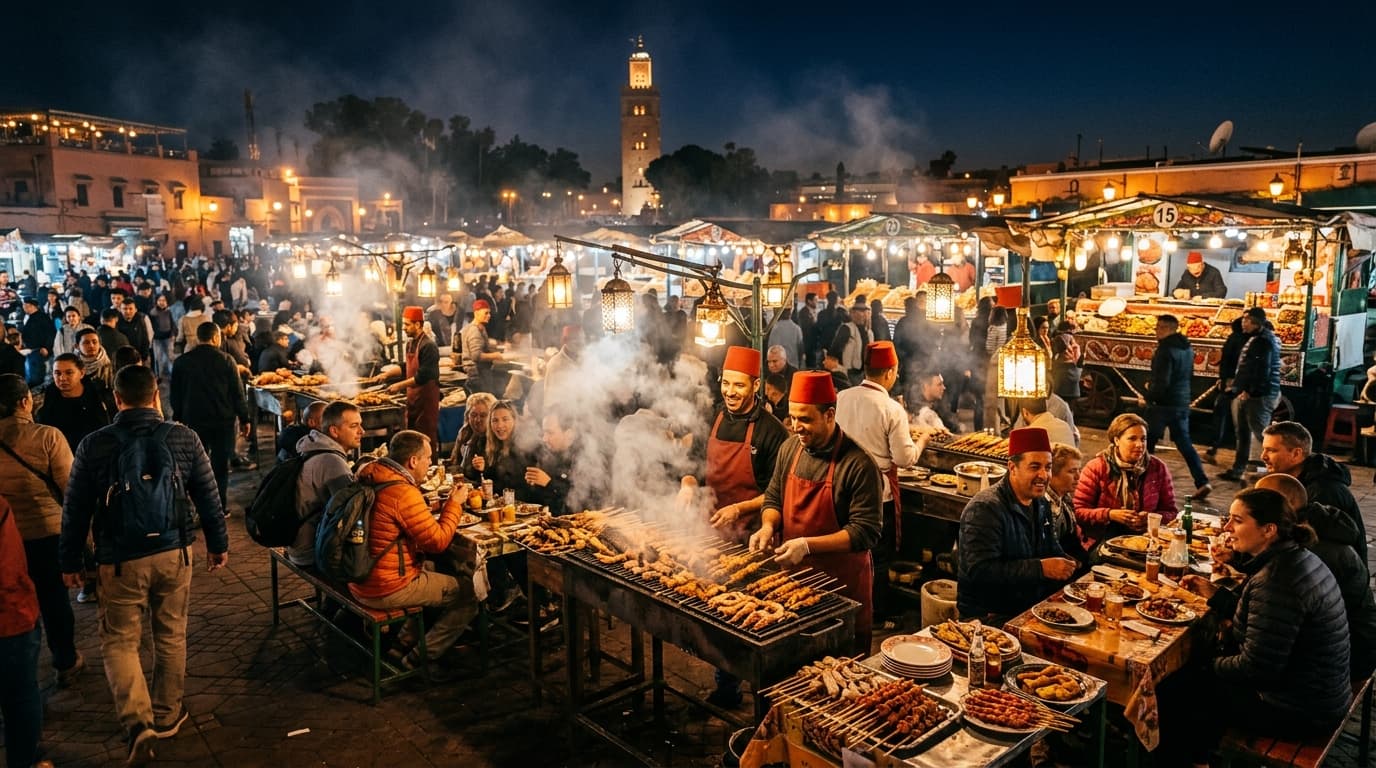
The most immediate practical difference is that cafes and restaurants serving food close during daylight hours. This is not universal — in major tourist areas in Marrakech and Agadir, establishments catering primarily to non-Muslim tourists remain open, but they are often tucked away or discreet about it. In smaller cities and the medinas, finding a sit-down lunch is genuinely difficult. Street food essentially disappears until after Iftar. The pace of life slows noticeably through the afternoon as fasting, particularly combined with heat in spring or summer Ramadans, takes its physical toll. Government offices and smaller shops may keep irregular hours. Transport runs, souks operate, and Morocco does not shut down — but it operates at a different register. Travellers who arrive expecting the full-volume Marrakech of high season will find something quieter, more interior, and in some ways more interesting.
Ramadan in Morocco: Key Facts
30 days
Duration of Ramadan (29-30 depending on moon)
10 days
Approximate annual shift earlier in Gregorian calendar
27th night
Laylat al-Qadr — the holiest night of the Islamic year
3 days
Duration of Eid al-Fitr celebration at Ramadan's end
99%
Approximate proportion of Morocco's population that is Muslim
Iftar: Sunset on Every Table in Morocco
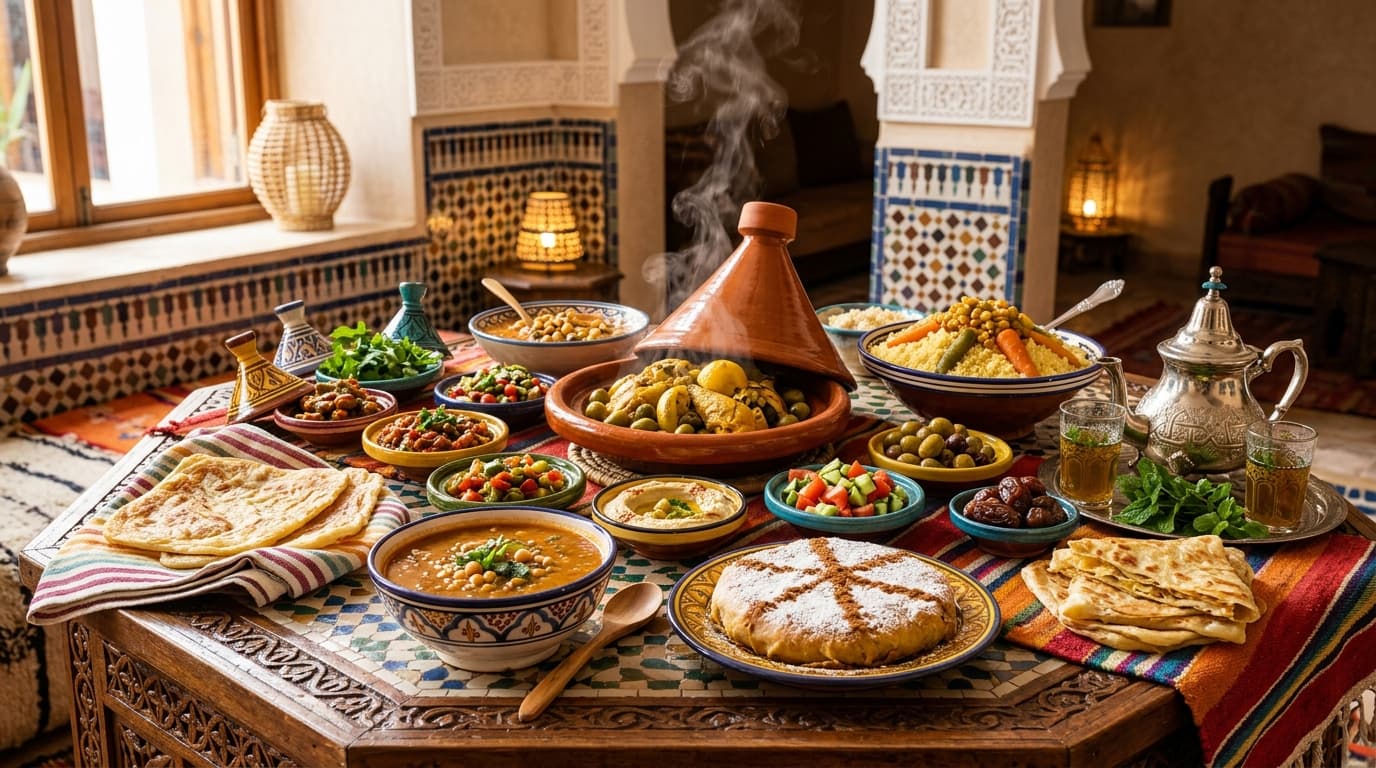
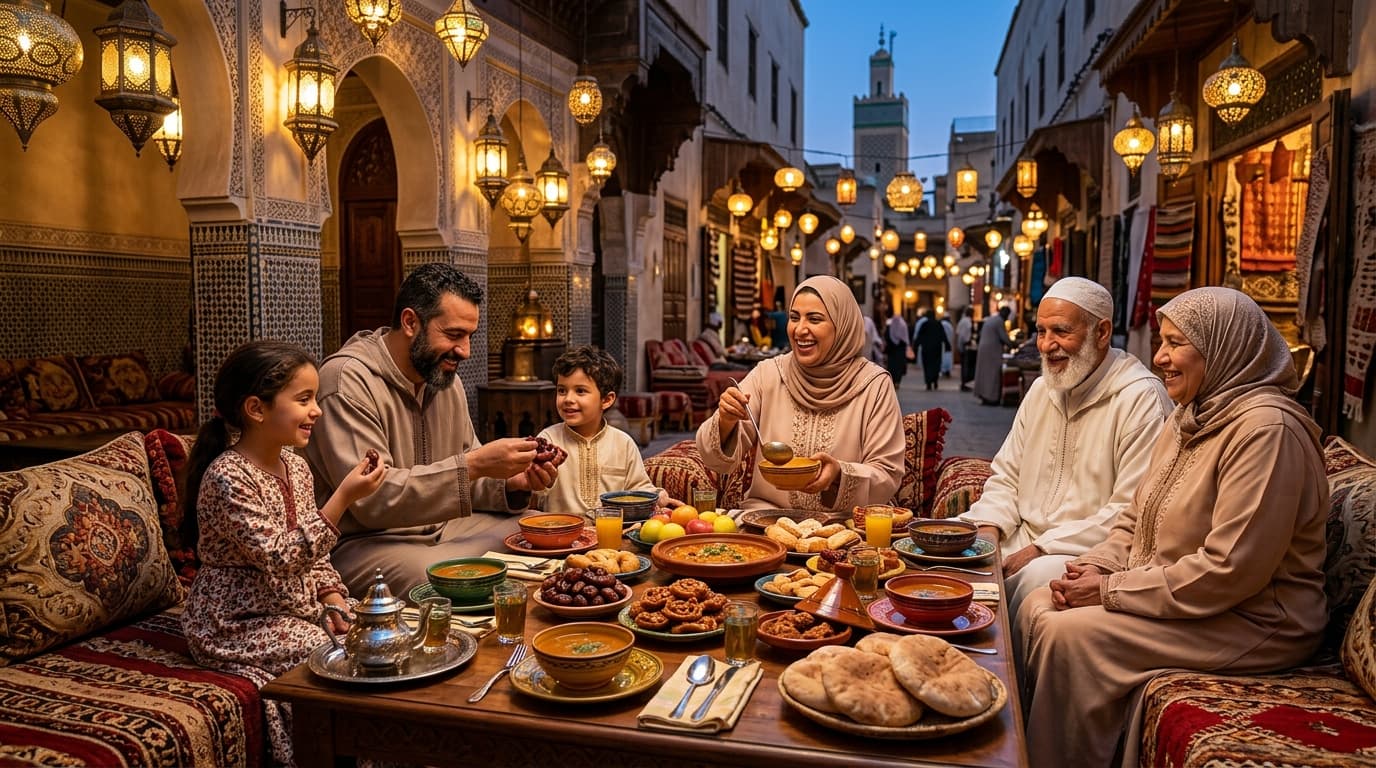
At sunset, everything changes. The call to prayer signals Iftar — the breaking of the fast — and within minutes the medinas come alive in a way that has no equivalent at any other time of year. Every family sits down to the same meal: a bowl of harira, the thick tomato, lentil and lamb soup that is Morocco's answer to hunger after a long fast; a plate of dates; chebakia, the sesame and honey cookies fried in oil and dusted with sesame seeds that appear almost nowhere except Ramadan; and sellou, a dense, sweet mixture of toasted flour, sesame seeds, almonds and fenugreek that is prepared in large batches at the start of the month and eaten throughout. The streets empty completely for twenty minutes as families eat. Then they fill again, louder and more energetic than at any other time of year, and remain that way until well past midnight. If you are in Morocco during Ramadan and you have any connection to a local family or guesthouse owner — and in Morocco, connections tend to arrive quickly — being invited to share Iftar is an experience that is difficult to achieve through any amount of money or planning at other times of year.
I was in Fes for the last ten days of Ramadan. The medina at 11pm was more alive than anything I had seen in it at noon in August. People were just walking, talking, eating from stalls. The energy was completely different — it felt like a city that had been holding its breath all day and finally exhaled.
Laylat al-Qadr and Eid al-Fitr
The 27th night of Ramadan is Laylat al-Qadr, the Night of Power, considered the holiest night of the Islamic year. The mosques overflow; in the major medinas the surrounding streets fill with worshippers praying outdoors. The atmosphere is extraordinary for anyone with an interest in Moroccan religious life and is entirely accessible to respectful non-Muslim observers who are willing to stand quietly at a distance. The month ends with Eid al-Fitr. The first day of Eid is marked by the morning Eid prayer — one of the largest congregational prayers of the year — and then an almost complete shutdown of commercial life as families gather. Most shops, restaurants and attractions close for the full first day. Day two and three see gradual reopening. In the week before Eid, live sheep appear for sale on many street corners in Moroccan cities in preparation for the sacrificial tradition that marks the larger Eid al-Adha (a different celebration two months later), though the two occasions are sometimes confused by visitors.
How to Behave Respectfully During Ramadan
- Do not eat, drink or smoke in public spaces during daylight hours — find an enclosed restaurant or your accommodation
- Dress more conservatively than you might otherwise — this matters more during Ramadan
- Do not photograph people eating Iftar without permission
- Expect slower service and occasional short tempers in the late afternoon — the fast is physically hard
- Accept that some things will be closed or unavailable — this is not a failure of Morocco to serve you
- If invited to Iftar, accept if you possibly can: it is one of the most generous gestures Moroccan hospitality offers
The Honest Verdict
Ramadan is logistically more demanding than travelling in Morocco at other times of year. Finding lunch takes effort; some sights keep reduced hours; the afternoon in summer Ramadans is genuinely quiet to the point of feeling deserted. But for anyone interested in Moroccan culture beyond its surface presentation to tourists, Ramadan offers something no other period does: Morocco behaving entirely on its own terms, oriented entirely around its own rhythms, with a generosity toward strangers that becomes most visible when the fast breaks at dusk.