At 4,167 metres, Jebel Toubkal is the highest peak in North Africa. It is also far more accessible than most people assume — and more demanding than most travel blogs admit. Here is the honest account.
The Standard Two-Day Route
The vast majority of Toubkal ascents follow the same circuit: drive from Marrakech to Imlil (roughly 1.5 hours), acclimatise briefly, hike to the Toubkal Refuge at 3,207 metres on day one, summit and descend on day two. The total distance covered is around 22 km with approximately 2,800 metres of cumulative elevation gain. On paper this looks modest. In practice, the section from the refuge to the summit — a 960-metre scree and boulder climb across loose rock — takes between three and four hours at altitude and is physically and psychologically harder than the elevation numbers suggest. Fitness alone is not the whole picture: altitude sickness can affect experienced hikers who ascend too quickly, and the summit push begins before 5 a.m. in near-darkness.
Toubkal: Key Facts
4,167m
Summit altitude — highest in North Africa
3,207m
Toubkal Refuge altitude
1,740m
Imlil village altitude
22 km
Total distance (standard 2-day route)
2,800m
Cumulative elevation gain
100 MAD
Refuge dormitory bed per night
Imlil: The Gateway Village
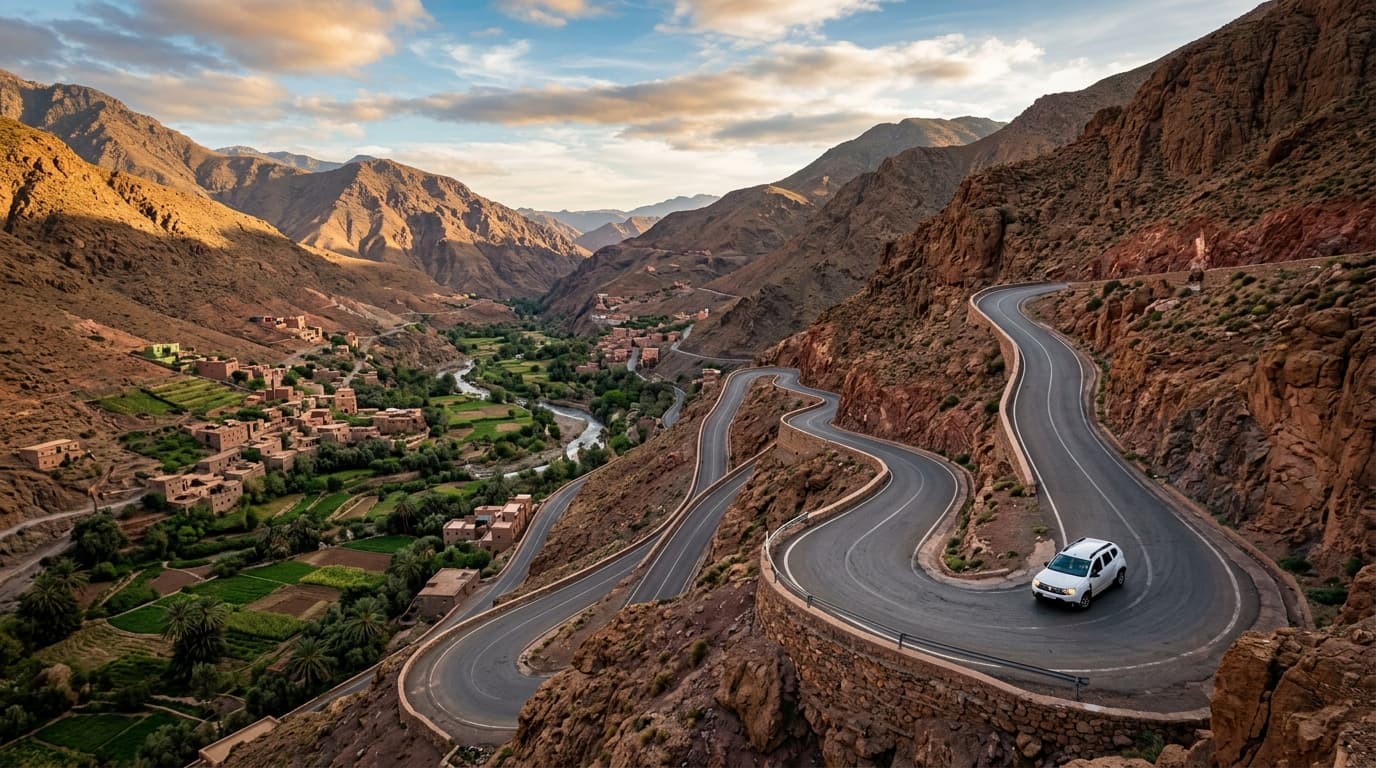
Imlil sits at 1,740 metres in the Mizane valley and is the last settlement before the mountain. It has transformed over the past decade from a functional trailhead into a small but well-organised trekking base with reliable guesthouses, equipment rental shops and a licensed guide association. The guide association office beside the main car park is the place to hire an official mountain guide — required by Moroccan national park rules for the Toubkal ascent, and genuinely valuable given the route conditions in poor weather. Guesthouses like Dar Imlil and Riad Atlas Toubkal offer clean rooms at 150 to 300 dirhams; the food served is hearty Amazigh cooking, heavy on protein and well-suited to the energy needs of the climb.
Essential Gear for the Toubkal Ascent
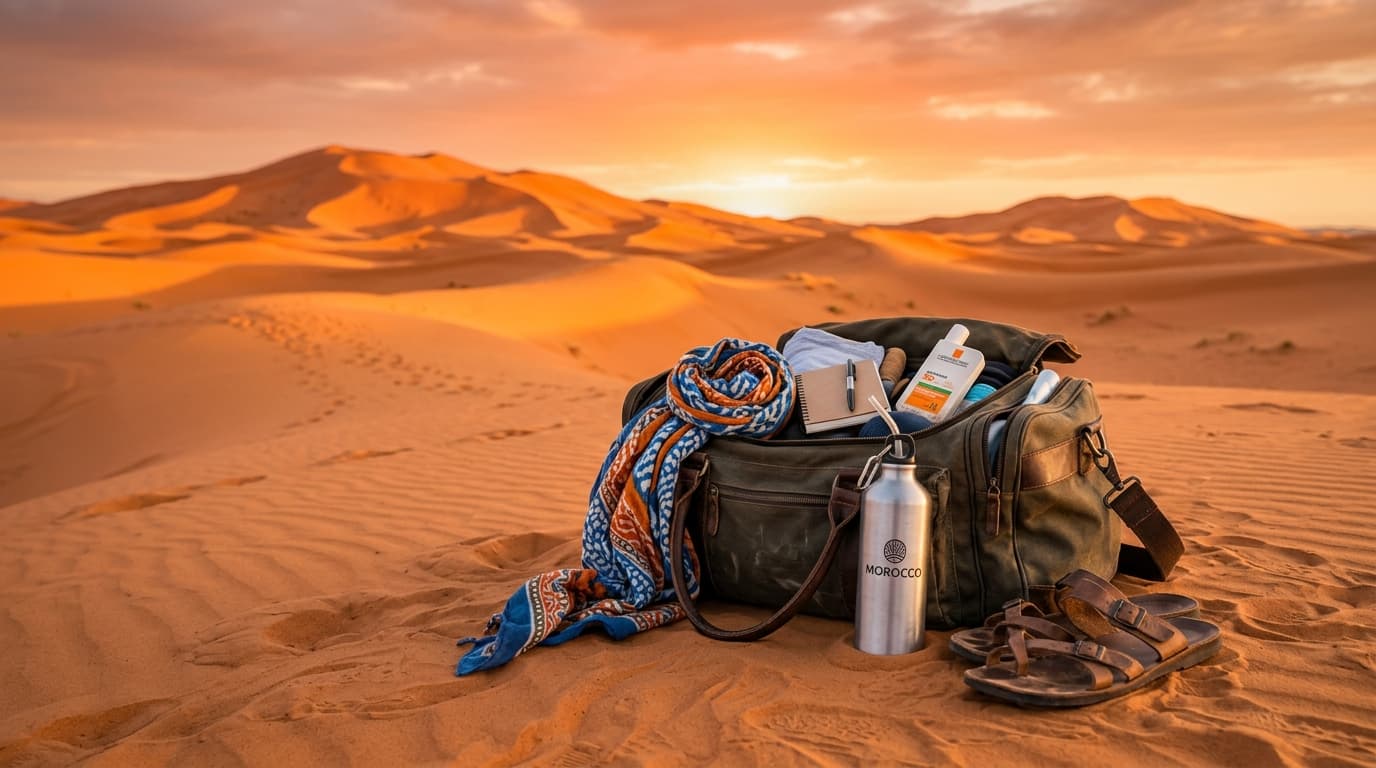
- Waterproof trail shoes or low-cut hiking boots with ankle support — scree destroys light trainers
- Trekking poles — non-negotiable on the descent from the summit scree field
- Headtorch with fresh batteries — the 5 a.m. summit push requires both hands free
- Down jacket or insulated mid-layer — temperatures at the refuge drop to 0–5°C even in July
- Sleeping bag liner — the CAF refuge provides blankets but they are thin and shared
- 1.5 litres of water minimum on your person for the summit push
- High-calorie snacks: nuts, dried fruit, chocolate — appetite diminishes at altitude
- Sunscreen SPF 50 and glacier glasses — UV intensity at 4,000m is extreme
Day One: Imlil to the Toubkal Refuge
The trail from Imlil climbs steadily through the Amazigh villages of Aroumd and Sidi Chamharouch — the latter a shrine built into a rock face beside a small seasonal river, visited by Moroccan pilgrims. The path is clear and well-maintained as far as the shrine; above it, the trail becomes a series of switchbacks on rocky terrain that steepens toward the refuge. The hike takes between four and six hours depending on pace and stops. The Toubkal Refuge, operated by the Club Alpin Francais, provides dormitory beds (around 100 dirhams), a simple dinner and breakfast. Bring your own sleeping bag liner as the blankets are minimal and shared. The refuge fills in April and May; book two weeks ahead through the CAF website.
The Summit Push: What No One Tells You
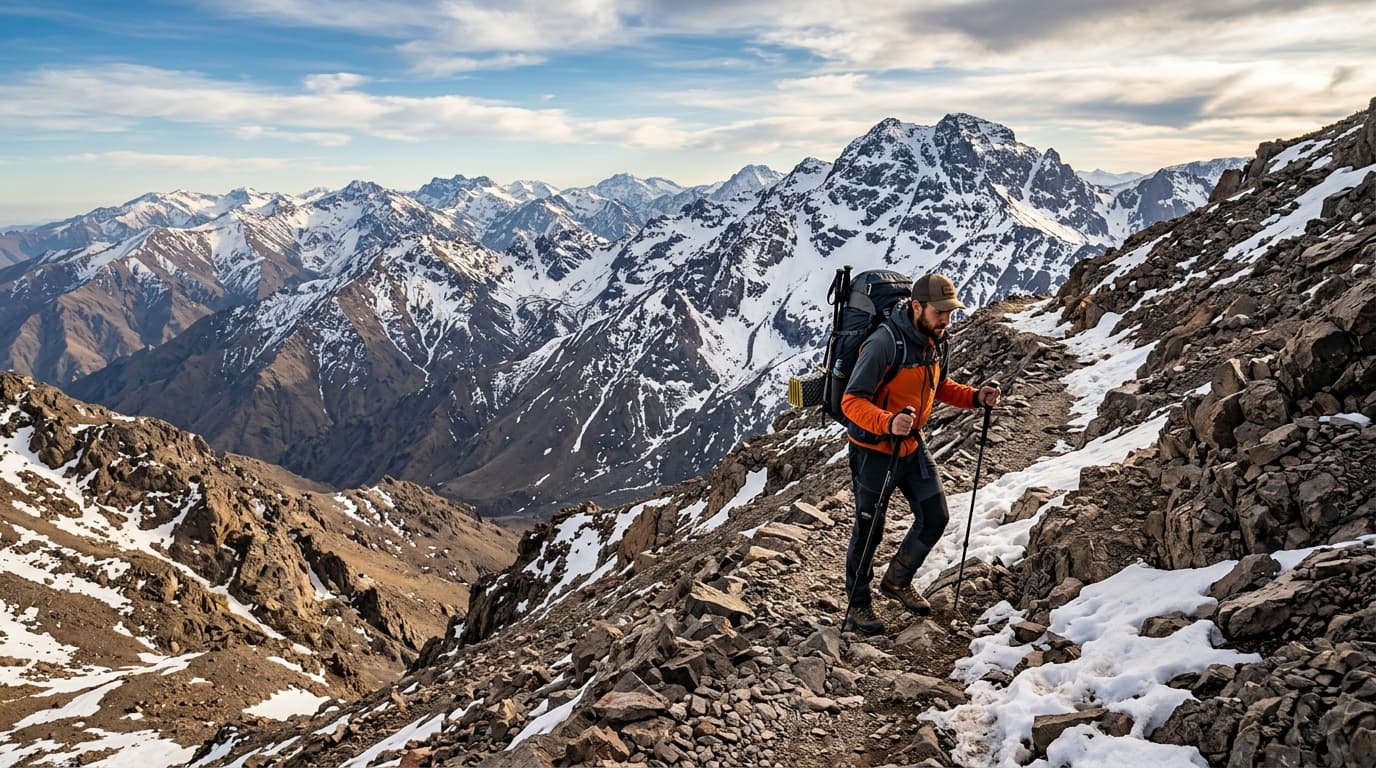
Most groups leave the refuge at 5 a.m. to catch sunrise from the summit and avoid afternoon cloud and wind. The first hour in the dark is a slog across loose boulders using headtorches; footing is unreliable and pace is necessarily slow. At around 3,800 metres the scree field begins — a slope of sharp, unstable volcanic rock that shifts underfoot with every step. Progress feels agonisingly slow. Many hikers describe this section as the point where mental determination matters more than physical fitness. The final 200 metres to the summit marker is on firmer rock and goes quickly. At the top, in clear conditions, you can see the Atlantic coast to the west, the Sahara haze to the south-east and the peaks of the Anti-Atlas range beyond Ouarzazate. The view is genuinely worth everything that preceded it.
I have guided Toubkal more than 200 times. The hikers who struggle most are never the unfit ones — they are the ones who slept badly at the refuge, skipped breakfast and underestimated how slowly you move in the dark on loose rock at 3,900 metres. Eat a proper meal, leave on time, and trust the pace.
Altitude Sickness and Safety
Toubkal sits at 4,167 metres — high enough to cause genuine altitude sickness in susceptible individuals, but below the threshold where acclimatisation days are typically mandatory. The standard two-day itinerary is aggressive for anyone arriving from sea level: ideally, spend a night in Imlil before going to the refuge rather than driving from Marrakech the morning of day one. Symptoms of acute mountain sickness — persistent headache, nausea, loss of appetite, disrupted sleep — should be taken seriously. The treatment is descent. Do not push through AMS symptoms to reach the summit. Ibuprofen manages mild symptoms; acetazolamide (Diamox) can be prescribed before departure and reduces incidence significantly. Discuss with your GP or a travel health clinic at least two weeks before the trip.
Winter Conditions Require Mountaineering Equipment
From November through April, the upper mountain is under snow and ice. Crampons and an ice axe are mandatory above 3,500m in winter conditions — this is a mountaineering objective, not a hiking route. Do not attempt it without a certified guide and proper equipment. Conditions can change rapidly and several rescues are conducted each winter season.
Winter and Spring Conditions
From November through April, the upper mountain is under snow. The scree section becomes an ice and mixed snow climb that requires crampons and ice axe, and the summit push becomes a genuine mountaineering objective rather than a strenuous hike. Do not attempt the winter route without the proper equipment and a guide with mountain leader certification. The most reliable weather window for a comfortable ascent is May through June and September through October. July and August see the mountain busy with Moroccan domestic hikers and occasional thunderstorms in the afternoon; start early on summer days to be back at the refuge before any electrical activity develops after midday.
Beyond the Summit: The Toubkal Circuit
For those with a week rather than two days, the Toubkal Circuit is the better itinerary. This four to six day loop takes in the Tazaghart plateau, the Lac d'Ifni (a high-altitude lake at 2,295 metres), the Azzaden valley and a series of remote Amazigh villages rarely visited by trekkers focused only on the peak. The circuit passes through genuine high-mountain wilderness where the only accommodation is local gites — simple family homestays that charge 100 to 150 dirhams including dinner and breakfast. The food in these gites is invariably excellent: tagines cooked over wood fires, fresh bread baked in clay ovens and mint tea poured from height in the Moroccan style that aerates and cools the liquid.